A year in review: the most-read stories of 2025
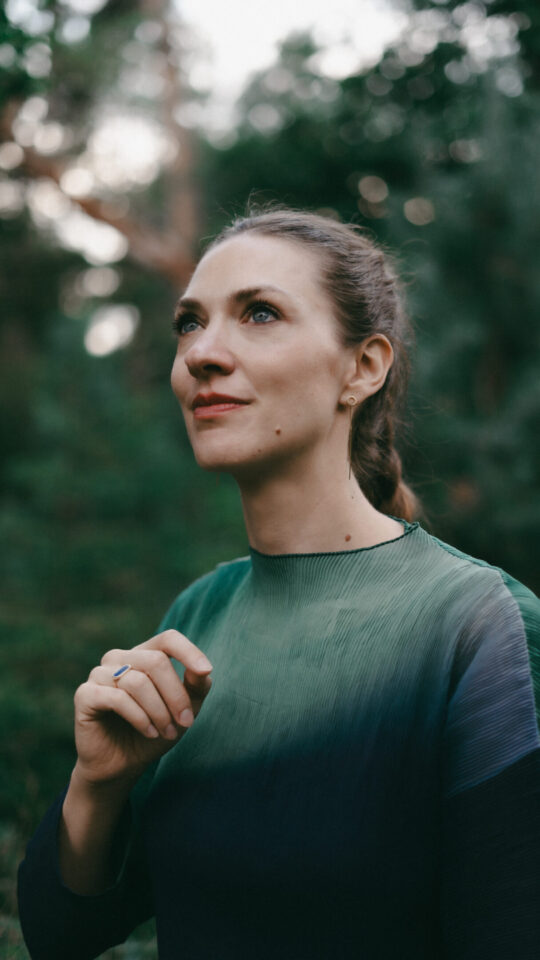
With more than 50 new stories, several short films and our very first We Are The ReGeneration documentary, 2025 was a year of real momentum. These are the pieces that resonated most with you. Dive back in – and recharge for a new year rooted in life, health and balance.
1) How to transform a valley into a regenerative society
At the foot of the eastern Pyrenees, something remarkable is taking shape. Sixty-eight communities are working together to restore 100,000 hectares of land. Their aim: to build a regenerative society where all life can thrive, and where the Muga river can once again flow freely.
This year we travelled to the region to listen, observe and document their efforts in our very first We Are The ReGeneration documentary: Muga, when she stops flowing so will we. It clearly struck a chord.
Join all who have already watched the film (now also launched globally on Waterbear and Core) – and read our interview with initiator Stef van Dongen.
Uitgelichte quote
Our very existence relies on a vast, immeasurable web of life
 Kees Klomp: "Neoliberal freedom is an illusion designed to let me market grow without limits." Photographer: Gabriela Hengeveld
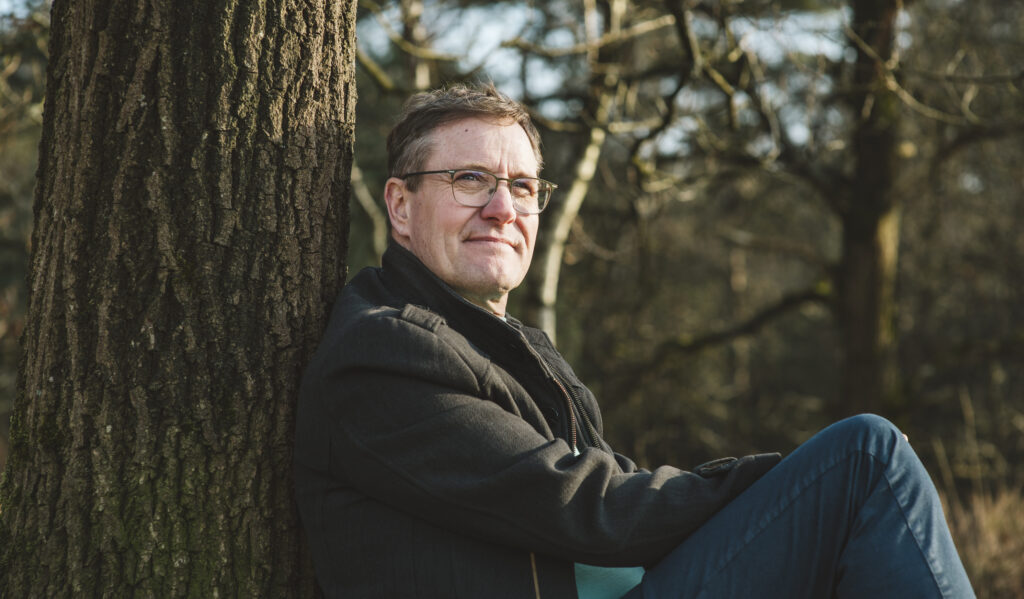 Photographer: Gabriela Hengeveld
2) Kees Klomp: “The undercurrent will outgrow the mainstream”
“We need to reorganise society based on the universal ecological principles that have governed life for almost four billion years”, according to activist, researcher and author Kees Klomp. “At our core, humans are not consumers, not even global citizens. We are Earth-citizens – part of a species society. That is the only ecologically sustainable way to look at ourselves.”
“Anyone who takes that reality seriously must rethink the economy from that foundation. It means an economic system rooted in ecology, and a political system based on an ecoliberal constitution in which all forms of life are treated as equals.”
In this widely discussed interview, Kees explains how such a shift becomes possible.
Uitgelichte quote
It’s about integrity and generosity
 Nora Bateson: “Applying static data to a living world is dangerous.” Photographer: Gabriela Hengeveld
 Photographer: Gabriela Hengeveld
3) Nora Bateson: “A hundred trees of the same species do not make a forest”
“Applying static data to a living world is dangerous – especially when it comes to the preservation of our planet”, says Nora Bateson. Through her work on warm data, she highlights the risks of looking at education, healthcare and food systems through a lens that is far too simplistic.
“Take biodiversity loss. We count how many insects, fish or fungi are disappearing and then decide the ‘solution’ is to increase the numbers again. But that’s not how ecology works. A hundred trees of the same species do not make a forest. The biodiversity is left out. Everything depends on context – and everything is always changing.”
“Regeneration helps us to find the values to live by in that shifting reality. Because it’s about integrity and generosity. Not integrity as consistency, but as responding from interdependency when no rulebook exists.”
Read our full interview with Nora Bateson for deeper insight.
Uitgelichte quote
If you use detached language, you make detached decisions
 Photographer: Sabine Rovers
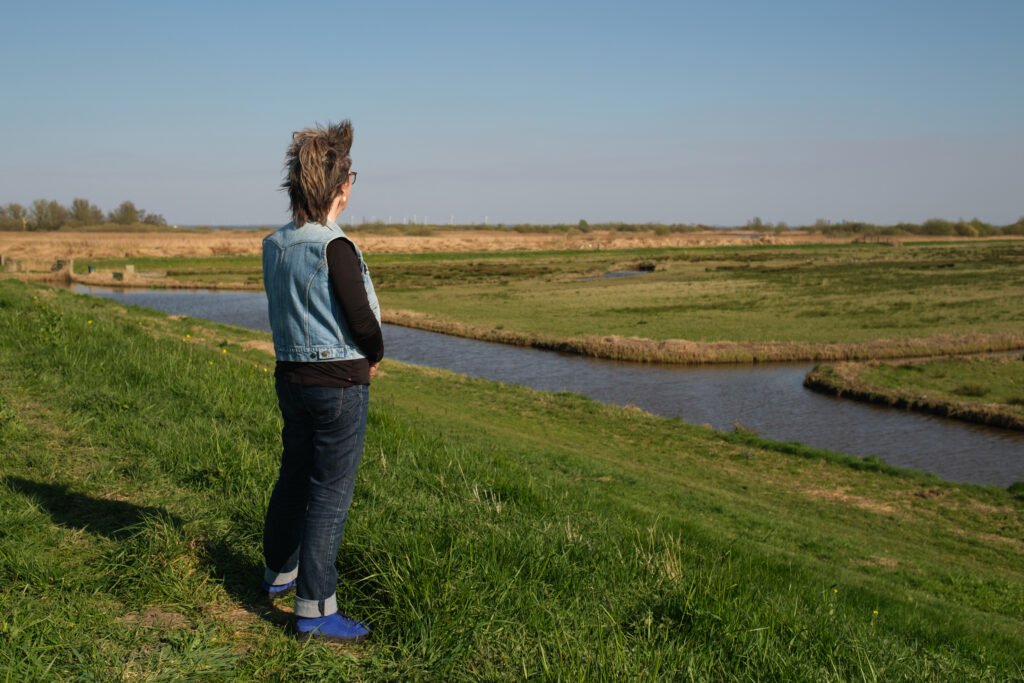 Arita Baaijens: “What struck me was that all of them genuinely loved the sea.” Photographer: Sabine Rovers
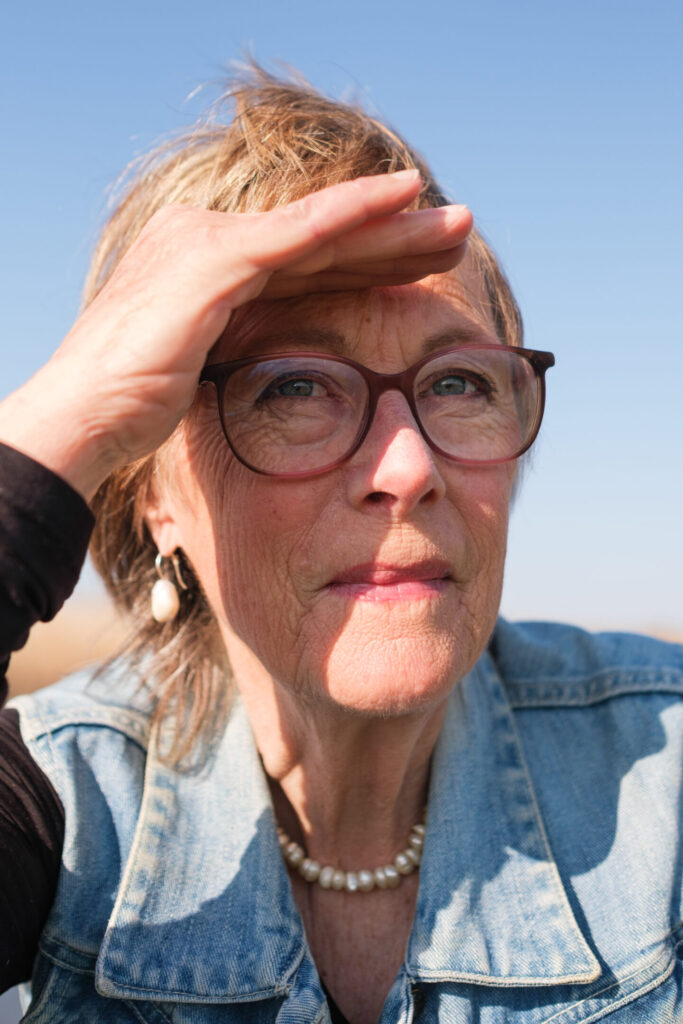
4) Arita Baaijens: “If I’ve managed to sow doubt about how the world works, then I’m satisfied”
After years of expeditions to the most remote corners of the planet, Dutch writer and explorer Arita Baaijens turned her attention to a landscape closer to home: the North Sea. For a year, she entered into dialogue with the ecosystem, and with the people who know it best – ecologists, fishermen, policymakers, artists and scientists.
“What struck me was that all of them genuinely loved the sea. But the moment the conversation turned professional, that intimacy vanished. Suddenly, it was all about numbers, policy frameworks, and technical language. The connection disappeared.”
“If you use detached language, you make detached decisions”, Arita continues. “What’s missing – in Dutch and many other Western languages – are words that allow for the agency of non-human beings. In many Indigenous languages, nature can act. In Riffian, there is a word we might translate as ‘to become the sea’: the fisherman becomes the sea, and the sea becomes the fisherman. That reciprocity – linguistic, cultural, spiritual – is extremely powerful.”
Uitgelichte quote
Children who spend a lot of time in contact with soil, for instance, are less likely to develop asthma and allergies
 Marco van Es: “80 percent of our immune system is housed in the gut.” Photographer: Gabriela Hengeveld
 Photographer: Gabriela Hengeveld
5) “The impact microbes have on our health is one of the most important discoveries of the past 200 years”
“The diversity in a teaspoon of healthy soil can range from 10,000 to 50,000 different species of micro-organisms. And 80 percent of our immune system is housed in the gut. That immune system needs both a high number and a high diversity of microorganisms to thrive”, Marco explains. “What we’re seeing is that people with so-called ‘diseases of affluence’ tend to have a far lower microbial diversity than those who are healthy.”
With his foundation Bac2Nature, Marco seeks to make knowledge about the link between microbial biodiversity and human health accessible – and to initiate new research where understanding remains incomplete. “Children who spend a lot of time in contact with soil, for instance, are less likely to develop asthma and allergies.” And: “organic apples carry a far greater diversity of bacteria than conventionally grown ones. I’m convinced these insights will contribute to a healthier world.”
Dive into the whole story of Marco van Es to learn more.
Uitgelichte quote
A coffin that doesn’t pollute, but brings back life to the soil
 Photographer: Gabriela Hengeveld
 Bob Hendrikx: “After death, your final footprint can be a positive one.” Photographer: Gabriela Hengeveld
6) Loop Biotech: “We’re opening the door to an economy that’s literally alive”
A coffin that doesn’t pollute, but brings back life to the soil – that’s the essence of Loop Biotech, the company founded by Bob Hendrikx and Lonneke Westhoff. Their living coffins, made from mycelium, decompose within 45 days, nourishing the earth in the process.
“You wouldn’t burn a bag of compost, would you? But that’s essentially what we’re doing with our bodies – over and over again”, Bob says. “On top of that, the conventional funeral industry is extremely polluting. A cremation produces around 208 kilos of CO2. A burial emits about 95 kilos, but every time we bury someone, a tree has to die in order to produce the coffin. But it doesn’t have to be this way. After death, you can still do something good – your final footprint can be a positive one.”
Let the story of this regenerative entrepreneur touch you.
Uitgelichte quote
Through this transition, the farmers’ earnings typically increase by 100 to 200 percent
 Thekla Teunis: “The more fertile the soil, the higher the yields and the better the quality of the crops.” Photographer: Gabriela Hengeveld
 Photographer: Gabriela Hengeveld
7) Grounded: “Ecology and economy must align”
Every year, 12 million hectares of fertile farmland are lost due to destructive agricultural practices. With Grounded, Thekla Teunis and Gijs Boers demonstrate the viability of another model. By collaborating with thousands of farmers in South Africa, Tanzania, Zambia and Uganda, they’re regenerating both their soils and their business models.
“Regenerative agriculture is surprisingly feasible in these countries”, says Thekla. “Most farms are small – ranging from 0.25 to 6 hectares – and there has been minimal investment in chemical-intensive farming infrastructure. This makes the shift to regenerative land use easier.” Through this transition, the farmers’ earnings typically increase by 100 to 200 percent. “Because the more fertile the soil, the higher the yields and the better the quality of the crops. It’s the difference between being able to send your children to school or not.”
Uitgelichte quote
Boreal forests are the second lung of the world
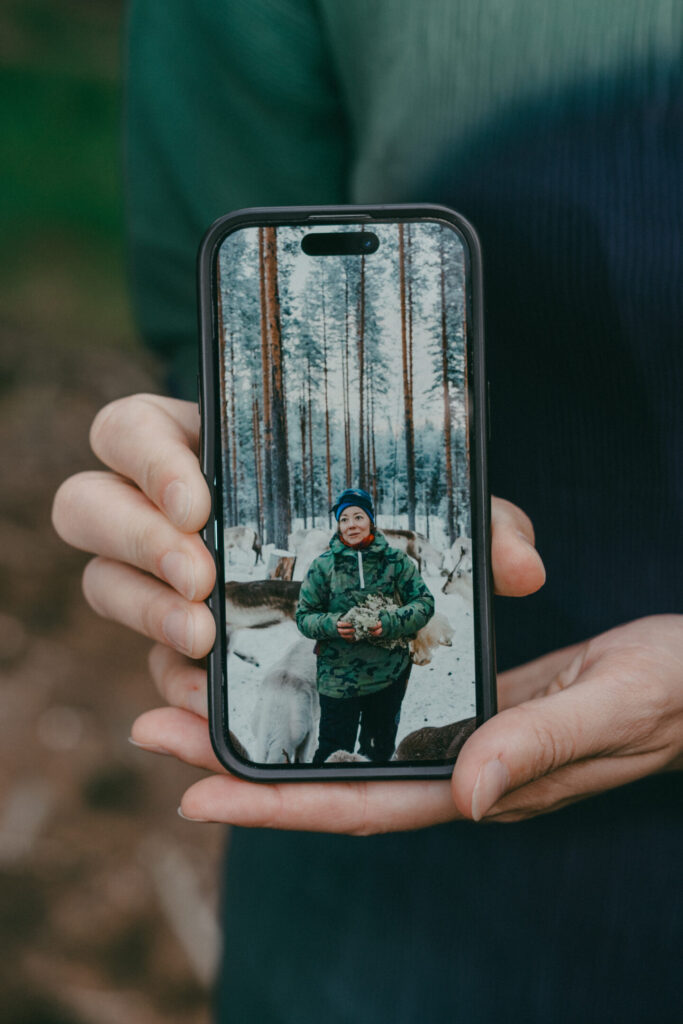 Photographer: Renata Chede
 Lilian Bosch: “My role is mainly to listen.” Photographer: Renata Chede
8) Lilian Bosch: “The Sámi and the boreal forests are the hidden treasures of Europe”
In the boreal forests of Scandinavia lives Europe’s last indigenous population: the Sámi. Their centuries-old wisdom is little known, just as the importance of the ecosystems they try to protect. “Boreal forests account for 27 percent of the world’s total forest cover and are known, after the tropics, as the second lung of the world”, Lilian Bosch explains. “They are almost as vital to the global climate as the Amazon rainforest. And yet, they are disappearing at an alarming rate.”
In the beginning of 2024, Lilian travelled to northern Sweden and – together with Sámi woman Johanna Nilsson and Amy Lewis – she co-founded WILD Sápmi. “Our aim is to strengthen the role of the Sámi, halt further destruction of ancient forests, and ensure Sámi leaders are embedded in nature and landscape initiatives so the boreal forests can be properly protected and restored. The foundation is Sámi-led – my role is mainly to listen.”
Step into the full interview with Lilian Bosch.
Uitgelichte quote
If we don’t change how we treat our soils, 90 percent of them will be degraded by 2050
 Merlin Sheldrake: “I feel like I’m walking on the surface of an ocean of land – always conscious of the depths beneath me.” Photographer: Sabine Rovers
 Merlin taking soil samples in Alerce Costero National Park, Chile. Photographer: Tomas Munita
9) Merlin Sheldrake: “What we’re blind to, we tend to take for granted”
“Fungi move around 13 billion tonnes of CO2 into the soil every year. Yet, there’s still a kind of fungal blindness, and it’s led to all sorts of oversights”, says Merlin Sheldrake, the British biologist and bestselling author of Entangled Life.
“Take conservation: we set aside land to protect ecosystems, but rarely think about what’s happening below ground. In agriculture and industry, we design technologies without considering soil life – often disrupting or even destroying underground ecosystems without realising it. It’s a sobering reality, because if we don’t change how we treat our soils, 90 percent of them will be degraded by 2050.”
“I feel like I’m walking on the surface of an ocean of land – always conscious of the depths beneath me. That’s why I find the term ‘more than human’ so helpful. It gestures beyond narrow, human-centric narratives and opens space for a richer, wilder sense of connection. It’s not just a concept – it’s a posture, an attitude, that invites deeper engagement with the living world.”
Discover why so many readers have been captivated by this interview with Merlin Sheldrake.
Uitgelichte quote
Our ambition is to become a regenerative Unilever
These stories are equally worth your time:
- In his PhD research, economist Hans Stegeman examines the deeper mechanisms driving our obsession with growth. “I’ve grown more nuanced – perhaps even a little gentler towards mainstream economics.”
- HarvestCare leads programmes that use food as medicine for people with type 2 diabetes. The results are remarkable.
- Only one percent of all Dutch flowers are grown organically. Wilderful is changing this reality.
- The natural world is rich with intelligence. That’s why Leen Gorissen pleads for an economy grounded in Natural Intelligence.
- “Our ambition is to become a regenerative Unilever.” Wilder Land is well under way.
- When founder of The Seaweed Company Joost Wouters came across seaweed, he immediately fell in love.
- On the banks of the Dutch river the Dommel, Vaderland shows how regeneration and gastronomy can come together.
- Become inspired by the story of regenerative entrepreneur Mo Qaem – a story that began a hundred years ago in Iran.
- Not fearing the future but looking forward to it with anticipation? After reading this interview with Rob Hopkins, you might find yourself doing exactly that.
Ready for a 2026 bursting with life? Sign up for our monthly newsletter and follow us on LinkedIn and Instagram.

READ MORE:
Stef van Dongen: “Living here makes me healthier, happier, and brings me clarity of mind”
27 August 2025