Denise Collignon &
Silke Tijkotte
Activities:Making regenerative flowers widely accessible
Founder:Denise Collignon and Silke Tijkotte
Launched:2024
Location:The Netherlands

Introductie
Around the world, flowers are used to celebrate and connect. We even call them ‘food for the soul’. Yet in most cases, they’re covered in chemical pesticides. What if the bouquets in our vases nourished both us and nature? With Wilderful, Denise Collignon and Silke Tijkotte make it possible to enjoy flowers that contribute to biodiversity, healthy soils and resilient ecosystems.
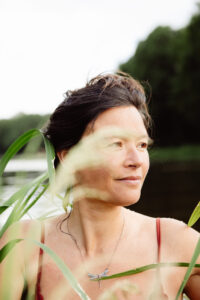
 “It’s in our human nature to enjoy flowers.” Photographer: Gabriela Hengeveld
“Flowers and people have been intertwined from the very beginning. They simply belong together”, says Silke Tijkotte, co-founder of Wilderful. “So many moments are celebrated with flowers. We enjoy them throughout the seasons – from winter’s Christmas greens to spring’s branches and tulips. Flowers symbolise the transience of life. It’s in our nature to take pleasure in them: just look at children picking them, or artists portraying them over and over again.”
Yet, there is a flipside. Conventional floriculture relies on copious amounts of synthetic fertilisers and chemical pesticides, monocultures devastate biodiversity, and the industry consumes vast quantities of water. And that’s not to mention transportation.
Uitgelichte quote
One in every four to five cargo planes arriving at and departing from Schiphol is loaded with flowers


The Impact of flowers
“The Netherlands is primarily an exporter of flowers”, Denise Collignon explains, who, along with Silke, runs Wilderful. “Around 35 percent of the flowers come from outside Europe, while we export around 85 percent ourselves. One in every four to five cargo planes arriving at and departing from Schiphol is loaded with flowers. The CO2 impact is enormous. The energy-intensive heating of greenhouses contributes too.” The true price of a bouquet of flowers is therefore much higher than what you pay for it. “If we talk about regenerating Dutch agriculture, we must not forget floriculture, which makes up ten percent of that sector”, Denise emphasises. “At this moment, not even one percent of those flowers are grown organically. That is a huge opportunity.”
Silke continues: “More and more people are becoming aware of the negative impacts of flowers and are looking for alternatives – like artificial bouquets. But in essence, flowers are beneficial for biodiversity, because they enable pollination. Without flowers, there would be no fruits, seeds or new plants. Therefore, Denise and I asked ourselves if we could unite the ecological function of flowers with the joy they bring to people.”
Uitgelichte quote
Let’s make the Netherlands a healthy flower-country, with products that restore nature


Wilderful
To learn how to grow flowers that support biodiversity, Silke started a flower garden at her parents’ place in Twente. That’s how she encountered the Slow Flowers movement and saw that it is possible to enjoy flowers that are healthy for nature. This led to the idea of Wilderful: a floral collective connecting organic growers and local florists, with the mission of making regenerative, seasonal flowers available to all and thus healing the floral sector. The organic growers Wilderful works with cultivate in harmony with nature – without synthetic fertilisers or chemical pesticides – and allow flowers to fulfill their role in the ecosystem before they are harvested, so that they can support biodiversity. Silke says: “Only after that people will enjoy their beauty.”
Uitgelichte quote
We asked ourselves if we could unite the ecological function of flowers with the joy they bring people
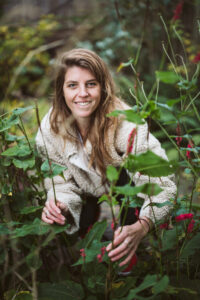
 “Let's continue to celebrate life with real and healthy flowers.” Photographer: Gabriela Hengeveld
Denise continues: “The significance of flowers is so deeply woven into our culture that we will always be drawn to them. The wonderful thing is that by choosing regenerative and seasonal flowers, you contribute to biodiversity. Before the plant reaches your vase, it has already looked after the soil, water quality and pollination. Organic growers foster life – both big and small. They plant hedgerows and create embankments where small creatures can nest, and they care for the life in the soil. Their farms truly are nature reserves, often adjacent to other nature areas, amplifying each other’s impact.”
“These growers also contribute to the transition toward healthy agriculture”, Denise adds. “We are here to support them in that shift and ensure that there’s a market for their products. If you choose these kinds of flowers, you don’t have to buy fewer. We are a flower-loving country, and I hope we remain so – but let’s be a healthy flower-loving country, with products that restore nature.”
Uitgelichte quote
Many people assume that flowers are naturally organic
Biodiversity
A crowdfunding campaign in 2024 got Wilderful off to a great start. In just one month, the organisation raised 200 percent of its target. Wilderful is moving towards steward-ownership, and florists donate a percentage of each bouquet to help Wilderful grow. “The campaign was a huge success and things have been going well since, but we also feel it’s slow going”, shares Denise. “Many people assume that flowers are naturally organic, or see artificial blooms as the best alternative. We want to show that there is a real alternative: a choice that’s not merely less bad, but actively impactful. You support biodiversity, you back organic growers and you become part of the transition toward healthier agriculture. Thankfully, we’re seeing the organic offerings from florists grow, partly because they are becoming more accessible. Via our own website, you can also order a nature-friendly bouquet with a florist in your local area.”
Silke and Denise are working tirelessly toward national coverage. They hope that in three to five years, everyone in the Netherlands can buy regenerative flowers that travel straight from an organic grower to a florist. And that by that time, 15 percent of the floriculture supply will be organic. Silke concludes: “We hope the Netherlands becomes a beacon for floral culture and organic agriculture across Europe; that the craft of florists and growers is truly valued. And – most importantly – that we can continue to celebrate life with real and healthy flowers.”
Looking for more organic and regenerative greenery? Dive into our story of pioneer Suzanne van Straaten, the co-founder of Sprinklr.
Original publication date: 5th of June 2025. Latest update: 6th of May 2026.