Zuzanna Zielínska & Anne van de Peppel
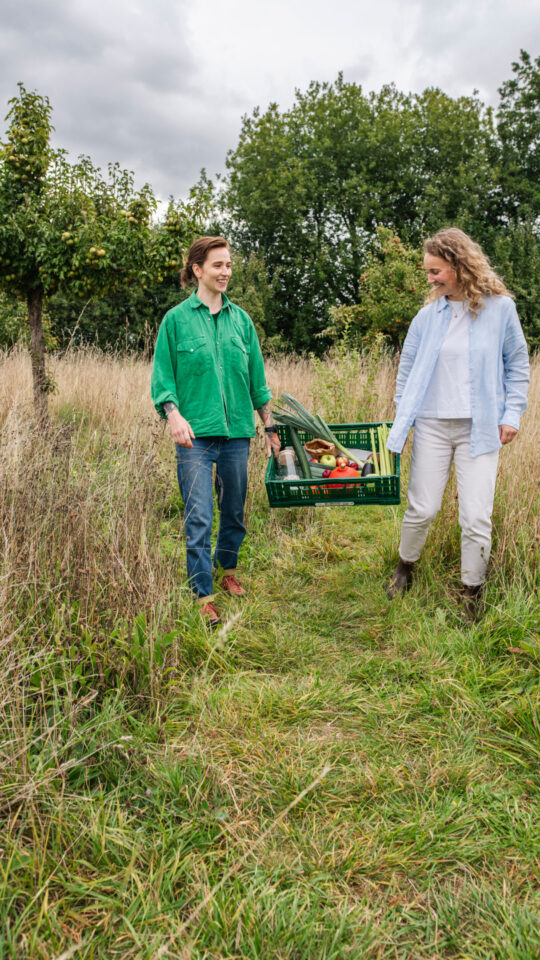
Every year, across the EU, more than €700 billion is spent treating preventable diseases. “That’s nearly 80 percent of all healthcare spending”, says Zuzanna Zielínska, co-founder of HarvestCare. Together with Anne van de Peppel, she runs food-is-medicine trials in Rotterdam to show how restoring soil and human health can go hand in hand. “Quality-of-life scores rose by nine points in just three months”, she notes. “For such a short pilot, that’s huge.”
“The Dutch healthcare system is cure-based. It’s easy to calculate the cost of treating someone, but not the value of preventing illness”, says Anne van de Peppel, who joined HarvestCare as a co-founder after a career in finance and regenerative agriculture. “As a result, the system is completely out of balance. According to the University of Leiden, by 2040 one in four Dutch workers may have to work in healthcare just to meet demand.” The sector already employs 17 percent of the workforce – over 1.7 million people – and faces the country’s most acute labour shortage. “Type 2 diabetes alone costs the Netherlands around €6 billion a year, and that figure is expected to double by 2040”, Zuzanna adds. “We’re spending the money anyway – the question is whose pockets it ends up in.”
The World Bank estimates that every euro invested in prevention yields at least 14 euros in long-term returns through avoided medical costs and increased productivity. “The problem is that prevention budgets are covered by municipalities, while the benefits go to health insurers – a structural mismatch that leaves no one accountable”, Anne explains. “Everyone agrees that food as medicine makes sense, but no one knows how to make the model work.”
Uitgelichte quote
Type 2 diabetes alone costs the Netherlands around €6 billion a year
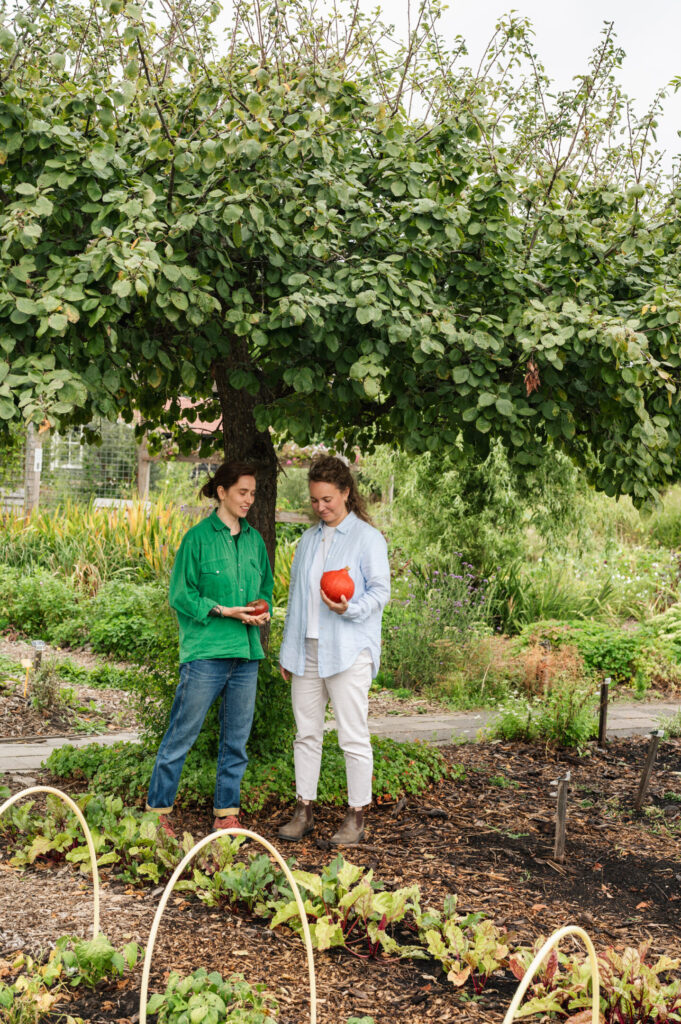 Zuzanna Zielínska: “Every year, more than 700 billion is spent treating preventable diseases in the EU.” Photographer: Gabriela Hengeveld
 “Prevention budgets are covered by municipalities, while the benefits go to health insurers.” Photographer: Gabriela Hengeveld
Food as medicine
With HarvestCare, this is exactly what Zuzanna and Anne are working to change. At its heart, the non-profit translates the rapidly growing food is medicine movement from the United States into a Dutch reality. Their Food Prescription Programme supports patients living with type 2 diabetes in Rotterdam South. Instead of only offering generic dietary advice, doctors prescribe weekly boxes of local, organic and regenerative food – and HarvestCare delivers them.
The first pilot, run in collaboration with Erasmus Medical Center in Rotterdam South, which carried out a randomised controlled trial, showed promising results. “We reduced participants’ average weight by 1.2 kilos, their BMI by 1.3, and daily calorie intake by 300”, says Zuzanna. “Quality-of-life scores rose by nine points – a statistically significant improvement. For a three-month pilot, that’s huge.”
Comparable food-is-medicine trials in the United States have shown similar results: a Massachusetts programme reduced overall healthcare spending by 16 percent in a single year, while Tufts University reported that national implementation could avert approximately 1.6 million hospitalisations in the first year alone. But numbers only tell part of the story.
Uitgelichte quote
Words and facts don’t change behaviour. Experience does
“In Rotterdam South, around 26 percent of households experience food insecurity. For many participants, the box was not only medicine – it was dignity”, says Zuzanna. “We had seven nationalities in one group,” adds Anne. “People shared recipes, photos, stories. Some said, ‘I’ve learned what it feels like to be full.’ Others said they no longer crave sweets or feel tired after lunch.”
Workshops, WhatsApp chats and communal cooking fostered social connection – an ingredient often missing from modern healthcare. “Words and facts don’t change behaviour”, says Zuzanna. “Experience does.
Uitgelichte quote
Regeneratively grown crops can contain 50–70 percent more vitamins and minerals than those from degraded soils
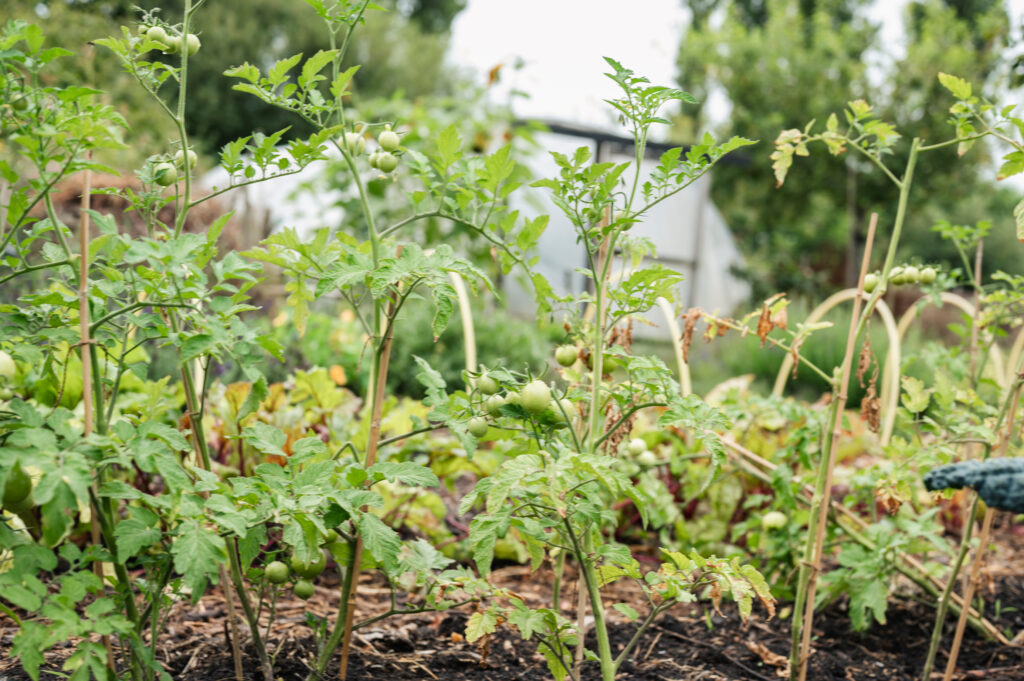 Zuzanna Zielínska: “Our carrots, potatoes and greens were tested for soil health and micronutrients.” Photographer: Gabriela Hengeveld
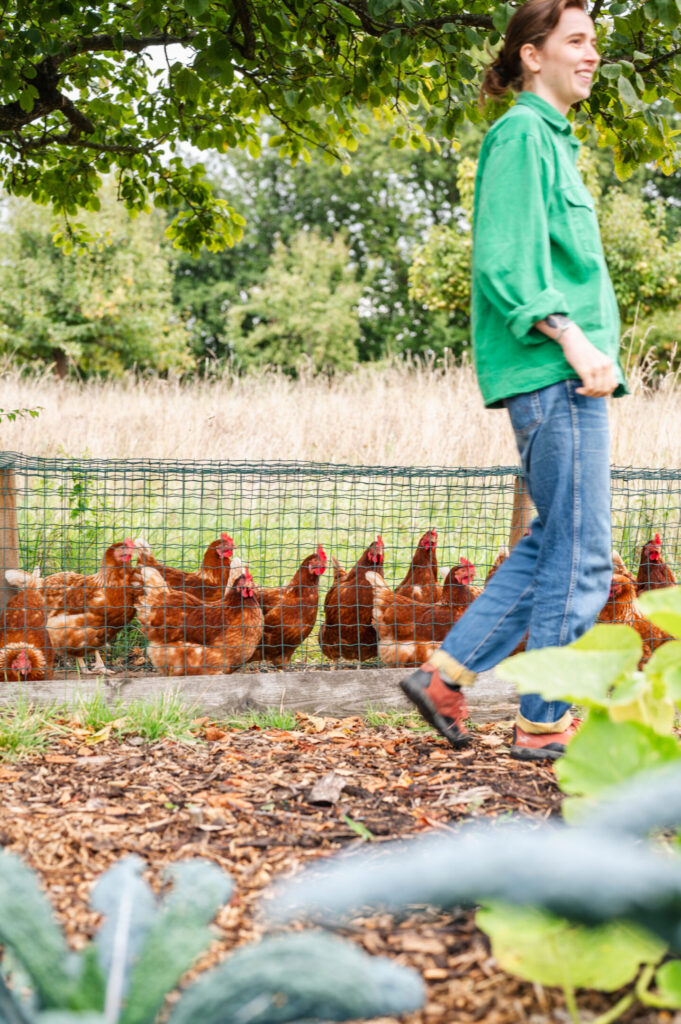 “We aim to show that farming practices directly affect nutritional value – and therefore people’s health.” Photographer: Gabriela Hengeveld
From soil to gut
During the pilot, the local organic and regenerative produce was also analysed as part of Leiden University’s Soil2Guts research. “Our carrots, potatoes and greens were tested for soil health and micronutrients”, says Zuzanna. “We aim to show that farming practices directly affect nutritional value – and therefore people’s health.”
Independent studies support this. Research by soil scientist David Montgomery found that regeneratively grown crops can contain 50–70 percent more vitamins and minerals than those from degraded soils. “People say there’s no data”, Zuzanna notes, “but there is. The question is how to connect it – soil health, food quality, health outcomes – into one system.” Anne adds: “We don’t yet have every metric, but intuitively it makes sense. Healthy soil, healthy food, healthy people.”
Uitgelichte quote
Farmers would be rewarded not only for their yields but for the nutritional value of what they grow
Where it all began
Zuzanna’s path to regeneration began in Denmark, where she studied Global Health and Nutrition. After a three-month incubator with Fresh Ventures in 2022, she founded HarvestCare. Two years later, Anne joined her as a co-founder. “My family were farmers, and the message was clear: don’t become a farmer – it’s not a sustainable life”, she says. A visit to relatives in Canada changed everything. Seeing small-scale farmers thriving through uniting their passion and their work, she quit her job in finance and spent a year apprenticing on farms. Later she joined the first training cohort at ’t Gagel, one of the Netherlands’ pioneering regenerative farms. “I thought they’d teach me how to start a farm”, she laughs. “But it was really about discovering your mission in life.”
Uitgelichte quote
Health insurers might measure success by the reduction of disease
Building an Agri-Health System
HarvestCare’s next six-month food-is-medicine trial is about to begin. But the ambition of the non-profit goes far beyond food boxes: the team is designing an Agri-Health System – a framework that aligns agriculture, healthcare, research and finance around prevention.
“An Agri-Health System recognises the impact of agriculture on healthcare”, explains Zuzanna. “It integrates policy, education and funding so that health and prevention become the organising principles.” In such a model, farmers would be rewarded not only for their yields but for the nutritional value of what they grow – closing the loop between soil and public health. “Research already shows that nutrient density depends on soil health”, says Anne. “Imagine a system that pays farmers for producing nutrition, not just calories.”
Hospitals could source directly from regenerative farms; medical curricula could include soil science; insurers might measure success not by the number of treatments, but by the reduction of disease. “We don’t want to build another niche project”, says Zuzanna. “We want to build a new pillar of the health system.”
Uitgelichte quote
Private funders provide the capital upfront and are repaid by public institutions based on measurable results

Financing regeneration
To scale their vision, HarvestCare is developing an Agri-Health Impact Bond – a financial mechanism that links private investment to public health outcomes. “Private funders provide the capital upfront”, explains Anne, “and are repaid by public institutions based on measurable results – like improved blood-sugar levels or reduced healthcare costs.” The model takes inspiration from social-impact bonds but roots it in healthcare and soil. “This way”, adds Zuzanna, “we align all the wheels – the financial sector, the farmers, the healthcare system. Everyone shares both the risk and the reward.”
Alongside this, they are launching an Agri-Health Action Lab – a space where policymakers, doctors, farmers and insurers can experiment together through round tables, webinars and farm visits. “In the US they’re about ten years ahead”, says Anne. “Here in Europe we need a space to learn together – to make this real.”
Uitgelichte quote
We’re part of a global movement working to reconnect health with the soil
 Anne van de Peppel: “Our vision: healing landscapes, healing people.” Photographer: Gabriela Hengeveld
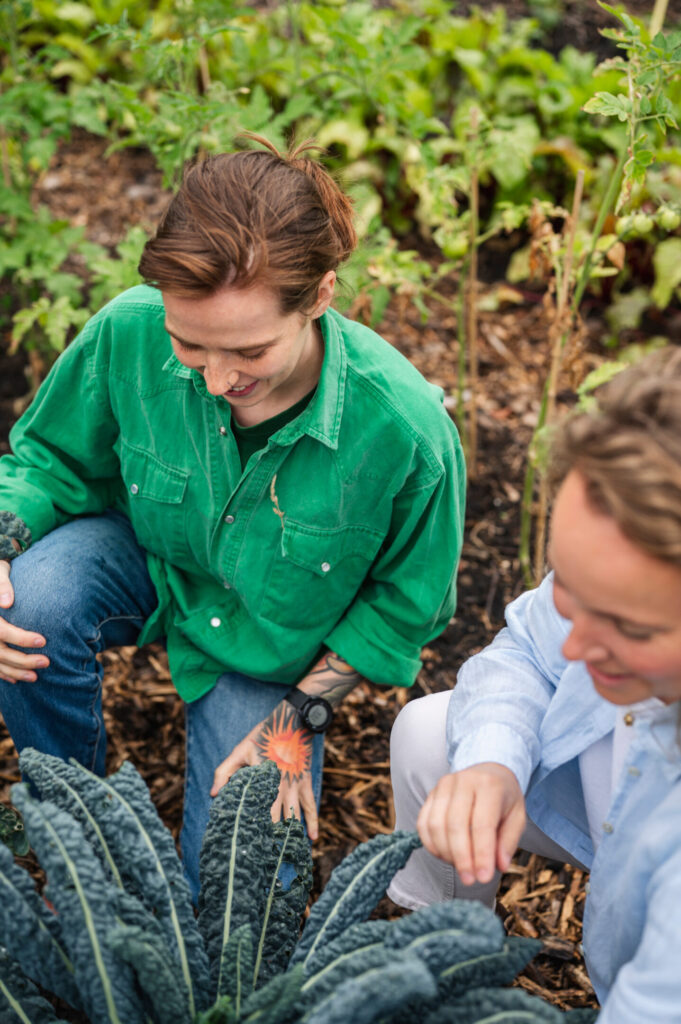 Zuzanna Zielínska: “It helps to know we’re not alone.” Photographer: Gabriela Hengeveld
Hope
“For me”, says Zuzanna, “it helps to know we’re not alone. There are people doing this in Rwanda, in Canada, in the US – we’re part of a global movement working to reconnect health with the soil.”
Anne nods. “Sometimes impact feels slow. You spend a whole year helping twenty people and wonder – is it enough? But then someone says, I feel good again, or a medical partner reaches out. You realise others are joining the mission. And with that, our vision – healing landscapes, healing people – comes a little closer.”
Also read our interview with Marco van Es about the impact of soil microbes on our health.
Original publication date: 20th of November 2025. Latest update: 8th of January 2026.