Leen Gorissen: “Of all Earth’s species, we humans are probably the biggest amateurs”
“Whales, plankton, fungi, trees, wolves – all of them leave our planet better off than before, and they’ve been doing this for hundreds of millions of years”, says biologist Leen Gorissen. This is why she advocates for Natural Intelligence: to align with and embody the wisdom of living systems, including in how we design our economies. “Only what is reciprocal, regenerative and resilient can last over the long haul.”
You grew up with a strong sense of connection to nature. How did that shape your worldview?
“As a child, I loved spending time in our garden – especially in the wild parts, because there was always something to discover. I found animals to be magnificent beings and was deeply impressed, even at a young age, by how elegant, intelligent, and skilled they are. For me, nature felt like a sanctuary: so intricately designed that it automatically demanded respect.
When teachers in primary school said that humans are the most intelligent species and better than all other life, every cell in my body protested. I never accepted the idea that humans are inherently superior. My own experiences had given me a different outlook, one that echoes the kincentric worldview of many indigenous cultures: everything is unique, everything is related and everything deserves respect. To me, animals weren’t second-class beings – they were kin.
That sense of kinship led me to study biology, and later to pursue a PhD in ecology. A deep curiosity about the more-than-human world has shaped my thinking ever since.”
Uitgelichte quote
Natural intelligence is the intelligence of life itself
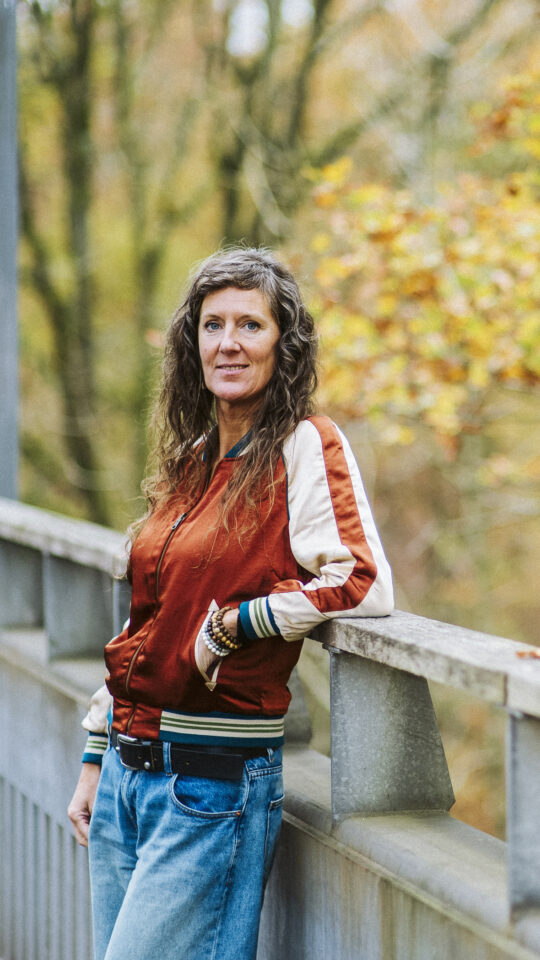
 Leen Gorissen: “To me, animals weren’t second-class beings, but kin.” Photographer: Gabriela Hengeveld
 “When teachers in primary school said that humans are the most intelligent species and superior to all life, every cell in my body protested.” Photographer: Gabriela Hengeveld
You work with the concept of Natural Intelligence. What does it stand for?
“For me, Natural intelligence represents the intelligence of life itself. It is the art and the science of leaving the Earth healthier, wealthier, more vibrant and more viable than before – without pollution, depletion or degradation.
If you look across the full sweep of 3.8 billion years of evolution, a pattern emerges that is as old as life itself: the species that persist, despite millions of years of upheaval and disruption, are the ones that leave the planet better than they found it. Whales cool down the climate. Fungi make rain. Termites green deserts. The species that endure the longest are not the strongest or the smartest, but those that contribute to the greater whole – they are world-makers, not world-breakers.
This shows that the intelligence of life is not focused merely on survival, sustainability or efficiency, but on regeneration – the continual improvement of living systems to higher orders of mastery and viability. That is because life invests in conditions that are conducive to life. This offers us a different perspective on innovation, because today we are doing the exact opposite.
Natural intelligence, therefore, is about the science and logic of living systems: how they become more, do more and achieve more over time. This speaks to the fact that living systems create the opposite of entropy: they create more order, more integration, and more capability.”
Uitgelichte quote
Regeneration is an evolutionary process – not a return to the past, but a forward movement towards something better
 Leen Gorissen: “Whales cool the planet, fungi make rain, termites green the desert.” Photographer: Gabriela Hengeveld
 “Only what is reciprocal, regenerative and resilient can endure.” Photographer: Gabriela Hengeveld
What is the difference between Natural Intelligence and biomimicry?
“Biomimicry is usually applied as a design approach in which we imitate nature to solve human problems. For example: can owls teach us how to make wind turbines or fans quieter? The difference with Natural Intelligence lies in the depth of our relationship with life itself: are we looking at nature from the outside, in order to copy her, or are we learning to participate from within: to join her logic and her evolution?
In other words, nature is no longer the backdrop for human activity – something to be imitated, managed, or controlled – but a full and wise partner in co-creation and co-evolution.”
Uitgelichte quote
Nature never returns to a previous state
Why is Natural Intelligence inherently regenerative?
“Regeneration is often confused with restoration, but nature never returns to a previous state. When a forest burns, the new forest that grows back does not replicate the old one – it evolves into something different, better equipped to deal with fire in the future.
That is because living systems don’t just grow physically – they grow up. They mature over time and learn to better deal with change, complexity and disruption. That is the essence of regeneration: a system becomes more, can do more, and can accomplish more over time. It’s about growing a higher order of capability and mastery. Regeneration is, in that sense, an evolutionary process – not a return to the past, but a forward movement towards something better.
Understanding how living systems work yields important insights. For example, living systems do not ‘fix’ problems; they develop new capabilities in which the original ‘problem’ ceases to be a problem. Working regeneratively thus means we begin from a different starting point: not from a problem, but from potential. What could this become if its full potential were allowed to unfold?
Think of learning to drive a car: you have to look in the direction you want to go, not at the obstacles. Focus on the obstacles, and you’ll steer straight into them. Innovation works the same way. Yet we keep fixating on the problems, and in doing so, we lose sight of where we actually want to go.”
Uitgelichte quote
Biology is the oldest economy we know
In which direction should we be moving – for example, in the economy?
“It’s not that complicated: we need to replace the self-destructive logic of our Western economy with the life-enhancing logic of living systems. And that begins with our worldview. Humans are not a superior species that are separate from or better than nature, but an interwoven species. Or, like Thich Nhat Hanh beautifully puts it: ‘We are interbeings.’ We are not the rulers of this planet but part of a living landscape, which means we have a responsibility to contribute value to that landscape. Something that indigenous wisdom keepers have been trying to teach us for centuries.
When we take that principle seriously, our motivations shift dramatically. The economy no longer revolves around the question ‘What can we extract from the Earth?’, but around ‘What can we contribute?’ In nature, every part adds value to the whole it belongs to – and in doing so, it receives nourishment in return. That is the foundation of value creation that can endure over the long term.
Seen this way, biology is the oldest economy we know – one that has thrived for billions of years by continually enriching the Earth rather than exhausting her.”
Uitgelichte quote
Only what is reciprocal, regenerative and value-adding can last over time
 Leen Gorissen: “Are we looking at nature from the outside to copy her, or learning to take part from within – in her logic and evolution?” Photographer: Gabriela Hengeveld
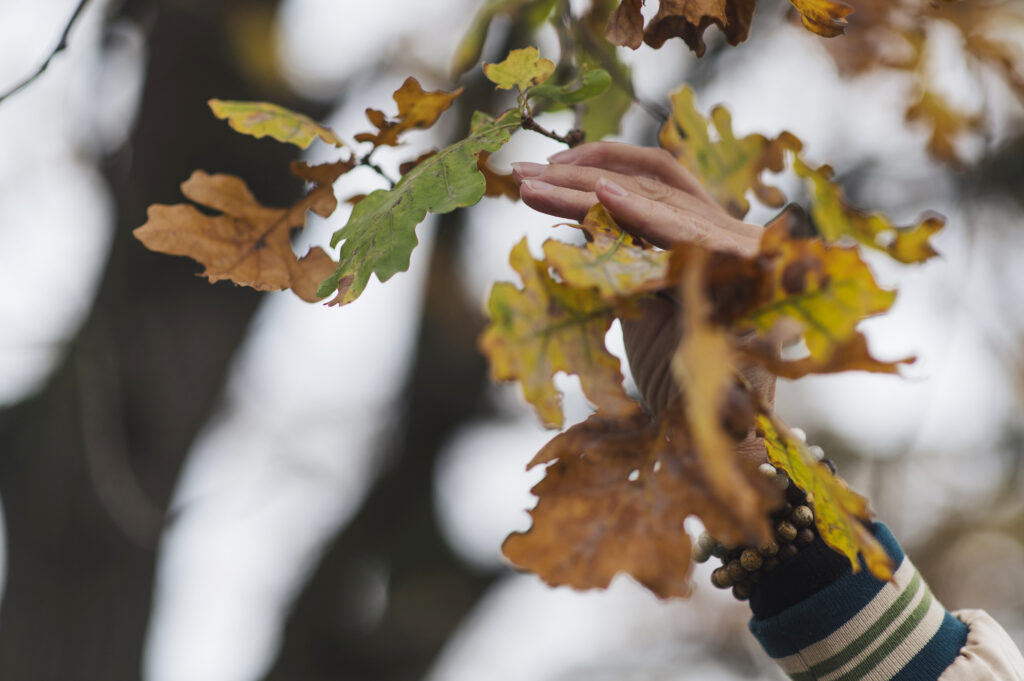 “We need to replace the self-destructive logic of our Western economy with the life-enhancing logic of living systems.” Photographer: Gabriela Hengeveld
You often use the human body as a metaphor for a living economic system. Why?
“Yes, because the human body can only remain healthy when there is a balanced economy of interests between the parts and the whole. A body has no ‘rich’ or ‘poor’ cells or organs; no part of a healthy body thrives at the expense of another. Vitality resides in the whole, not in its individual components.
As long as the body is healthy, its ecology and economy are one: there is no conflict. The same is true for every healthy living system – your community, the organisation or company you are part of, the landscape, the bioregion in which your city is embedded. Even the largest living system we know, our planet, operates according to this same logic.
Our current economy, however, behaves as if it stands apart from ecology and from the planetary body it is nested in. The only other entity that does this is a cancer cell. A cancer cell has just one objective: growth – without regard for, or contribution to, the body it inhabits. That is the essence of a terminal system. Because only what is reciprocal, regenerative and value-adding can last over time.
So, the question of our time is: can we draw on the science of living systems to meet our greatest challenges, or will we continue to cling to an outdated paradigm that is good at managing parts, but blind to wholes?”
Uitgelichte quote
The partnership between trees and fungi has been functioning for more than 300 million years
What does all of this mean for companies and organisations?
“Most companies operate as if they exist in a vacuum, just like our economy. They don’t add value to their surroundings – they extract it. The Earth is often their largest investor yet receives nothing of value in return. What she does get are harmful side-effects.
This remains a major blind spot. We have been conditioned to think only in terms of direct effects: A leads to B, B leads to C. But every action also produces indirect effects. The by-product of burning fossil fuels is climate disruption. The by-product of producing plastic is an ocean filled with microplastics which disturb marine oxygen production.
But it does not have to be that way. The partnership between trees and fungi has been functioning for more than 300 million years. Trees convert sunlight into sugars. Fungi have no access to sunlight, but can obtain minerals from the soil and so they trade these minerals for sugars. This alliance between fungi and trees means that together they can access far more resources than they could on their own. But that is not the main thing. Their symbiosis produces a whole range of beneficial by-products: more life, air to breathe, food to eat, medicine to heal and materials to build.
In short, the trade system that drives forest growth leaves the entire planet better off. Now imagine what we can achieve if our economy learns to function in the same way: every relationship reciprocal, every part investing in the whole, every by-product beneficial to life. That is the logic of living systems – and the kind of economy that can endure over the long haul. Because in healthy systems, no species lives solely for itself.”
Uitgelichte quote
We are no cogs in the machine
 “Life develops new capabilities so that the ‘problem’ ceases to be a problem.” Photographer: Gabriela Hengeveld
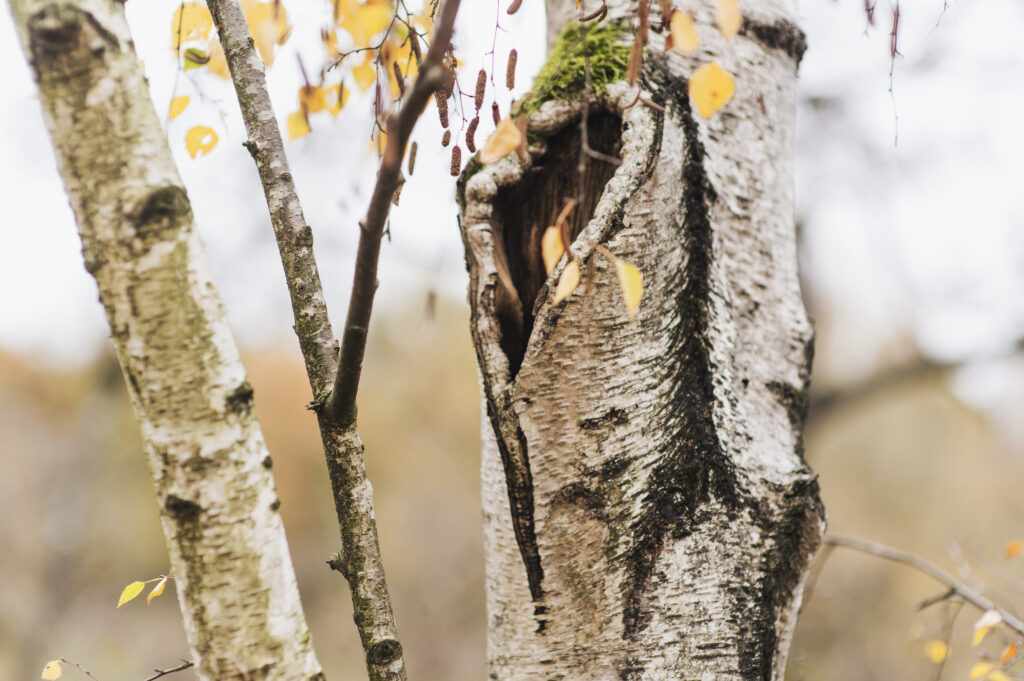 Leen Gorissen: “We are not rulers of this planet, but part of a living landscape.” Photographer: Gabriela Hengeveld
In your book Natural Intelligence, you write that self-organisation is crucial.
“That’s another insight from Natural Intelligence. In nature, living systems carry out complex tasks without top-down hierarchy or central management. There is no queen bee assigning responsibilities, no conductor-starling issuing instructions during a murmuration – that spectacular flock dance of hundreds or thousands of birds. There is no CEO directing zebras or gazelles during their annual migration.
Self-organisation works because each individual follows a specific set of simple rules: no central authority is needed. And yet, from these simple rules emerges complex, coordinated and adaptive behaviour. Simple rules represent a kind of source-code for self-organisation: they enable collective intelligence without hierarchy and show that complexity does not require complex governance – only clear, shared local intentions, agreements and actions.
Simple rules that can help organise our work are, for example: ‘Add value to the larger system you are part of’’ and ‘Work in relationship, not in isolation’. These simple guidelines give the system the space it needs to organise itself – and prevent it from getting stuck in rigid rules and protocols that drain motivation, energy and joy. After all, we are no cogs in a machine.
This matters because every living system – whether an animal, a person or a place – carries a unique essence, and that essence can only flourish when it is allowed to express itself, not when it is forced into uniformity. That’s why regenerative work always begins with the core question: What is the unique essence of the living system you are working with? Every place, organisation or community demands its own approach. Forget best practices: life does not tolerate cookie-cutter solutions.”
Uitgelichte quote
Embrace not-knowing as a source of insight
This requires thinking in complexity. Why do we find this so difficult?
“Complexity asks us to live with paradox, to rely on relationships rather than control, and to embrace not-knowing as a source of insight. That calls for inner maturity: the ability to hold tension without rushing to resolve it.
Future-oriented thinking is therefore developmental thinking. How can we, as humans, grow in maturity so we can navigate complexity with greater skill and discernment, without slipping into binary thinking? How can we become more caring and responsible for the health of the living systems we are part of? And which capabilities must we cultivate to reclaim our role as a keystone species? Because we cannot transform our external systems without changing ourselves internally.”
Uitgelichte quote
I am astonished by how many outdated ways of thinking we continue to teach

Which sectors, in your view, are most ready to become regenerative?
“Regeneration begins with unlearning degenerative ways of thinking and acting, and adopting new ways of seeing, understanding and planning. For me, regeneration therefore starts with education.
Every day, I am astonished by how many outdated ways of thinking we continue to teach. We still teach toxic chemistry, we still teach that nature is something separate from humans, and we still teach economic thinking that inevitably leads to degradation.
At the same time, we have become so disconnected from our places and our environments that we urgently – and at scale – need to come home to our own planet. Right now, we behave as if we do not belong here. Becoming indigenous to place is therefore essential.”
Uitgelichte quote
What is it that we humans need to do to strengthen its vitality, so that it can contribute to a healthy planet Earth?
How do we put that into practice?
“We have to learn to truly know our places as a living system again: how did it come into being – geologically, hydrologically, biologically, and culturally? What role does it play within the larger whole? And what is required of us, as humans, to enhance the vitality and viability of that place?
When we researched this so-called ‘Story of Place’ of our regeneration project in France, we discovered that it is part of a source landscape: a place where streams and rivers are born. Such places play a crucial role in water cycles, and those water cycles in turn shape climate regulation. Whatever we do there can either disrupt or strengthen that role. With that understanding, we can organise ourselves in a way that places these planetary processes at the centre of our activities. It shifts the focus from an ‘economy of scale’ towards an ‘economy of place’-logic: a local economy that works in harmony with the planet.
It all begins with a set of simple but fundamental questions: How did this place come into being? What is its significance in the larger whole? And what is it that we humans need to do to strengthen its vitality and value-adding capability, so that it can contribute to a healthy planet Earth?”
Uitgelichte quote
Which capabilities must we cultivate in order to reclaim our role as a keystone species?
What would you say to young pioneers beginning regenerative work?
“Regeneration is not about restoring ‘nature out there’; it’s about reclaiming our relationship with it. So, it doesn’t begin with doing, but with awakening – with remembering that you are part of a much larger web of life and that you have a unique contribution to make within this web.
Ask yourself: Where does my talent come into service for something larger? Which unique value can you add to the living system to which you belong? When you do that, every action becomes a way of supporting the greater process of life itself.”
Uitgelichte quote
I realise that I have no control over how the future will unfold
And finally: how do you stay hopeful in a time when so many people see only threats?
“I try to consciously step back from the misconceptions and pitfalls of our time, and to focus my attention on my role within the larger whole. I realise that I have no control over how the future will unfold, but I do have influence over what I choose to do here and now – and how I do it.
My focus, therefore, is not on how things will turn out, but on whether I have done what I needed to do. That understanding creates space: it replaces powerlessness with engagement, and hopelessness with meaning.”
Want to learn more? Dive into our interview with Kees Klomp, who pleads for Ecoliberalism.
Original publication date: 11th of December 2025. Latest update: 13th of January 2026.
Who is Leen Gorissen?
Leen Gorissen (1976) is a biologist, researcher and author, and the founder of Centre4NI, an organisation that supports companies, governments and communities in applying Natural Intelligence. Her work centres on the idea that life itself – through species that have survived for hundreds of millions of years – offers a compass for innovation, organisation and economy.
In her book Natural Intelligence, she shows how living systems foster regeneration and how organisations can learn from them. Her approach invites a fundamental shift: from seeing humans as the rulers of nature to seeing them as participants in living systems.
READ MORE:

Nora Bateson: “How our ways of knowing shape our collective future”
8 April 2026