Marco van Es: “The impact microbes have on our health is one of the most important discoveries of the past 200 years”

Bacteria are not our enemy – they’re our allies. Losing touch with these invisible companions has profound consequences for our health. Marco van Es, founder of the Dutch foundation Bac2nature, is on a mission to make the link between microbial diversity and human wellbeing more widely understood. “The impact microbes have on our health is one of the most important discoveries of the past 200 years.”
“We don’t see them, but our skin and every part of our body is teeming with bacteria and fungi. Your gut alone contains roughly as many bacteria as there are cells in your body – and they’re essential to your health. The way it all works is mind-blowing. But we know far too little about it. That needs to change.”
For 22 years, Marco worked at a company developing probiotics for medical nutrition and supplements. Leading its innovation division, he searched for novel bacterial strains that could support people with intestinal and immune-related conditions like asthma, allergies, and diabetes. Increasingly, his work focused on the gut-brain axis: the relationship between the gut microbiome and mental disorders such as depression, anxiety, autism, Parkinson’s disease, and multiple sclerosis.
“As an innovation team, we were always on the lookout for the latest insights into a healthy microbiome”, he recalls. “Which bacteria do you want in your gut, and which are missing when someone is ill? More specifically: which bacterial species represent functions that are absent – and as a result, make you sick? We were looking for biomarkers: indicators of healthy or unhealthy gut function. One thing stood out again and again: microbial diversity. A gut rich in diverse bacteria is strongly associated with resilient health. What we’re seeing is that people with so-called ‘diseases of affluence’ tend to have a far lower microbial diversity than those who are healthy.”
Uitgelichte quote
We don’t see them, but our skin and every part of our body is teeming with bacteria and fungi
 Photographer: Gabriela Hengeveld
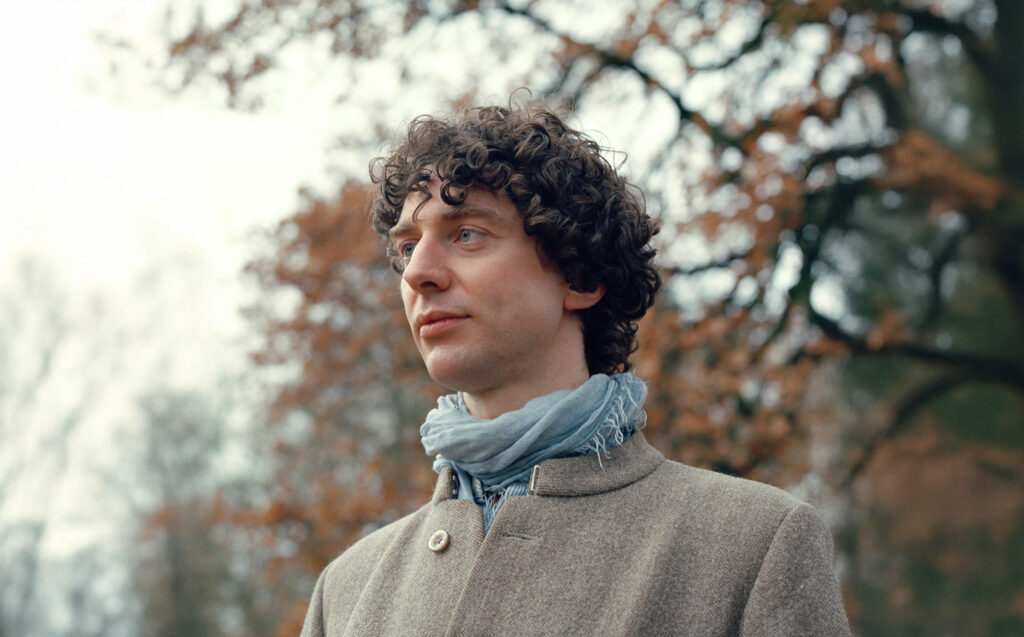
 Marco van Es: “We don’t see them, but our skin and every part of our body is teeming with bacteria and fungi." Photographer: Gabriela Hengeveld
The Hadza
Everything clicked for Marco when he attended a lecture by microbiome researcher Jeff Leach. His research showed that the Hadza people – a hunter-gatherer community in East Africa who live in close connection with the land – have a far more diverse gut microbiome than people in industrialised nations. Autoimmune diseases that are rapidly rising in the West, such as asthma, allergies, diabetes, and IBS, are virtually unheard of among the Hadza.
“It suddenly made so much sense”, Marco says. “These people live close to the soil – the richest source of microbes in both abundance and variety. Here in the West, we no longer live in nature, we eat less and less from the land, and we keep inventing new ways to further distance ourselves from the ground beneath our feet. That can only lead to a decline in the diversity of our own microbiome, and to an underdeveloped immune system. With the way we’re living now, we are collectively becoming more fragile.”
Uitgelichte quote
80 percent of our immune system is located in the gut
 Photographer: Gabriela Hengeveld
 Marco van Es: "We now know that coming into contact with more and more different microorganisms is key to our health." Photographer: Gabriela Hengeveld
Symbiosis
“Our bodies are symbiotic systems”, Marco explains. “We are a collaborative organism, hosting trillions of bacteria, viruses, yeasts and fungi: all part of our gut and skin microbiome. And 80 percent of our immune system is housed in the gut. That immune system needs both a high number and a high diversity of microorganisms to thrive.”
“Ever since the 19th century, bacteria have had a bad reputation because we discovered some of them cause disease. But those are a tiny minority. Hygiene practices meant to protect us from those pathogens have given us great health benefits, but we’ve gone too far. Over-sanitisation is now depriving us of contact with beneficial microorganisms. And that’s fuelling a surge in autoimmune conditions.”
Uitgelichte quote
We need to reconnect with the soil: eat raw, unprocessed fruits and vegetables grown in biodiverse fields
“We now know that coming into contact with more and more different microorganisms is key to our health”, Marco says. “It’s important to distinguish between quantity and diversity. A packet of probiotics or a glass of kefir might contain billions of bacteria. But the diversity in a teaspoon of healthy soil? That can range from 10,000 to 50,000 species. Far more than food safety regulations currently allow in our diets.”
“To encounter that diversity, we need to reconnect with the soil: eat raw, unprocessed fruits and vegetables grown in biodiverse fields. If we want to train our immune system, we need to return to the earth. Everyone’s talking about probiotics, fermentation (which gives you many bacteria), and fibres (which feed them) — but hardly anyone looks at the microbial biodiversity of our environment.”
“When I first heard about this, I’d been working on the microbiome and health for 20 years — and I had no idea. That blew my mind. After going on an expedition with Jeff Leach to Tanzania, I knew: this is what I want to dedicate the next chapter of my career to.”
Uitgelichte quote
Organic apples host a far greater diversity of bacteria than conventionally grown ones
From sabbatical to soil health foundation
In 2020, Marco took a six-month sabbatical to explore the relationship between microbes in nature and human health. He read about babies instinctively training their immune systems by putting soil in their mouths. He learned that organic apples host a far greater diversity of bacteria than conventionally grown ones – and that rocket grown in open fields contains far more microbial species than rocket cultivated in vertical farms. Some of those bacteria appear to directly benefit our gut flora.
He also came across a Finnish study showing that children with frequent exposure to soil have significantly lower rates of asthma and allergies. While the findings are still being further explored, Marco finds the hypothesis convincing: the more biodiverse the growing conditions – meaning crops are cultivated in healthy, microbially rich soil – the more microbially diverse the food becomes, and the more it supports human health. But intensive farming practices, he warns, are stripping the soil of its microbial richness. “Healthy soil is becoming increasingly rare.”
A Dutch cress grower once told him: ‘If you can scientifically prove that growing in biodiverse open ground improves health, I’ll switch to organic.’ “That was the trigger,” Marco says. “I knew I needed to start a foundation so I could access funding to help make that evidence irrefutable.”
Through Bac2nature, he now focuses on two goals: sharing existing knowledge about the relationship between environmental microbes and human health with professionals, and stimulating new research where gaps still remain. The ultimate aim? To improve the health of both people and planet.
A recent example of Bac2nature’s work is bringing the Finnish asthma and allergy programme to the Netherlands. In Finland, children spend the first thousand days of their lives in close contact with the natural world – and their risk of developing asthma or allergies is drastically lower as a result.
Uitgelichte quote
Intensive farming practices are stripping the soil of its microbial richness
 Photographer: Gabriela Hengeveld
 Marco van Es: "Intensive farming practices are stripping the soil of its microbial richness.” Photographer: Gabriela Hengeveld
Inseparable from the natural world
“Over the 25-plus years I’ve worked with microbes, I’ve become increasingly fascinated by their influence on our health”, Marco reflects. “What makes it so exciting is that we’re discovering more every day – and the evidence is growing that microbial diversity, and our contact with it, are crucial for building a resilient immune system. It shows us something fundamental: whether we like it or not, we are inseparably connected to nature. I believe that if more people would accept and feel that connection, we would treat the planet very differently — because we would understand that we are part of it.”
“These are dark times, but I find hope in the perspective of nature-inclusive thinking: about ourselves and our surroundings. It’s encouraging to see more people getting involved with regenerative agriculture, and with biodiverse, nature-inclusive farming. At Bac2nature, we’re strengthening the bridge between those practices and human resilience. I am certain that these insights will lead to a healthier world.”
Want to know more? Also read our interview with bestselling author and biologist Merlin Sheldrake.
Original publication date: 19th of December 2025. Latest update: 31st of March 2026.

READ MORE:
Merlin Sheldrake: “What we’re blind to, we tend to take for granted – we ignore it, or we destroy it”
15 September 2025