Re-growth: eight thinkers on how our economies can help life flourish

Nothing in nature grows endlessly. Our economy, however, has been built on a different logic. What might happen if we learned to grow differently? From Jeremy Lent to Vandana Shiva and Joyeeta Gupta, these eight thinkers trace the contours of re-growth: not just more of everything, but more of what allows life to thrive.
Jeremy Lent – putting the economy back in its place
Before deciding on how we can grow, Jeremy Lent argues, we need to reconsider the place the economy occupies in our imagination.
Western societies have come to treat the economy as the system on which everything else depends. But this picture, Lent argues, turns reality upside down. The economy does not contain society or the natural world; it exists within them. It depends entirely on healthy soils, stable climates, functioning ecosystems, human relationships and forms of work and care that rarely appear on a balance sheet.
“The economy is not the centre of everything – it’s embedded within the wider system of life,” he says. “What we need is a Copernican shift: to understand the economy as one small subsystem of the living Earth, rather than the organising principle around which life must revolve.”
Once we make that shift, the central question changes. Instead of asking how to keep the economy growing, we can ask what prosperity actually consists of.
For Lent, re-growth begins by putting the economy back in its place. Growth is no longer an end in itself. The goal is to create the conditions in which people, communities and the more-than-human world can flourish – and an economy that serves that wider purpose.
Uitgelichte quote
The economy is one small subsystem of the living Earth
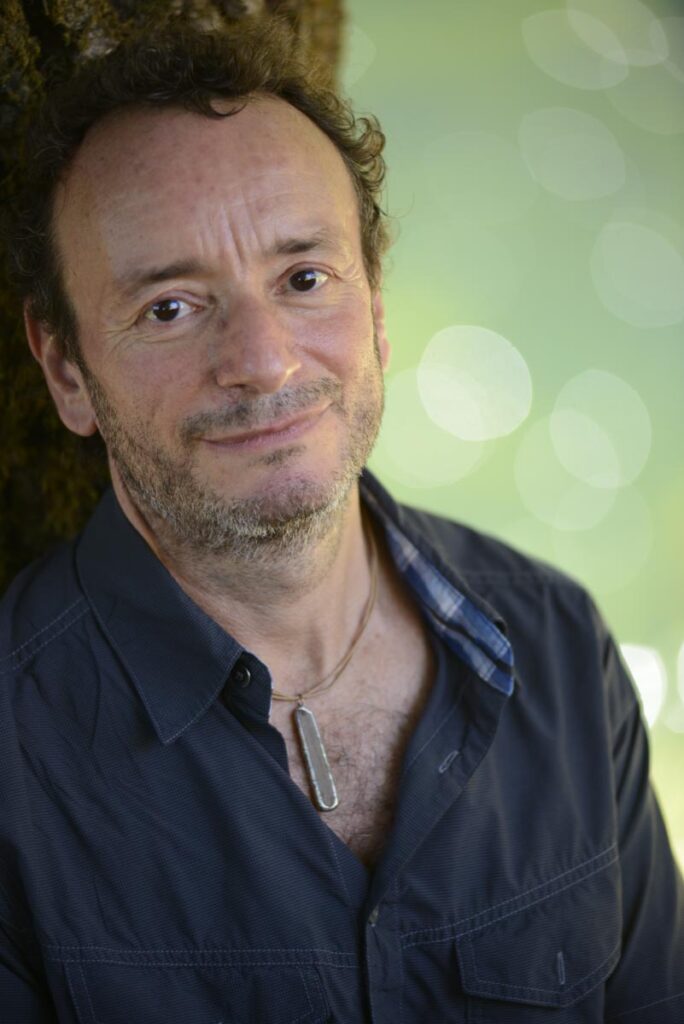 Jeremy Lent: “Instead of asking how to keep the economy growing, we can ask what prosperity actually consists of.” Photographer: Philip Saltonstall
 Photographer: On a hazy morning
Vandana Shiva — creating an economy that multiplies life
If Jeremy Lent puts the economy back within the living Earth, Vandana Shiva asks us to model it on the way life itself works.
The dominant economy, she argues, rests on the “dead Earth assumption”: the belief that soil, water, seeds and forests are lifeless resources waiting to be turned into commodities.
A living economy reverses that logic. “Living economies are economies that create, multiply and regenerate life,” she says. Seeds multiply, fungi exchange nutrients with plants and birds pollinate trees: value is created through relationships that allow life to renew itself. Humans are not its masters, but participants in a much larger living system.
This also requires a different understanding of abundance. Our current system promises abundance through limitless consumption, yet leaves behind depleted soils, indebted farmers and wealth concentrated in fewer hands. A living economy begins instead with enoughness and reciprocity. “The more you give to the soil, the more the soil gives back to you.”
For Shiva, re-growth means moving from an economy that creates wealth by depleting life to one that creates value by regenerating it. The question is no longer only whether an enterprise is profitable, but what becomes more alive because it exists.
Discover more in our full interview with Vandana Shiva.
Uitgelichte quote
A living economy begins with enoughness and reciprocity
 For Vandana Shiva, re-growth means moving from an economy that creates wealth by depleting life to one that creates value by regenerating it. Photographer: Gabriela Hengeveld
 “Living economies are economies that create, multiply and regenerate life.” Photographer: Gabriela Hengeveld
Hans Stegeman — ending the compulsion to grow
Building an economy that multiplies life requires us to confront an uncomfortable reality: our present system cannot simply choose to stop growing.
According to economist Hans Stegeman, growth is no longer primarily pursued because it improves people’s lives. Beyond a certain point, rising economic output contributes little to happiness. Yet companies need increasing revenues, governments depend on expanding tax bases and financial markets expect returns. Growth has become less a route to prosperity than a condition for keeping the system functioning.
This dependence also makes the economy inherently extractive. “A growth-dependent system is by definition extractive, socially and ecologically,” Stegeman says. Without a continuous flow of materials, energy and consumption, growth falters – threatening jobs, debt repayments and financial stability. We therefore sustain the system, even as its ecological foundations erode.
Stegeman does not claim to have a single model to replace it. The economy is a complex social system, and he distrusts anyone who says they possess the complete solution. But its priorities can be reversed.
Instead of setting a desired growth rate and trying to limit the damage afterwards, we can begin with ecological boundaries and optimise within them for wellbeing, fairness and resilience. “The financial system is a derivative of economic activity, not the other way around,” he says.
This is the degrowth at the heart of re-growth: not shrinking everything indiscriminately, but ending the demand that everything must expand. It allows extractive industries to contract while communities, cooperative enterprises and activities that support wellbeing flourish.
Explore Hans Stegeman’s full argument in our interview.
Uitgelichte quote
Growth is no longer primarily pursued because it improves people’s lives
 Photographer: Sabine Rovers
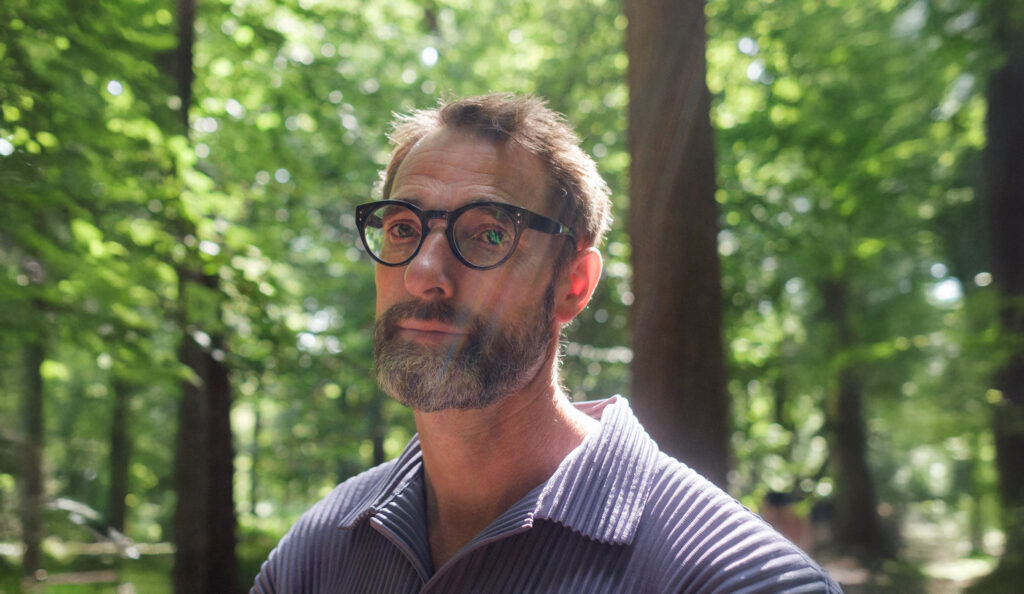 Hans Stegeman: “We sustain the system, even as its ecological foundations erode.” Photographer: Sabine Rovers
Joyeeta Gupta — who gets to grow?
Once we accept that not everything can continue growing, we face a question economics has long avoided: who must reduce their claim on the Earth, and who should still have room to grow?
For climate justice professor Joyeeta Gupta, climate change is not merely an environmental crisis, but a distributional one. The atmosphere can absorb only a limited amount of additional carbon, yet we have never agreed how that remaining budget should be divided between countries, companies and individuals.
In practice, ecological space is not shared according to need, but claimed by those with the greatest wealth. The richest have vastly larger footprints, while communities that contributed least to climate change are often the most exposed to its consequences. “Those who can afford it are allowed to pollute,” Gupta says. “But no matter how rich you are, you cannot buy your way out of this.”
Re-growth therefore cannot prescribe the same path for everyone. “Worldwide, rich countries must reduce their emissions much faster, creating space for countries that still need to develop,” Gupta argues. Within countries, too, those who consume the most must carry more of the transition.
A just economy must ask not only how much growth is possible, but whose needs it serves, who bears its costs and whether it protects everyone’s right to a liveable planet.
Explore Joyeeta Gupta’s full vision for a just transition.
Uitgelichte quote
Rich countries must reduce their emissions much faster, creating space for countries that still need to develop
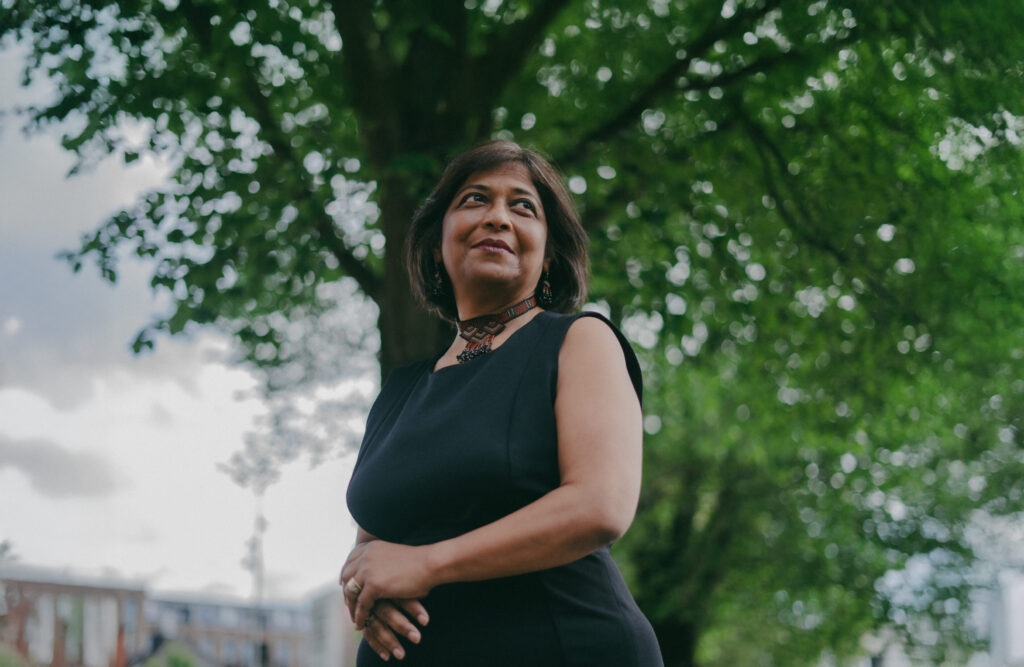 Joyeeta Gupta: “Climate change is not merely an environmental crisis, but a distributional one.” Photographer: Renata Chede
 “Who must reduce their claim on the Earth, and who should still have room to grow?” Photographer: Renata Chede
Leen Gorissen — growing up instead of growing bigger
Once ecological space has been distributed more fairly, the question remains: what kind of growth should take place within it? Biologist Leen Gorissen offers an answer by looking at the oldest economy we know: the living world itself.
For 3.8 billion years, the species that endure have been those that strengthen the larger systems of which they are part”, Gorissen argues. “Whales cool down the climate. Fungi make rain. Termites green deserts.”
Gorissen calls this Natural Intelligence: the intelligence through which life continually creates conditions for more life. It offers a radically different model of value creation: instead of asking what we can take from the Earth, she argues, the economy should ask: “What can we contribute?”
This also changes how we understand growth. Living systems do not grow physically forever. A forest does not remain in an endless phase of expansion, nor does a healthy adult body continue increasing in size. Living systems mature. They become better able to respond to disruption, maintain relationships and support the vitality of the whole.
“They don’t just grow – they grow up,” Gorissen emphasises. Regeneration is therefore not a nostalgic attempt to return to an earlier state, but an evolutionary process through which a system becomes more capable of meeting the future.
This distinction is central to re-growth. The aim is not to maximise the physical size of the economy, but to deepen its capacity to care, adapt, cooperate and contribute to the larger systems of which it is part. It does not mean producing more, but becoming more: more mature, resilient and beneficial to the living world.
Dive into our full interview with Leen Gorissen.
Uitgelichte quote
It does not mean producing more, but becoming more: more mature, resilient and beneficial to the living world
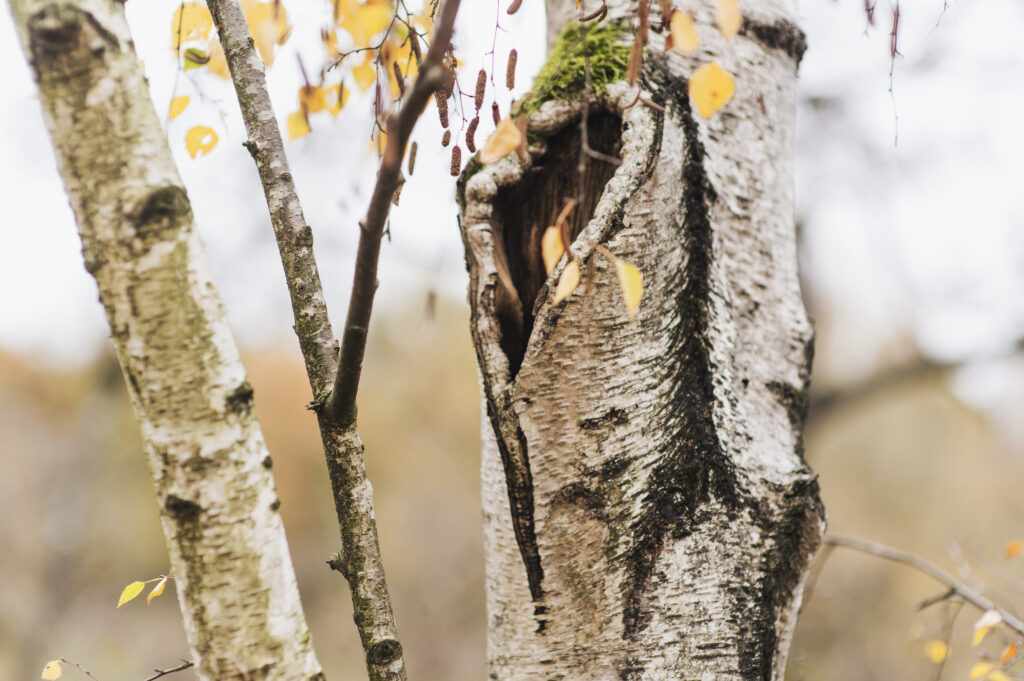 “Whales cool down the climate. Fungi make rain. Termites green deserts.” Photographer: Gabriela Hengeveld
 Leen Gorissen calls this Natural Intelligence: the intelligence through which life continually creates conditions for more life. Photographer: Gabriela Hengeveld
Kees Klomp — rebuilding the economy around Earth citizenship
But how can we translate these principles into economic and political institutions? Economist Kees Klomp believes this requires a different political and economic philosophy.
He calls it ecoliberalism: a system in which ecology is not one policy area among many, but the foundation of politics and economics.
Ecoliberalism begins by reconsidering who we are, Klomp argues. “At our core, humans are not consumers, not even global citizens. We are Earth citizens, part of a broader species society.”
This inner shift must be matched by new institutions. Klomp sees a central role for the commons: energy cooperatives that generate local power, community-led housing that provides homes at cost, and shared land, tools and care that meet real needs beyond profit-maximising markets.
The task of re-growth, then, is to strengthen this undercurrent: to help these emerging forms of ecological cooperation move from the margins to the mainstream.
Discover how Kees Klomp envisions an ecoliberal future in our full interview.
Uitgelichte quote
At our core, humans are not consumers
 “Ecoliberalism begins by reconsidering who we are”, Kees Klomp argues. Photographer: Gabriela Hengeveld
 Photographer: Gabriela Hengeveld
Helena Norberg-Hodge — bringing the economy back home
For this undercurrent to become a durable economic system, it must take root in particular landscapes, communities and places. For Helena Norberg-Hodge, rebuilding the economy begins by shortening the distance between what we depend on and where it is produced.
“Localisation is about shifting from a global, corporate-driven system towards stronger, more decentralised economies,” she explains. This does not mean closing borders or retreating into self-sufficient villages, but redirecting power away from global corporations and towards communities.
Food and farming are the most powerful places to begin, Norberg-Hodge argues, because they create a cascade of regenerative value. Smaller, diversified farms are better able to support biodiversity, use water wisely and provide meaningful work. Money circulates among local businesses rather than being extracted by distant shareholders, while people rebuild their relationship with the soils, landscapes and communities that sustain them. “More hands and hearts per hectare is what the land needs to heal,” she says.
Localisation offers a tangible form of re-growth. Unnecessary trade, corporate concentration and sprawling supply chains can contract, while local farming, repair, care and craftsmanship flourish.
Discover Helena Norberg-Hodge’s vision for a more localised economy in our full interview.
Uitgelichte quote
More hands and hearts per hectare is what the land needs to heal
 Photographer: Diane van der Marel
 Redirecting power away from global corporations towards communities, that’s the way forward according to Helena Norberg-Hodge. Photographer: Diane van der Marel
Koen van Seijen — putting money to work for regeneration
However, if regenerative initiatives are to move beyond the margins, money must begin flowing in a different direction, regenerative finance expert Koen van Seijen argues.
This creates an uncomfortable tension. The financial system has been one of the main engines of extraction – yet the transition to a regenerative economy cannot take place without investment.
“Over the next ten years, we need a lot of things: trees in the ground, farmland transitions and, of course, countless regenerative food companies,” Van Seijen says. “Philanthropy alone cannot deliver the transformation regeneration requires.”
To turn isolated experiments into a serious economic force, regeneration must therefore learn to work with investment capital.
Van Seijen identifies two paths forward. The first is to redesign finance itself. This requires forms of capital that can act as a good ancestor: accepting uncertainty, prioritising impact and investing on behalf of future generations and the more-than-human world, rather than demanding the highest possible short-term return.
The second path is more pragmatic: to work with the existing financial system wherever regenerative projects can already meet its expectations. “There are many pockets within regeneration where the existing financial system actually makes a lot of sense,” Van Seijen says.
The goal is not to prove that every act of ecological care can deliver conventional market-rate returns. It is to create a financial landscape in which different forms of capital serve different forms of value – and profit is earned by strengthening the living systems from which all wealth ultimately comes.
This is where the two meanings of re-growth meet. Regenerative and financial value do not have to remain opposites. When money is patient, expectations are honest and ecological health is treated as an asset rather than an externality, the two can reinforce one another.
Read Koen van Seijen’s full argument for how finance can turn re-growth from an idea into economic reality.
Uitgelichte quote
Profit is earned by strengthening the living systems from which all wealth ultimately comes
 Regeneration must learn to work with investment capital, says Koen van Seijen. Photographer: Gabriela Hengeveld
 Photographer: Gabriela Hengeveld
READ MORE:

The new eco-literacy: 8 thinkers on how to read the living world again
20 July 2026