The new eco-literacy: 8 thinkers on how to read the living world again
After speaking with some of the most inspiring ecological thinkers of our time – from Vandana Shiva and Jeremy Lent to Merlin Sheldrake, Nora Bateson and Rob Hopkins – the ecological crisis comes into focus as a crisis of literacy. We have forgotten how to read the living world: how to understand soil, seeds, fungi, bodies, communities and economies as part of one interdependent web. These eight thinkers offer a way back.
Vandana Shiva – seeing the Earth as alive again
For Vandana Shiva, the ecological crisis begins with a profound misreading of the world: the idea that the Earth is dead matter, separate from us, available for extraction. “It’s crucial to understand that our separation from the natural world is a form of dehumanisation,” she says. “Because we are nature – we are the soil, we are the water.”
Regenerative agriculture, in her view, offers a way back into that connection. By getting our hands into the soil, we begin to understand the living relationships that sustain us: soil, seeds, water, insects, breath, food, bodies and future generations. “It means collaborating with nature and recognizing that we are all living organisms on a living Earth”, Shiva says.
Her lesson in eco-literacy is therefore not only about farming, but about perception. To become literate again is to see the Earth not as a stockpile of resources, but as a living whole we belong to. Or, as Vandana puts it: “Regeneration writes its own poetry – it brings the Earth back to life again in our minds.”
Also read our interview with Vandana Shiva.
Uitgelichte quote
How rapidly we went into a monoculture of the mind and became slaves to consumption
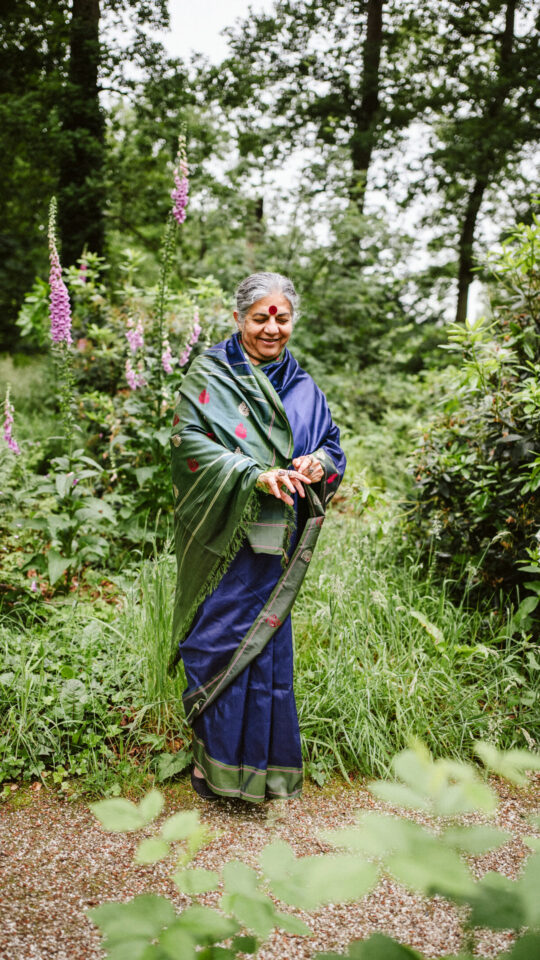
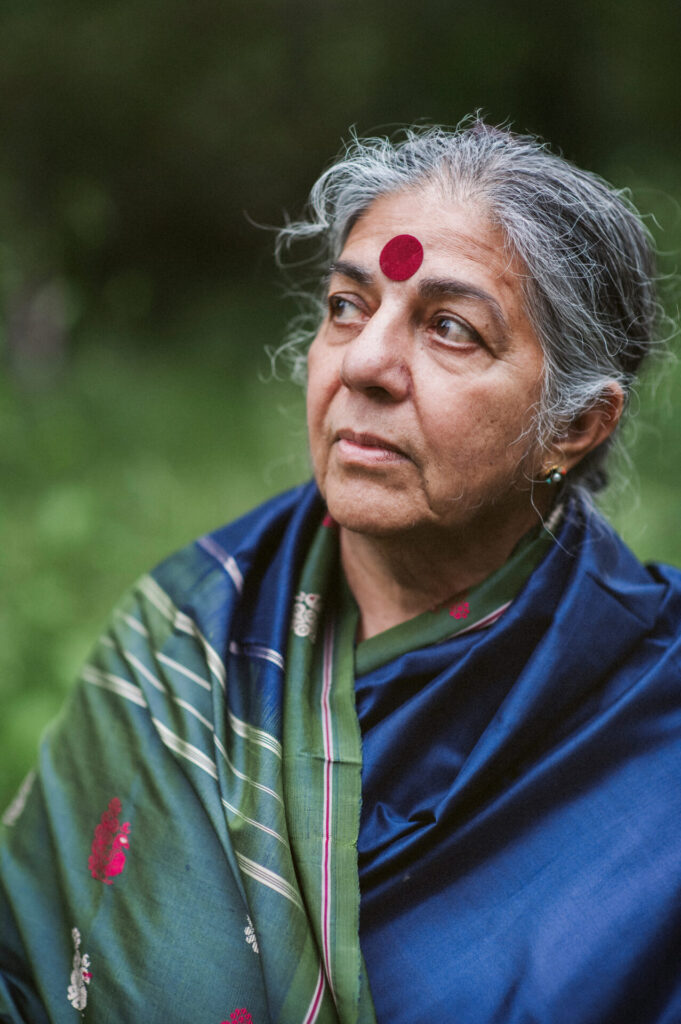 Vandana Shiva: “It’s crucial to understand that our separation from the natural world is a form of dehumanisation.” Photographer: Gabriela Hengeveld
 “The Earth is not a stockpile of resources, but a living whole we belong to.” Photographer: Gabriela Hengeveld
Zach Bush – understanding the body as an ecosystem
If Vandana Shiva asks us to see the Earth as alive again, Zach Bush asks us to recognise that our own bodies were never separate from that living Earth in the first place.
Trained as a medical doctor and scientist, Bush has spent decades tracing the rise of chronic disease alongside the degradation of our ecosystems. For him, what we call illness is often a symptom of a deeper disconnection: from land, biodiversity, soil, food and life itself.
“What is upstream of disease? For nearly twenty years, that’s what I’ve been trying to understand,” he says. “And what turned up is, in many ways, very simple: nature deficit. When human biology becomes disconnected from nature, disease becomes inevitable.”
This is his lesson in eco-literacy: the body is not a closed, isolated machine, but an open ecosystem in constant relationship with the world around it. The gut, in this view, is not separate from the field, the forest, the farm or the food system. “It’s embedded within a much larger macrobiome: the soil, the food, the animals, the entire living environment,” Bush says. “The gut is simply an extension of that broader ecosystem. That, to me, is the deeper story of gut health: it’s not just about what’s happening inside the body, but about our relationship to the living systems around us.”
Dive into our entire interview with Zach Bush.
Uitgelichte quote
When human biology becomes disconnected from nature, disease becomes inevitable
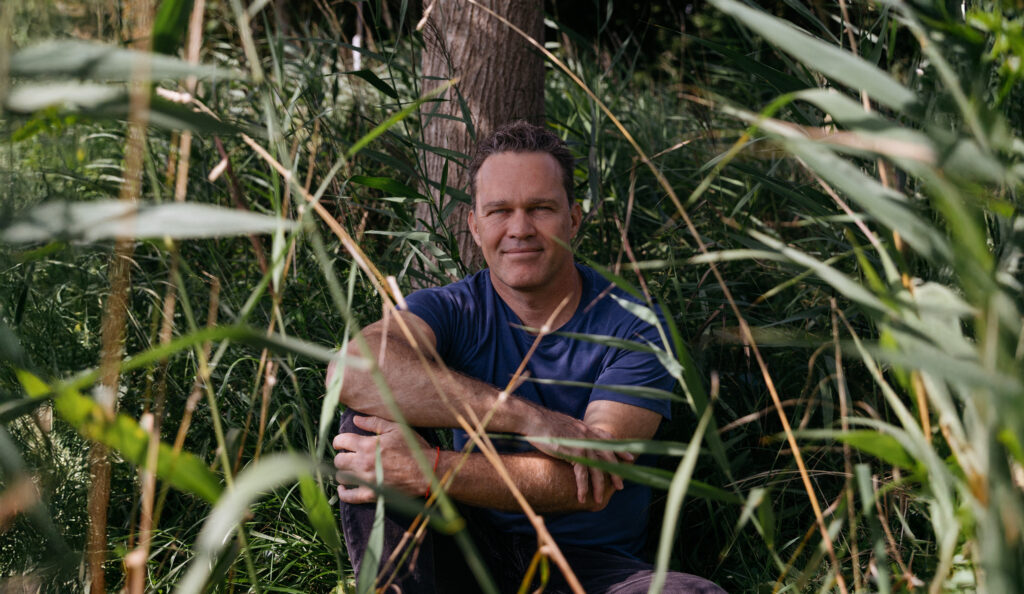
 Zach Bush: “The body is not a closed, isolated machine, but an open ecosystem in constant relationship with the world around it.” Photographer: On a hazy morning
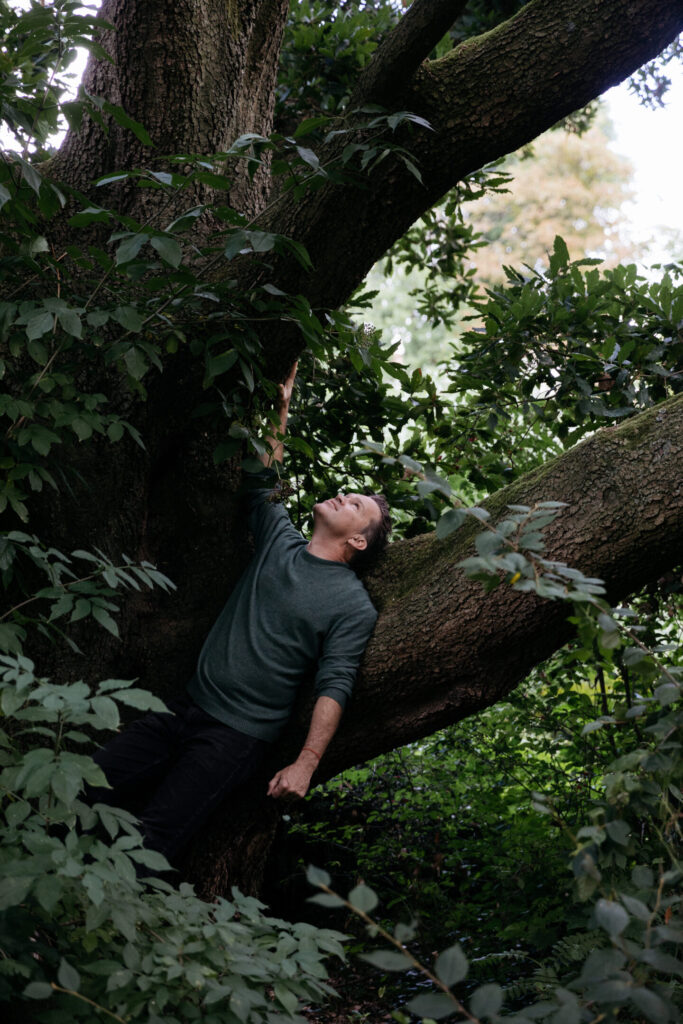 “The gut, in this view, is not separate from the field, the forest, the farm or the food system.” Photographer: On a hazy morning
Nora Bateson – reading ecology as relationship
Nora Bateson shows us that the same applies to the health of the wider ecosystems around us – and to the way we try to understand them.
Bateson’s concept of ‘warm data’ invites us to look at information in context, rather than in isolation. This is where reductionist thinking often fails. Biodiversity loss, for example, is often treated as a matter of numbers: insect decline, fish decline, fungi decline. But simply trying to raise those numbers misses the deeper relational crisis.
“Ecology doesn’t work like that,” Bateson says. “Planting a lot of the same trees in the same place does not create a forest. The biodiversity is left out. Each organism isn’t a cog in a machine doing one task – each is involved in hundreds of relationships.”
To become eco-literate again, therefore, is to stop reading ecosystems as collections of separate parts, and begin to see the shifting relationships that make those parts meaningful: between forests and food systems, oceans and bodies, daily rituals and biodiversity, present choices and future generations.
Read the rest of our interview with Nora Bateson.
Uitgelichte quote
Planting a lot of the same trees in the same place does not create a forest
 Photographer: Gabriela Hengeveld
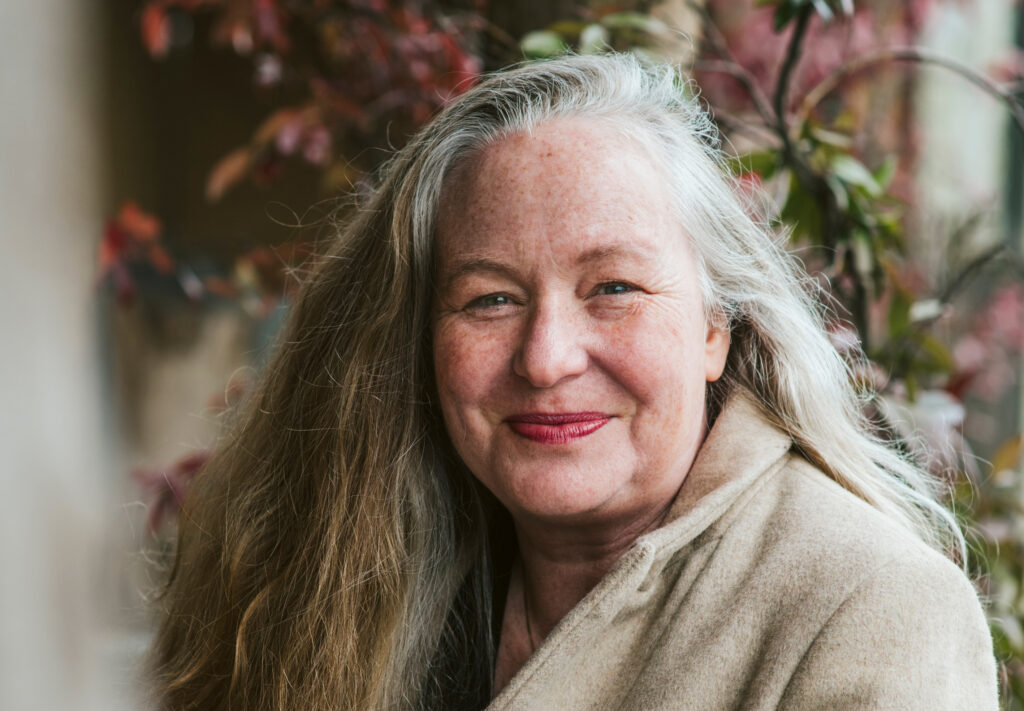 Nora Bateson: “To become eco-literate again is to stop reading ecosystems as collections of separate parts.” Photographer: Gabriela Hengeveld
Jeremy Lent — understanding the economy as part of life itself
To recognise the embeddedness of living systems is also to recognise that none of our human systems stand above the web of life – least of all the economy.
For Jeremy Lent, bestselling author of The Web of Meaning and Eco-Civilization, one of the most dangerous stories of our time is that the economy is the centre of everything, and that nature and human labour exist to serve its growth.
“Capitalism is built on the assumption that both nature and human labour are resources to be extracted for growth,” Lent says. “And once nature is reduced to a thing, exploitation doesn’t just become acceptable – it becomes virtuous.”
His lesson in eco-literacy is to understand the economy not as an independent machine, but as one living subsystem within the wider Earth community.
“The first step is to recognize that the economy is not the centre of everything – it’s embedded within the wider system of life,” Jeremy says. “What we need is a Copernican shift: to see the economy as one aspect of life on Earth, not the thing that defines it.”
Once we make that shift, the central question changes. Instead of asking how to grow the economy, we begin asking what enables life to flourish: what real prosperity looks like, what a meaningful life requires, and how our systems can reduce harm to the living world – or better yet, become regenerative.
Also read our interview with Jeremy Lent.
Uitgelichte quote
One of the most dangerous stories of our time is that the economy is the centre of everything
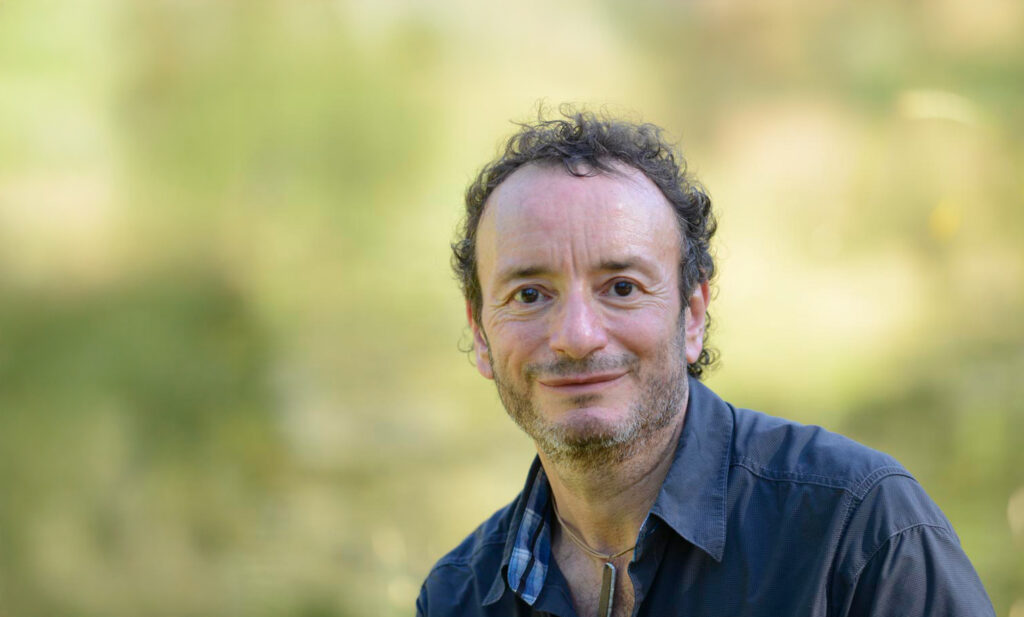 Jeremy Lent: “Once nature is reduced to a thing, exploitation doesn’t just become acceptable – it becomes virtuous.” Photographer: Philip Saltonstall
 “Let’s see the economy as one aspect of life on Earth, not the thing that defines it.” Photographer: On a hazy morning
Helena Norberg-Hodge — getting to know our local landscapes
But how do we begin to reshape an economy that has become so detached from life? For Helena Norberg-Hodge, the answer lies close to home: by becoming literate again in our local landscapes, food systems and communities.
“Localisation doesn’t mean going back to a world where we cannot use energy, or where we all have to eat food from a few kilometres away,” Helena says. “It’s about realising that all people, all beings and all ecosystems will benefit from building more localised systems.”
Her lesson in eco-literacy is therefore a lesson in attention. When we return to local landscapes and communities, we begin to see the complexity that globalised systems erase: the changing seasons, the uniqueness of every farm, every apple tree, every earthworm, every bit of water.
“Everything that lives, every human being, every plant, every ecosystem is constantly changing, unpredictable and contradictory. That is what makes life rich,” Norberg-Hodge says. “Once we come back to our local landscapes and communities, we become more aware of these complexities.”
Dive into our interview with Helena Norberg-Hodge.
Uitgelichte quote
Everything that lives, every human being, every plant, every ecosystem is constantly changing. That is what makes life rich
 Photographer: Diane van der Marel
 Helena Norberg-Hodge: “Localisation is about realising that all beings will benefit from building more localised systems.” Photographer: Diane van der Marel
Merlin Sheldrake — learning from the hidden networks beneath our feet
One of the most important parts of our local environment is also one of the easiest to overlook: the hidden world beneath the soil. For Merlin Sheldrake, learning to pay attention to this underground life is essential if we want to understand how ecosystems really work.
“Mycorrhizal fungi sit at the base of the food webs that sustain much of life on Earth,” he says. “Without them, the ecosystems we depend on wouldn’t exist.” In the soil, these fungi act as living infrastructure: weaving networks that support bacteria, microbes, nematodes, springtails, earthworms, trees, grasses and crops – and, through them, insects, birds, mammals and humans too.
His lesson in eco-literacy begins with seeing what dominant culture has taught us not to see. “What we’re blind to, we tend to take for granted – we ignore it, or we destroy it,” Sheldrake says. He calls this “fungal blindness”: a failure to notice the underground alliances on which above-ground life depends.
But for Sheldrake, this is not only about fungi. It is also about loosening our “species narcissism”: the tendency to centre human life so completely that we forget the many other ways there are to be alive.
To become literate again is to notice these more-than-human lives on their own terms, not only for their usefulness to us. The fungal world reminds us that life is not built from isolated individuals, but from relationships, exchanges and hidden alliances – many of them unfolding quietly beneath our feet.
Find out more in our interview with Merlin Sheldrake.
Uitgelichte quote
The fungal world reminds us that life is not built from isolated individuals, but from relationships
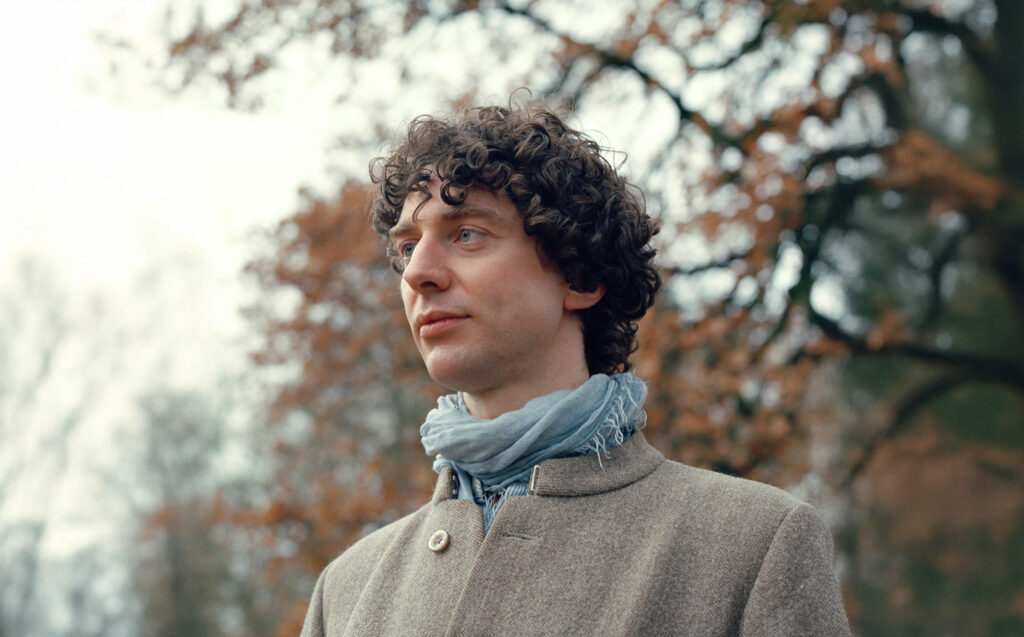 Merlin Sheldrake: “Mycorrhizal fungi sit at the base of the food webs that sustain much of life on Earth.” Photographer: Hanna-Katrina Jędrosz.
 Photographer: Jesse Bauer
Toby Kiers — approaching farming as an underground partnership
Someone who urges us to engage more deeply with this hidden world beneath our feet is Toby Kiers, evolutionary biologist and colleague of Merlin Sheldrake. For Kiers, fungal literacy is not only important for scientists or conservationists. It is essential for the future of farming.
Modern agriculture has often treated fungi as enemies: pests, diseases or threats to be controlled. But beneath the soil, mycorrhizal fungi form some of the most important partnerships in the living world – helping plants access nutrients, while receiving carbon in return.
“Pesticides, fungicides, artificial fertilisers, mechanical tilling; they are all harmful to fungi,” Kiers says. In these landscapes, fungal networks become “sparser, thinner and less diverse than in natural soils.” And when plants receive artificial fertilisers, they no longer depend on fungi in the same way – and may stop trading carbon with them.
Her lesson in ecological literacy is therefore deeply practical: farmers must learn to see the soil not as an inert growing medium, but as a living field of relationships. Healthy farming depends not only on what happens above ground, but on the invisible collaborations between roots, fungi, soil, carbon, nutrients, hedgerows, insects and people. As Kiers puts it: “Farmers of the future will join forces with their fungi.”
Discover more in our interview with Toby Kiers.
Uitgelichte quote
Farmers of the future will join forces with their fungi
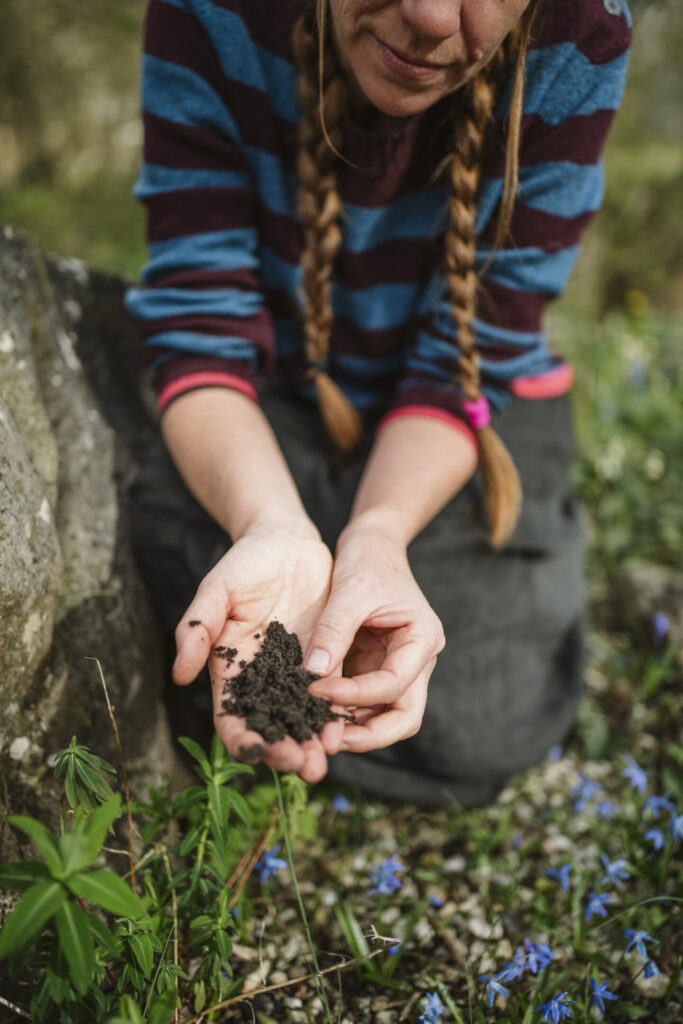 Photographer: Gabriela Hengeveld
 Toby Kiers: “Farmers must learn to see the soil not as an inert growing medium, but as a living field of relationships.” Photographer: Gabriela Hengeveld
Rob Hopkins — seeing the future as possibility
After learning to read the living world differently – living ecosystems, the body, the economy, our communities, the hidden networks beneath our feet – Rob Hopkins reminds us that there is one more form of literacy we urgently need: the ability to imagine the future.
Too often, the future is presented as something to fear: collapse, extinction, scarcity, chaos. But fear alone rarely moves people into action. More often, it shuts them down.
What we need, Hopkins argues, are futures that feel alive enough to long for: cleaner air, louder birdsong, softer cities, local food systems, regenerative farms, rewilded landscapes and communities that know how to care for one another.
“We need to fill the future with delicious stories, narratives and dreams,” he says. “We have to give people something to run towards.”
His lesson in eco-literacy is therefore about imagination as a regenerative practice. To become literate again is not only to understand what has been broken, but to recognise what is already emerging: the cooperatives, transition towns, community farms and acts of repair that offer glimpses of another world.
Perhaps that is the final lesson these eight thinkers offer us. Ecological literacy is not only the ability to read the living world as it is, but to sense what it could become – and to act as if that future is already asking something of us.
Also read our interview with Rob Hopkins.
Ready for more regenerative stories? Sign up for our monthly newsletter and receive them straight in your inbox.
Uitgelichte quote
To become eco-literate again is not only to understand what has been broken, but to recognise what is already emerging
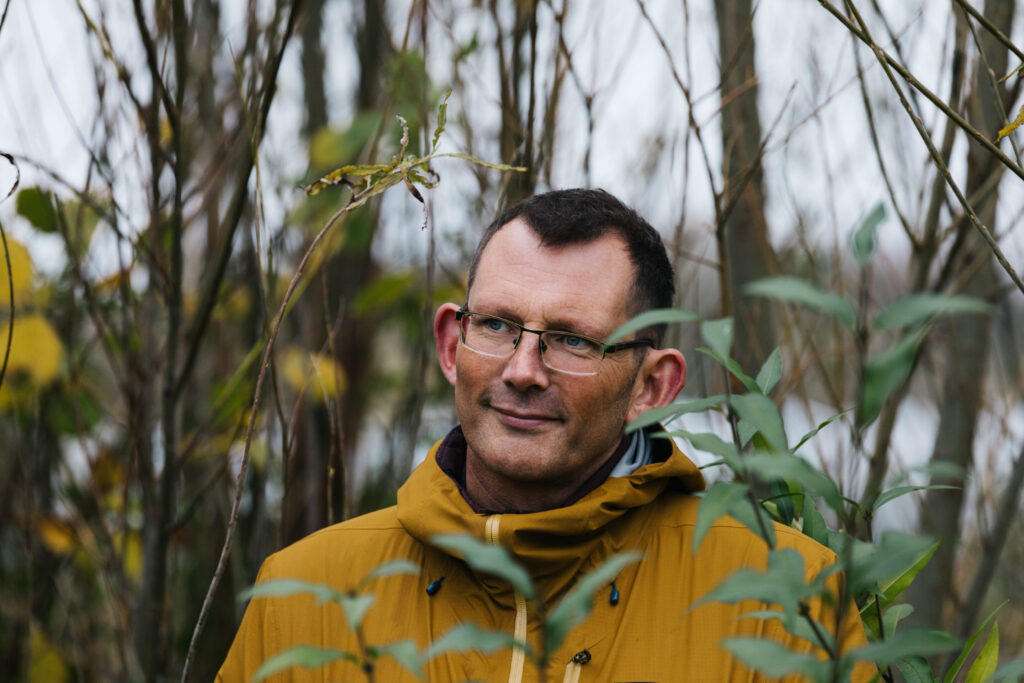 Rob Hopkins: “We have to give people something to run towards.” Photographer: On a hazy morning
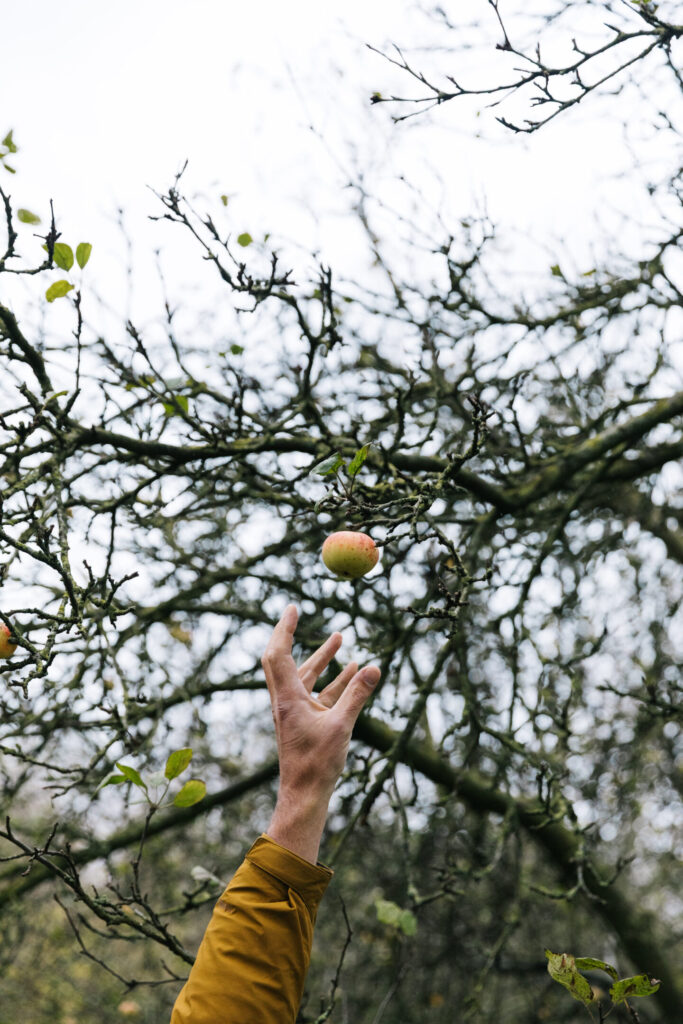 Photographer: On a hazy morning
READ MORE:

From soils to rivers: these women are reshaping our relationship with life
8 March 2026