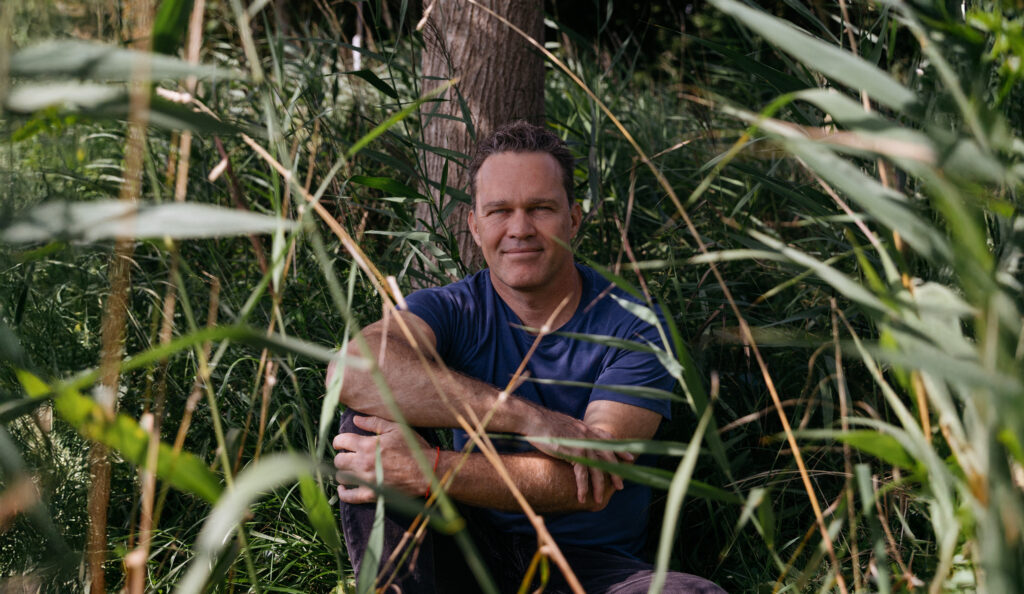
Jeremy Lent: “The future of our world is not a spectator sport – we’re part of it”
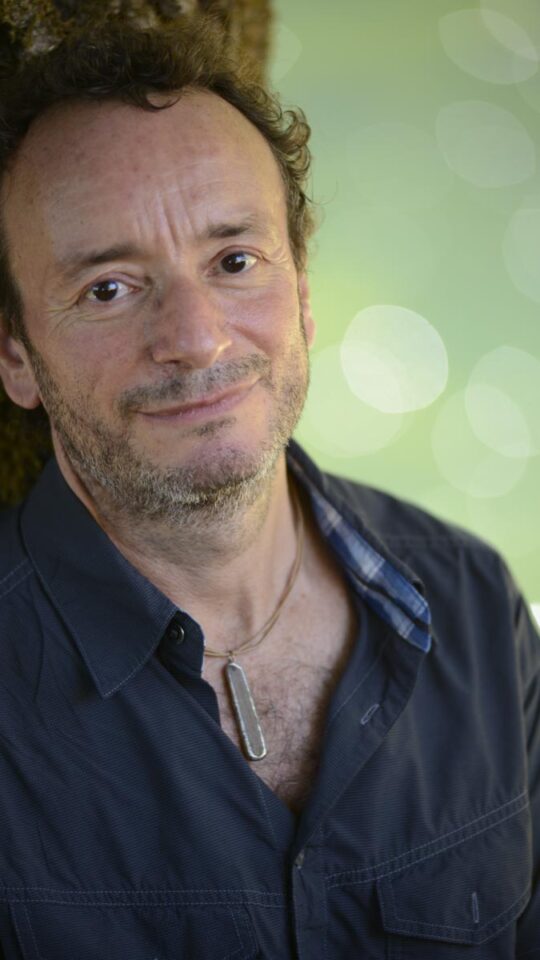
For centuries, we have organized society around a simple premise: that growth is good, and more is better. But what if that story is fundamentally flawed? Jeremy Lent, bestselling author of The Web of Meaning and his latest book Eco-civilization, shows how it has led us into a system that is deeply misaligned with life itself — and how another way of organizing society is already beginning to emerge. In this conversation, he explores how we got here, and what it would take to move towards a world designed not for extraction, but for the flourishing of all. “The economy is not the centre of everything — it’s embedded within the wider system of life.”
Let’s start at the beginning: what is an eco-civilization?
“An eco-civilization is a way of imagining a society that lives in alignment with the natural world, rather than extracting from it. It moves beyond the industrial model of endless growth, and instead centres life – community, wellbeing, and the health of the Earth.
In essence, it asks a simple but powerful question: what would society look like if it were designed to set the conditions for all beings to thrive, rather than to exploit and deplete?
And importantly, this isn’t some distant utopia. It’s a real possibility – something that can begin to take shape as soon as we recognize what’s available to us, and start to challenge the institutional systems that currently stand in the way. Of course, that’s no small task, given where we are today.”
Those systems didn’t emerge overnight. How did we get here?
“It’s a long history, but there’s a story that captures its essence. It centres on Cecil Rhodes – one of the most powerful figures of the late 19th century, who built his fortune through the diamond mines of southern Africa and even had a country, Rhodesia, named after him.
At one point in London, Rhodes attended a workers’ meeting where large numbers of people were unemployed, hungry, and angry. It shook him. He wrote in his journal that he feared revolution – that the system itself could be overturned.
His response was telling: expand extraction from the colonies, bring back enough wealth and resources to keep people in Britain just comfortable enough not to rebel.
For me, that moment encapsulates what has been happening for roughly the past 500 years. The system has changed shape over time, but its underlying logic has remained the same.”
 Jeremy Lent: “Capitalism can be understood as the economic expression of this worldview – a system built on the assumption that both nature and human labour are to be extracted for growth.” Photographer: On a hazy morning
 “An eco-civilization would instead be designed to support cooperation, care, and mutual support.” Photographer: On a hazy morning
So imperialism, colonialism and capitalism are all deeply connected.
“Yes – they all began to take shape within a relatively short period in Europe, around the 17th century, alongside the scientific revolution. Thinkers like Francis Bacon, René Descartes and Galileo Galilei transformed how we understand the world, but they also introduced a deeper shift in worldview.
At its core was the idea that humans are separate from – and superior to – nature. Nature became something external: a ‘thing’ to be understood, controlled, and ultimately exploited.
Once nature is reduced to a thing, exploitation doesn’t just become acceptable – it becomes virtuous. Francis Bacon, for example, spoke of the ‘conquest of nature’ as a moral project. Many believed this would improve human life – curing disease, reducing hunger, advancing knowledge – and to some degree that was true.
But alongside that came a logic of domination – not just over nature, but over other people. It fed into ideas of human – and specifically white European – supremacy, where others were seen as lesser, and therefore legitimate targets for colonization and extraction.
In that sense, capitalism can be understood as the economic expression of this worldview – a system built on the assumption that both nature and human labour are resources to be extracted for growth. That’s the foundation of the wealth of the Global North today. Understanding that is essential if we’re serious about creating a system that works for all living beings.”
Uitgelichte quote
Today, everything is organized around growth. In an eco-civilization, dignity and wellbeing come first
An eco-civilization is just that. What are its core characteristics?
“In the book, I distill it into six core principles – each standing in direct contrast to the values of our current system.
The first is a shift from human supremacy to ecocentrism: recognising the intrinsic value of all life. That’s a fundamental change in worldview.
Closely linked to this is moving away from the primacy of capital. Today, everything is organized around growth of capital. In an eco-civilization, the dignity and wellbeing of people – and the living world – come first.
Another shift is from commodification and homogenization towards diversity and relational richness. Instead of flattening differences, such a system would actively nurture ecological, cultural, and social diversity.
There’s also a move from top-down hierarchies to subsidiarity, meaning decisions are made as locally as possible, with power distributed rather than concentrated.
Alongside that, we move from structural inequality to structural equity. Instead of a ‘wealth pump’ extracting value into ever fewer hands, you can imagine a system more like ‘wealth irrigation’ – where resources circulate to support the flourishing of all.
And finally, there’s a shift in incentives. Today’s economy rewards extraction and self-interest. An eco-civilization would instead be designed to support cooperation, care, and mutual support – aligning our systems with the way our species actually thrives.”
Uitgelichte quote
The logic of our system makes very little sense from a basic human perspective
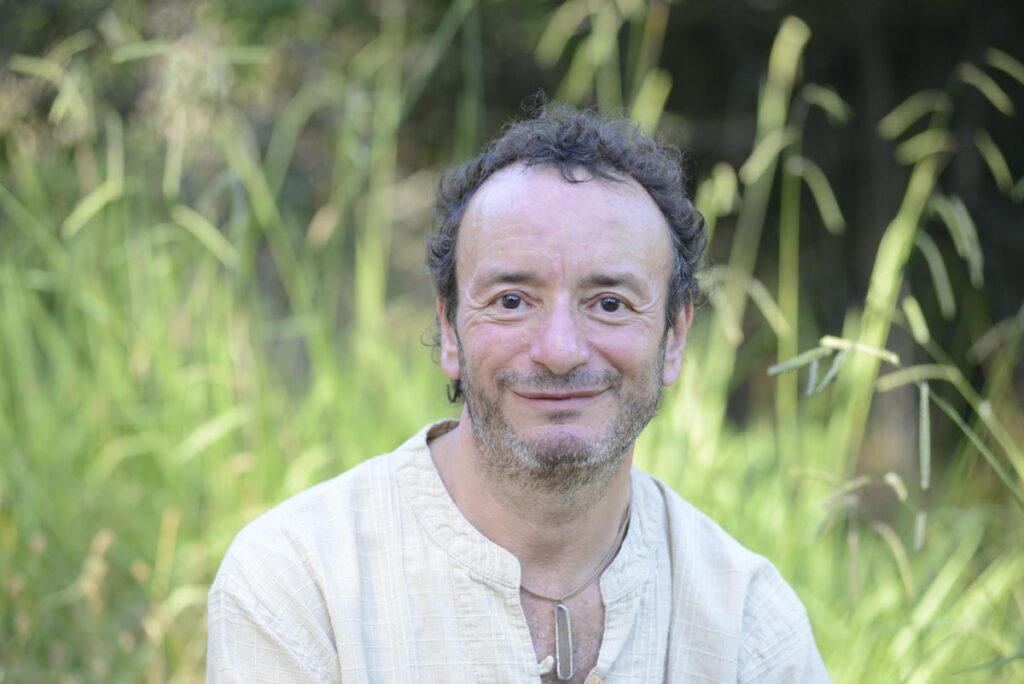 Jeremy Lent: “We can move from commodification and homogenization towards diversity and relational richness.” Photographer: Philip Saltonstall
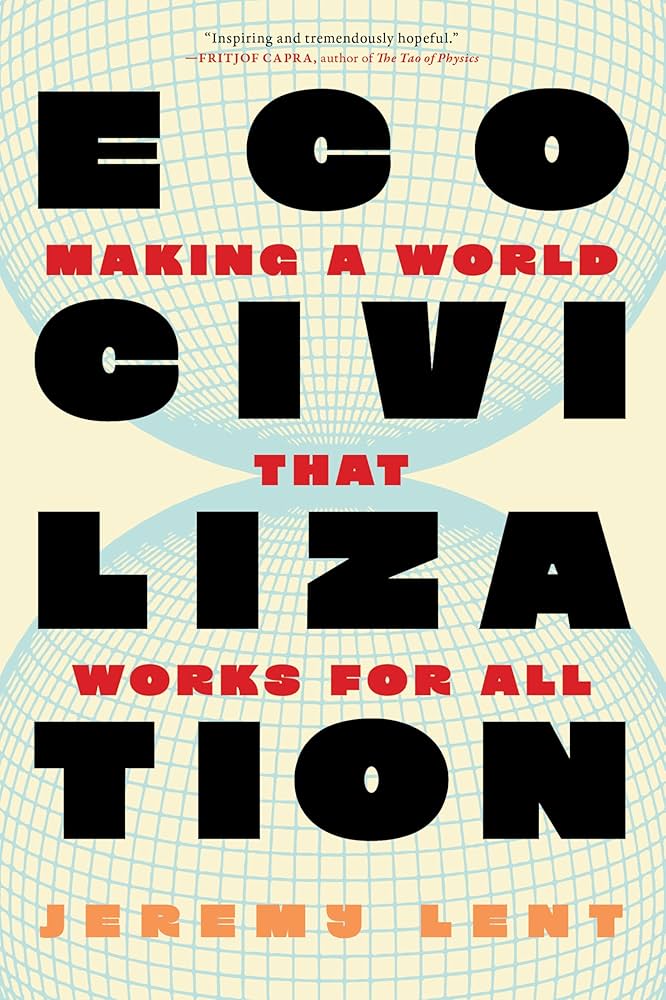 “Power can be distributed rather than concentrated.” Source: jeremylent.com
It sounds like a shift away from our ‘more, more, more’ mindset. In the book, you use the Wendigo as a metaphor for that – can you explain why?
“The Ojibwe and other Indigenous peoples in North America told stories of the Wendigo – a terrifying being with a heart of ice, driven by an insatiable hunger. It would roam the wilderness, consuming whatever it came across. But the most frightening aspect was that if it bit you, you would become a Wendigo yourself: endlessly hungry, never satisfied.
You can see that dynamic very clearly in modern capitalism. Take large corporations: even after a highly profitable year, the question is never whether it’s enough. What matters is future growth – the expectation of ever-increasing returns. The value of a company isn’t based on what it earns now, but on how much more it can extract in the future. That, to me, is Wendigo logic institutionalised — what I sometimes call ‘Wendigo Incorporated’.
In that sense, the Wendigo becomes more than a myth; it becomes a way of understanding the dominant worldview. In the book, I use it as a central metaphor — almost like a contagion. A ‘Wendigo virus’, if you like, spreading across the very structures that organise our global economy.”
Uitgelichte quote
GDP measures the rate at which life – both natural and human – is turned into money
The way we fixate on GDP being an expression of this.
“Exactly. And this is where it starts to feel almost like Alice in Wonderland – because when you really look at it, the logic of our system makes very little sense from a basic human perspective.
We measure the success of countries by how much their GDP grows. But GDP doesn’t actually measure wellbeing, satisfaction, or human flourishing. It measures the rate at which life – both natural and human – is turned into money within the economy.
Take a simple example: if you grow vegetables in your garden and share them with your neighbours, that has no impact on GDP. From that perspective, it’s effectively worthless. But if you go to a shop and buy packaged vegetables, that counts as economic growth.
Or something more extreme: an oil spill. From a human or ecological perspective, it’s a disaster. But for GDP, it’s positive – because it generates economic activity through clean-up, healthcare, and repairs.
When you see this pattern, it becomes clear that GDP isn’t measuring what we actually care about. It’s measuring the scale of extraction and monetisation, which fits perfectly with a system not designed around human wellbeing, but around the continuous expansion of value.”
Uitgelichte quote
Instead of asking how to grow the economy, you begin asking: what actually constitutes prosperity?
 Jeremy Lent: “If you grow vegetables and share them with your neighbours, that has no impact on GDP.” Photographer: On a hazy morning
 “GDP isn’t measuring what we actually care about.” Photographer: On a hazy morning
How would economic success be redefined in an eco-civilization?
“The first step is to recognize that the economy is not the centre of everything — it’s embedded within the wider system of life. What we need is a Copernican shift: to see the economy as one aspect of life on Earth, not the thing that defines it.
Once you make that shift, the question changes. Instead of asking how to grow the economy, you begin asking: what actually constitutes prosperity? What does real life satisfaction look like?
That’s harder to capture than a single number like GDP. It’s not about one metric, but about the conditions that enable flourishing — including how much harm we cause to the living world, and whether that is being reduced or turned into regeneration.
In that sense, we need an ecosystem of ideas: different perspectives, debates, and possibilities interacting with each other. But above all, we need to shift the frame of the conversation itself – away from narrow debates about short-term gains or polarised issues, and towards a deeper rethinking of what truly matters.”
Uitgelichte quote
The economy is just one aspect of life on Earth, not the thing that defines it
You also emphasise the importance of a ‘third horizon’ – pointing towards a different kind of future we can all contribute to.
“That’s exactly it. In the book, I explore this through the Three Horizons framework – a simple but powerful model, developed by people like Bill Sharpe and others, to help us think about large-scale transformation.
Imagine you’re travelling through unknown terrain. The first horizon is right in front of you – focused on not tripping or falling. In practice, that means incremental improvements: making the current system a bit less harmful, step by step – for example, investing more in renewables while the broader system remains intact.
The second horizon is more disruptive. It brings innovation, but within the same underlying paradigm. Take Tesla: a significant shift away from fossil fuels, yet still operating within a model of growth, extraction, and shareholder ownership. Some of these changes lead us back into the same system – what you might call ‘Horizon 2 minus’. Geoengineering is a good example: bold ideas, but still rooted in the assumption that nature can be engineered and controlled. Others, however, begin to open pathways towards something fundamentally different – ‘Horizon 2 plus’.
That’s where the third horizon comes in. It represents a genuinely transformed future – a different way of organising society that isn’t yet fully visible from where we stand.
You can think of this book as offering a glimpse of that horizon – like rising above the landscape and sensing what lies beyond the mountains. Not in full detail, but enough to give us direction. And when we return to the present, we carry that orientation with us.”
Uitgelichte quote
We can accelerate change far more quickly than we might expect
 Photographer: On a hazy morning
 Jeremy Lent: “We need an ecosystem of ideas.” Photographer: On a hazy morning
Which initiatives already make that third horizon visible?
“Citizens’ assemblies are a good example – a form of deliberative democracy that rethinks what democracy can be. Instead of what we might call an ‘electoral oligarchy’, where people periodically choose between elites who then decide on their behalf, citizens’ assemblies bring together ordinary people to deliberate on complex issues and arrive at more thoughtful, collective solutions. When done well, they represent something genuinely different.
And there are many other examples like this. You can think of them as ‘islands of coherence’, emerging within a wider system that often feels chaotic. In that sense, the third horizon is less a distant destination and more like a network you can tap into –almost like a mycelial system underground, connecting things in ways that aren’t immediately visible, but can accelerate change far more quickly than we might expect.
For those of us who have the privilege and capacity to act – through our circumstances, education, or position – that awareness can lead to a kind of moral imperative: what can I do to contribute?”
Uitgelichte quote
We need to move away from the idea that we each have to come up with a heroic, individual solution
So what’s the answer – where do you begin?
“The first step is a shift in perspective: to recognise that the future of our world is not a spectator sport. We’re already shaping it, whether we realise it or not – we’re part of it.
At the same time, we can move away from the idea that we each have to come up with a heroic, individual solution. We’re far more effective when we join forces with others. There are already countless groups working on that third horizon future.
So the question becomes: what moves you? What genuinely matters to you? That inner drive is a useful guide. From there, it’s about finding the people already doing meaningful work in that space – and contributing to it.”
Uitgelichte quote
It’s important to let go of the need to control outcomes
 Jeremy Lent: “What moves you? What genuinely matters to you?” Photographer: On a hazy morning
 “That inner drive is a useful guide.” Photographer: On a hazy morning
Lastly, what do you hope people take away from the book?
“Ultimately, I hope people take away not just a new way of thinking, but a sense of participation – an understanding that this transition is already underway, and that each of us has a role to play within it.
I didn’t want the book to be something passive – something you read and then set aside. I wanted it to be part of something more active. That’s why, together with a group of changemakers from around the world, I helped initiate the Eco-Civilization Coalition: an effort to connect and amplify the many initiatives already working towards this kind of future, and to bring more coherence to what can sometimes feel like a fragmented landscape. For those who feel moved by these ideas, I’d encourage you to explore that space and consider how you might get involved.
And whilst doing this, it’s important to let go of the need to control outcomes. As Buddhist philosophy describes, that attachment can be a source of suffering – dukkha. Instead, we can set an intention to be part of the change we want to see, and begin to organise our lives around that.”
About Jeremy Lent
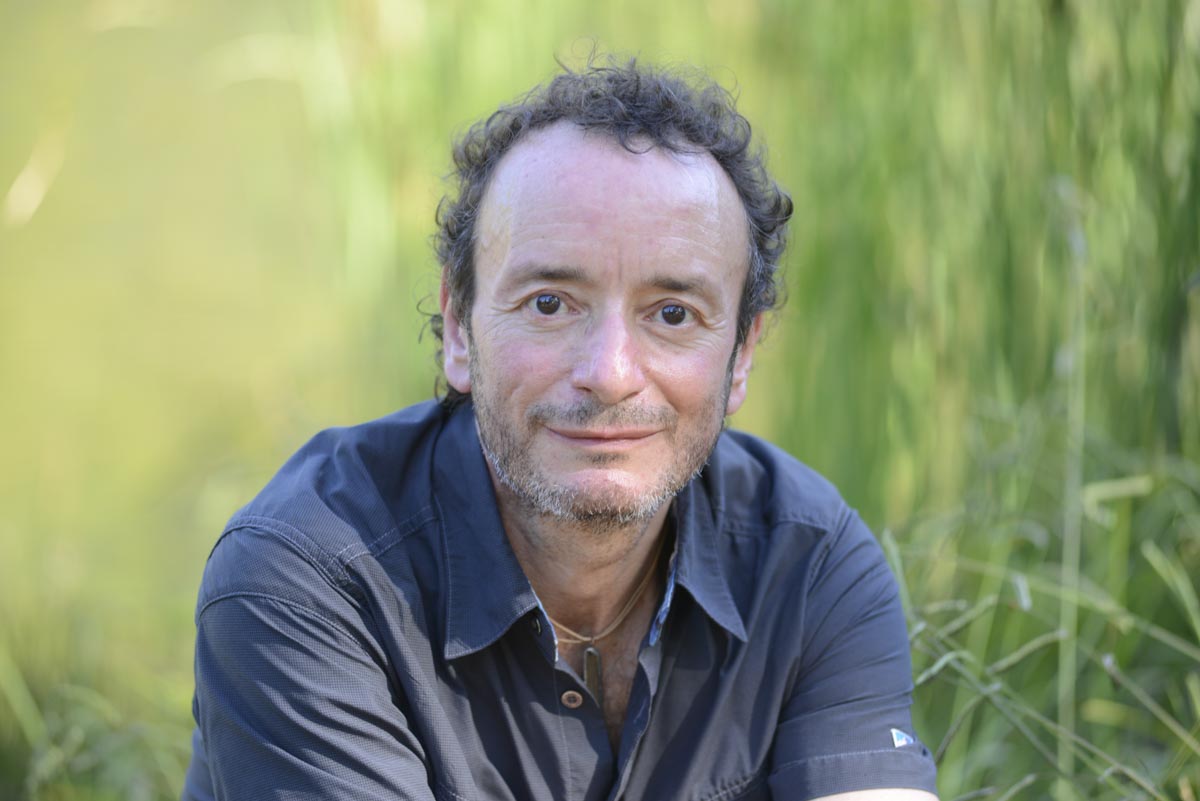
Jeremy Lent (1960) is a British-American author and interdisciplinary thinker known for his work on the cultural roots of today’s ecological and societal crises, and how the dominant worldview shapes the future of humanity. He is the co-founder of the Eco-Civilization Coalition, founder of the Deep Transformation Network, and the author of several influential books, including The Patterning Instinct (2017), The Web of Meaning (2021), and his latest work Eco-civilization. His work explores pathways toward a life-affirming, ecological civilisation grounded in interconnectedness, justice, and human flourishing
READ MORE:

Vandana Shiva: “In a living economy, we participate in the natural world as equals”
26 February 2026