Dan Kittredge: “One carrot can contain forty times the antioxidants of another”

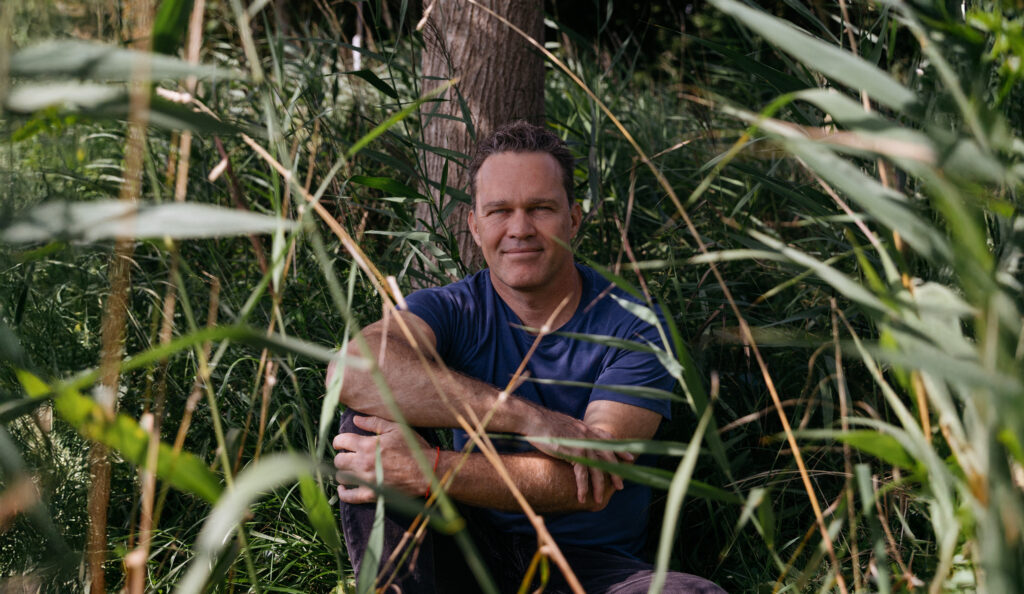
Two crops can look identical, yet contain strikingly different levels of nutrients. Dan Kittredge, an organic farmer for more than 30 years and founder of the Bionutrient Food Association, is leading extensive research into nutrient density – the hidden variation in the nutritional quality of food – in an effort to shift farming from yield to nourishment. “If we do this work carefully and systematically, I believe we can reverse chronic disease.”
What do you mean by nutrient density? How should we define it?
“That is a very important question. I often tell people: if you think you know what nutrient density means, I’m all ears – because I’m the guy who coined the term, and the science needed to define it properly is still being developed.
The problem is that people have begun using the term to mean whatever they want. For some, food is nutrient-dense because it is local. For others, because they know and trust the farmer. Those things are valuable, but nutrient density means something more precise: measurable differences in the nutritional quality of food.
Rather than simply calling a tomato nutrient-dense or not, we should be able to say that it sits, for example, in the twentieth or eightieth percentile compared with all other tomatoes. It is not a binary label, but a continuum. To define it properly, we first need to do the science. Every food is different, so each requires its own research into the relationships between soil health, plant health, animal welfare, food quality and human health.”
Uitgelichte quote
Healthier soil and plants do much more than improve an individual farm – they improve human health and help address climate change


What made you realise how closely those things are connected?
“I grew up on a small organic farm in Massachusetts. My parents were leaders in the organic movement and helped develop some of its first standards in the 1980s. But despite their central role in the movement, the farm was never profitable: they both worked other jobs to make ends meet.
When I began farming myself in my late twenties, I also struggled to make a living. So, I started looking beyond the basic organic principle of avoiding synthetic chemicals. I learned more about biochemistry, minerals and microbiology and began applying those insights while remaining organic. The diseases disappeared, yields rose and the farm became profitable.
That was the breakthrough. I began sharing what I had learned with other farmers and, in 2010, founded the Bionutrient Food Association. Over the following years, we worked with farmers across North America, in almost every climate, soil type, crop and scale of operation. The same principles kept working.
It became clear that healthier soil and plants could do much more than improve an individual farm. They could produce better food, improve human health and help address climate change. That has driven our work ever since.”
Uitgelichte quote
To understand how nutrient-dense a food is, you need a separate standard for potatoes, carrots, milk and every other food
 Dan Kittredge: “We chose beef first because it has one of the largest ecological footprints of any food.” Photographer: On a hazy morning
 “Wheat is our next focus because it is another major staple.” Photographer: On a hazy morning
To test these ideas scientifically, you began with beef. Why start there?
“To understand how nutrient-dense a food is, you need a separate standard for potatoes, carrots, milk and every other food, because each contains its own set of compounds. We chose beef first because it has one of the largest ecological footprints of any food. More land is used to produce beef than anything else.
People can debate whether we should be eating beef at all. But agriculture affects the climate, and markets shape how agriculture is practised. If we can change the economic incentives around beef, the ecological impact could be greater than almost anywhere else in the food system.
To establish a standard, we had to examine the whole chain: the soil, the plants and fodder the animals ate, their gut microbiomes and health, farming practices, the nutrients in the meat and the effects on human health. Only by bringing those elements together can you identify the links between soil health, animal welfare, food quality and human health – and determine where a piece of beef sits on the nutritional continuum.
Wheat is our next focus because it is another major staple. We are trying to work on the biggest parts of the diet. I love apples, and blueberries are great, but comparatively little land is used to grow blueberries. We have to think about this holistically.”
Uitgelichte quote
In some cases the difference between the highest and lowest levels was fiftyfold
Are the differences in nutritional quality really that great?
“We measured more than 150 nutrients in every steak, and in some cases the difference between the highest and lowest levels was fiftyfold. We have seen the same pattern in other people’s research on almost every food, including carrots, potatoes, wheat and blueberries. One potato might contain five times as much copper as another, or thirty times as many polyphenols. You may have to eat forty of one carrot to get the same level of antioxidants as you would from another. The variation is enormous.
What is surprising is that local and fresh do not necessarily mean more nutritious. Nor does organic. We have seen enormous variation within every farming approach, whether no-till, cover cropping or biodynamic farming. Each category contains both excellent and very poor results. We found no consistent relationship between labels, certifications or individual practices and higher nutrient levels. The one consistent relationship was with soil health: the more life in the soil, the higher the nutrient levels in the food.”
Uitgelichte quote
Fertilised crops are the agricultural equivalent of empty calories: form without nutritional substance
So, to understand crop health – and ultimately our own – we have to begin with the soil microbiome.
“Yes. Microbes are effectively the gut flora of plants. As we know from our own bodies, when our gut flora is healthy, we are more likely to be healthy too. When it is not, neither are we.
Conditions that damage soil microbes also weaken plants. The cause can be as simple as too little water. A farmer may irrigate a row of tomatoes with a single line of drip tape. The plants receive enough water to survive, but by midsummer the ground between the rows is dry and powdery. That is dirt, not soil.
Without water, the microbes die of thirst and can no longer feed the plant properly. When a tomato plant is carrying fruit, she is like a pregnant woman: she needs to be well nourished. If her microbiome is struggling, she draws on her own reserves to fill the fruit, resulting in lower nutrient levels. To compensate, many farmers use fertiliser. That may help a plant to quickly build structure and form, but in a watery way. It is the agricultural equivalent of empty calories: form without nutritional substance.”
Uitgelichte quote
Nature has equipped us with incredibly sophisticated nutrient-monitoring sensors: our noses and tongues
 Dan Kittredge: “The opportunity to revitalise depleted bodies lies in something remarkably simple: trusting our natural instincts.” Photographer: On a hazy morning
 “The more flavourful the food, the more nourishing it is.” Photographer: On a hazy morning
What about flavour?
“There is all this talk about science, meters and certifications, but nature has already equipped us with incredibly sophisticated nutrient-monitoring sensors: our noses and tongues.
What we experience as flavour comes from compounds such as polyphenols, terpenoids and alkaloids. They give a carrot its carroty flavour and a tomato its tomatoey flavour. These compounds can also be profoundly health-giving, which is why medicinal plants often taste so intense. In general, the more flavourful the food, the more nourishing it is. The opportunity to revitalise depleted bodies therefore lies in something remarkably simple: trusting our natural instincts.
Yet we have often overridden those instincts with labels. We tell ourselves, ‘It is organic, so it must be good,’ even when the carrot barely tastes of anything. But if it is a good carrot, it should taste really good. If it does not, it probably is not that good.
So, when we eventually define nutrient density for each crop, that definition must align with what our noses and tongues tell us. If it does not, then we have the wrong definition.”
Uitgelichte quote
The first thing to remember is that microbes come first: they feed the plants
How can farmers begin producing more nutrient-dense food? What should they change first?
“The first thing to remember is that microbes come first: they feed the plants. Once you understand that basic principle, the question becomes: what do microbes need to flourish?
I say there are five essentials. First, microbes need air to breathe. If the soil is too compacted, figuring out how to aerate it is critical. They also need water, which means thinking about the whole field as a living system rather than merely keeping the crop alive. And they need food: if the soil is left bare for any length of time, the microbes begin to starve.
The fourth element is minerals. Important biological processes depend on small amounts of particular minerals being present in the soil. Nitrogen fixation, for example, relies on an enzyme containing molybdenum. If land has been ploughed for decades or centuries, that mineral may have leached away. Without it, nitrogen fixation cannot function properly, making farmers more dependent on fertiliser. A soil test allows you to identify and address deficiencies such as molybdenum or boron directly.
The final element is the microbial community itself. Air, water, food and minerals are not enough if the right microorganisms are missing. When all five elements are in place, however, the whole system begins to flourish.”
Uitgelichte quote
Nature is incredibly powerful when we give her what she needs
 Dan Kittredge: “When my wife and I bought this land, the soil was compacted, depleted and unhealthy.” Photographer: On a hazy morning
 “Two months later, we had what I call chocolate-cake soil, full of large earthworms.” Photographer: On a hazy morning
How quickly can the land begin to recover? Can you give an example?
“My own farm is a good example. When my wife and I bought this land in North Brookfield, Massachusetts, about 10 miles from where I grew up, the soil was compacted, depleted and unhealthy. That first spring, I spread minerals across it, loosened the soil, made beds, laid drip tape and added mulch. Two months later, we had what I call chocolate-cake soil, full of large earthworms. Earlier that same spring, the ground had been pale and there was not a worm to be found.
Nature is incredibly powerful when we give her what she needs. People often say a regenerative transition takes five or seven years, or that you will see no results for the first three. I would say that often means the system’s underlying needs have not yet been identified. Once they are, transformation can happen remarkably quickly, and increased profitability follows.”
Uitgelichte quote
We do not believe it is our job to answer every question about nutrient density for the entire planet
Your next major research focus is wheat. Where does the project currently stand?
“We have just launched the project, and the first step is selecting the laboratories. Different labs can produce different results, so to make the data comparable, we need to use the same laboratory for each part of the analysis. We are also working with a statistician to determine how many samples we need across different soil types and farming practices.
Once we know the sample size and the cost of the analysis, we can raise the full budget. We expect the project to cost around $750,000 and have already secured close to $150,000, so it is moving forward. The next step is recruiting between 300 and 400 farmers to collect wheat and soil samples from around the world, from Russia and Ukraine to Iran, Turkey, Western Australia and China.
As a small non-profit, we do not believe it is our job to answer every question about nutrient density for the entire planet. Our role is to put a first stake in the ground, show the scientific community a rigorous way of approaching these questions and inspire larger research institutions, with greater resources, to take the work further.”
Uitgelichte quote
Most supermarket food is currently fairly uniformly poor
This could fundamentally change how we think about food, health and farming.
“Exactly. If we do this work carefully and systematically, I believe we can help reverse chronic disease. As the nutritional quality of our food has declined, our health has suffered. Many younger people do not seem to have the same vigour as their parents or grandparents, and I think what we are building our bodies from is a major part of the problem.
It is the same principle we see in plants. If a plant does not receive what it needs, it begins to compensate. Our bodies do the same. Without sufficient nutrients, things start to break down – hormonally, emotionally and physiologically. It is logical, predictable and reversible, but it is also systemic. It is happening across the planet.
The question is how to change the food supply for everyone. Most supermarket food is currently fairly uniformly poor – perhaps sitting between the twentieth and fortieth percentile of what’s nutritionally possible. But if people know that one brand is more likely to be a forty and another a twenty, they can choose one potato over another. As the twenties remain unsold, the signal travels back through the supply chain: farmers need to produce forties. Then the fifties arrive, and the forties begin to sit. In that way, the quality of the entire food supply can gradually rise.”
Uitgelichte quote
I think about it in terms of music – humanity is currently out of tune
 Dan Kittredge: “I think lasting change begins by healing people.” Photographer: On a hazy morning
 “We want the nutritional calibre of food next year to be better than it is this year.” Photographer: On a hazy morning
What would success ultimately look like for you?
“Our organisation’s mission is to increase the quality of the food supply. We want the nutritional calibre of food next year to be better than it is this year. If we can help create a process through which food becomes more nourishing for everyone, that is success.
On a personal level, I think of this work as a kind of spiritual covert operation. I spent time in the Himalayas when I was young and came to understand human beings as more than physical bodies. We also have emotional, mental and spiritual dimensions.
I think about it in terms of music. If the physical body is out of tune – because the substances we use to build it are incomplete – it becomes harder to reach coherence at those other levels. Humanity is currently out of tune. We are not in a right relationship with nature, and we should not be surprised that this affects how we function, whether in politics, economics, medicine or the media.
I was an activist in my twenties. I spent a lot of time saying: ‘This is wrong; we have to fight it.’ Now I think lasting change begins by healing people. Better food can create greater coherence within us, allowing our higher nature to emerge. And to produce better food, we need to make it more profitable for farmers to grow it. Money drives much of the world, so if we can change that economic incentive, the effects can ripple far beyond agriculture.”
Uitgelichte quote
You don’t need a laboratory – just a simple refractometer and an ordinary garlic press
 Dan Kittredge: “The Brix Campaign allows anyone to take part in mapping the quality of our food.” Photographer: On a hazy morning
 “In many ways, the answers are already within us.” Photographer: On a hazy morning
Finally, how can ordinary people take part?
“We are developing a project called the Brix Campaign, which allows anyone to take part in mapping the quality of our food. You do not need a laboratory or scientific training – just a simple refractometer, which costs around ten dollars, and an ordinary garlic press.
The idea is simple. Before cooking an onion, potato or apple, you squeeze out a little juice with a garlic press and take a Brix reading. The whole process takes about thirty seconds. You then upload the result to an app, together with the brand and where you bought it.
By gathering those readings, we can begin to map the quality of the food supply through citizen science. It becomes a global, bottom-up way of showing that one carrot can be very different from another – and that flavour often reflects that difference. Ultimately, it helps people trust what their own senses are already telling them. In many ways, the answers are already within us.”
Original publication date: 2nd of September 2026. Latest update: 30th of September 2026.
About Dan Kittredge
Dan Kittredge (1977) is an American organic farmer, educator and prominent advocate for nutrient density. Raised on Many Hands Organic Farm in central Massachusetts, he has farmed organically for more than 30 years and worked with farmers, researchers and NGOs on all six continents where food is grown. In 2010, he founded the Bionutrient Food Association, where he serves as executive director, with the mission of increasing quality across the food supply.
Through the Bionutrient Institute, Kittredge leads research into the links between soil health, plant and animal health, food quality and human health. Its work seeks to define nutrient density, understand what causes nutritional variation and develop open-source tools – including the Bionutrient Meter – that could make the quality of food measurable and visible to farmers, retailers and consumers.

READ MORE:
Zach Bush: “When human biology becomes disconnected from nature, disease becomes inevitable”
6 August 2026