Zach Bush: “When human biology becomes disconnected from nature, disease becomes inevitable”

Trained as a medical doctor and scientist, Zach Bush has spent decades tracing the rise of chronic disease alongside the degradation of our ecosystems. In this conversation, he argues that what we call illness is, in many ways, a symptom of a deeper disconnection – from land, from biodiversity, from life itself. Or, as he describes it: “The gut is simply an extension of the macrobiome.”
Your work centres around reconnecting human systems with nature. Where did that journey begin for you?
“It began with my training as a medical doctor. I was part of the generation that witnessed the global rise of chronic disease. When I was in pre-med and medical school, many of the conditions we now consider epidemic simply didn’t exist. I then watched them emerge, first-hand, as both a clinician and a scientist.
In the early 2000s, I was running a basic science laboratory at the University of Virginia. There, I saw an explosion of ADHD and autism in children, Alzheimer’s and Parkinson’s in adults, and a dramatic rise in autoimmune disease – particularly in women. Food allergies, gluten sensitivity, and cancers in increasingly younger patients, including cases like osteosarcoma that we had previously only seen in the elderly, all began to surge.
I found myself on the front line of a wave of disease that hadn’t existed a decade earlier. That led me to a deeper question: what happens when human biology becomes disconnected from nourishment?
In that context, I developed a chemotherapy based on vitamin A compounds: not as a poison, but as a form of nutrition. We found that cancer cells could be eliminated through nourishment rather than toxicity. That marked a turning point in how I understood disease.”
Uitgelichte quote
What is upstream of disease? That question flipped my entire paradigm
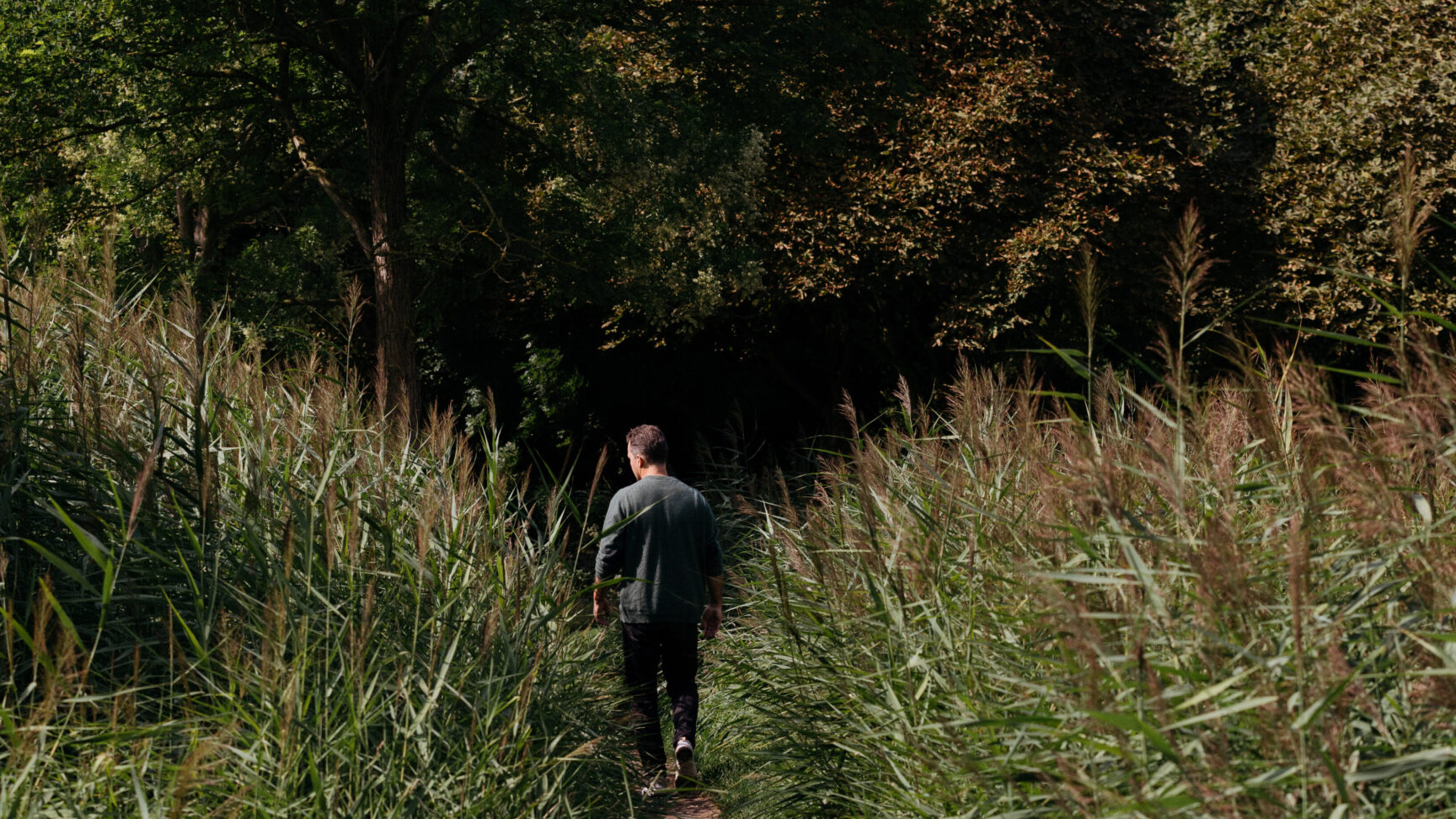
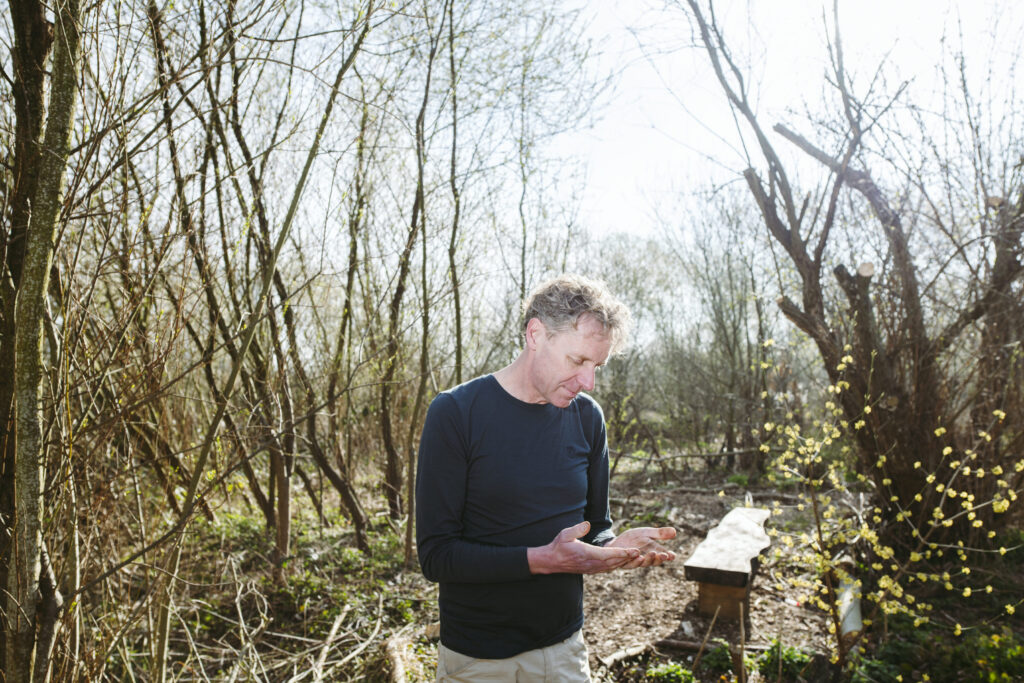
 Zach Bush: “I found myself on the front line of a wave of disease that hadn’t existed a decade earlier.” Photographer: On a hazy morning
 “That led me to a deeper question: what happens when human biology becomes disconnected from nourishment?” Photographer: On a hazy morning
Was there a moment when that realisation truly crystallised for you?
“Yes, very clearly. In 2008, I had my first patient enter a clinical trial for this new therapy. She was the first person to take the drug, and was understandably nervous. I was sitting with her, encouraging her to take the capsules, when she asked a simple question: ‘What do these have to do with why I have cancer?’
And I had no answer.
That question flipped my entire paradigm. I realised there has never been a case of cancer caused by a lack of chemotherapy. There has never been a case of heart disease caused by a lack of blood pressure medication.
From that moment on, I began asking a different question: what is upstream of disease? What is upstream of cancer?
For nearly twenty years, that’s what I’ve been trying to understand. And what turned up is, in many ways, very simple: nature deficit. When human biology becomes disconnected from nature, disease becomes inevitable.”
Uitgelichte quote
There’s no injury we’ve created that nature hasn’t already evolved a response to
How does that insight translate into your work today?
“Over the past fifteen years, I’ve built companies across different industries, all guided by the same question: how do we reconnect natural systems to large-scale human systems?
In the pharmaceutical space, this led me to soil. In 2012, I founded a biotech company that developed a supplement called Intelligence of Nature, derived from fossilised soils dating back nearly 60 million years – from a time when microbial biodiversity was far richer than it is today.
What’s striking is how quickly elements from these ancient soil ecosystems can influence human biology in laboratory settings. When you look under the microscope, you see immediate changes in how human cells behave: in protein production, in antioxidant activity, even in the early stages of tissue repair.
It challenges our assumptions about how quickly the body can respond when it reconnects to these kinds of natural signals. What that has shown me is that nature is inherently regenerative. There’s no injury we’ve created that nature hasn’t already evolved a response to.”
Uitgelichte quote
The problem is that we’ve abstracted ourselves away from our biological reality
 Zach Bush: “Humans can function as a keystone species, increasing vitality and biodiversity wherever we interact with the world.” Photographer: On a hazy morning
 “When we fail to do so, we become harmful to the planet, ourselves and one another.” Photographer: On a hazy morning
Which raises a different question: if that capacity is already there, why are we so unhealthy?
“The problem is that we’ve abstracted ourselves away from our biological reality, building systems based on metrics and values that are disconnected from life itself – and in doing so, we’ve become harmful to the planet, ourselves and one another.
Reconnecting to biological systems means stepping back into what I would call a right relationship – one in which humans can function as a keystone species, increasing vitality and biodiversity wherever we interact with the world.”
Uitgelichte quote
Communities that had no history of chronic disease begin to develop conditions like diabetes within a short span of time
There are still places where this ‘right relationship’ exists, for example in indigenous communities.
“That’s right, you still see this in parts of the Amazon, in southern Ecuador, northern Brazil: communities that remain closely attuned to the ecosystems around them. What’s striking, however, is how quickly that connection can also be lost. Cultures that have sustained themselves for tens of thousands of years can begin to unravel within a single generation.
Often, the first break comes through food. Even deep in the Amazon, one of the first signs is something as simple as boxed apple juice for children – a processed product replacing living, local food systems that have nourished people for millennia. There’s something about the convenience, the packaging, the perception of modernity that makes it immediately attractive. From there, other changes follow: new habits, new dependencies. And within a few years, you can already see the consequences: in immune function, metabolism, and overall health. Communities that had no history of chronic disease begin to develop conditions like diabetes within a short span of time.
I’ve seen this first-hand in parts of rural India – regions where chronic disease was virtually unknown a few decades ago, and where, within fifteen years of the introduction of processed food and chemical agriculture, you now see high rates of kidney failure and childhood cancers. Entire hospital systems pop up to manage diseases that didn’t previously exist…
It’s a stark illustration of how quickly the human system responds to disconnection from nature, and how deep that wound can go.”
Uitgelichte quote
The microbiome is not an isolated system – it’s embedded within a much larger macrobiome
Is that what led you to focus on gut health?
“It was really the science of soil that led me there. When we began working with extracts from ancient soils, it reframed how I understood the microbiome.
Around that time, in the late 2000s and early 2010s, microbiome research was expanding rapidly. Projects like the American Gut Project showed how diminished the Western microbiome had become. A typical American gut might contain around 8,000 species of bacteria – compared to around 40,000 in hunter-gatherer communities in East Africa. That points to a significant loss of biodiversity, largely driven by modern agriculture, processed food, and lifestyle.
One of the most striking observations came from a hunter-gatherer community that had been given antibiotics by visiting missionaries, with the instruction to take them if they became ill. They lived in such a state of health that they didn’t even have a word for illness, and so, not fully understanding the pills, they simply shared them among the group. Researchers feared this might permanently damage what could be one of the last intact human microbiomes. But when they continued sampling, they found something remarkable: there was virtually no loss of diversity – the microbiome rebounded almost immediately. In contrast, in Western populations, antibiotics can wipe out a large portion of the microbiome.
So why are some systems so resilient, and others so fragile?
What they discovered is that, in these communities, the microbiome is not an isolated system – it’s embedded within a much larger macrobiome: the soil, the food, the animals, the entire living environment. The gut is simply an extension of that broader ecosystem.
When the macrobiome is intact, the microbiome remains resilient. But when we isolate ourselves – in built environments, disconnected from nature – that relationship breaks down, and our internal ecosystem becomes far more fragile.
That, to me, is the deeper story of gut health: it’s not just about what’s happening inside the body, but about our relationship to the living systems around us.”
Uitgelichte quote
It shows how much of our microbiome is influenced by what we physically engage with in the web of life
 Zach Bush: “The crisis in our gut health is really an extension of a much deeper disconnection from the macrobiome.” Photographer: On a hazy morning
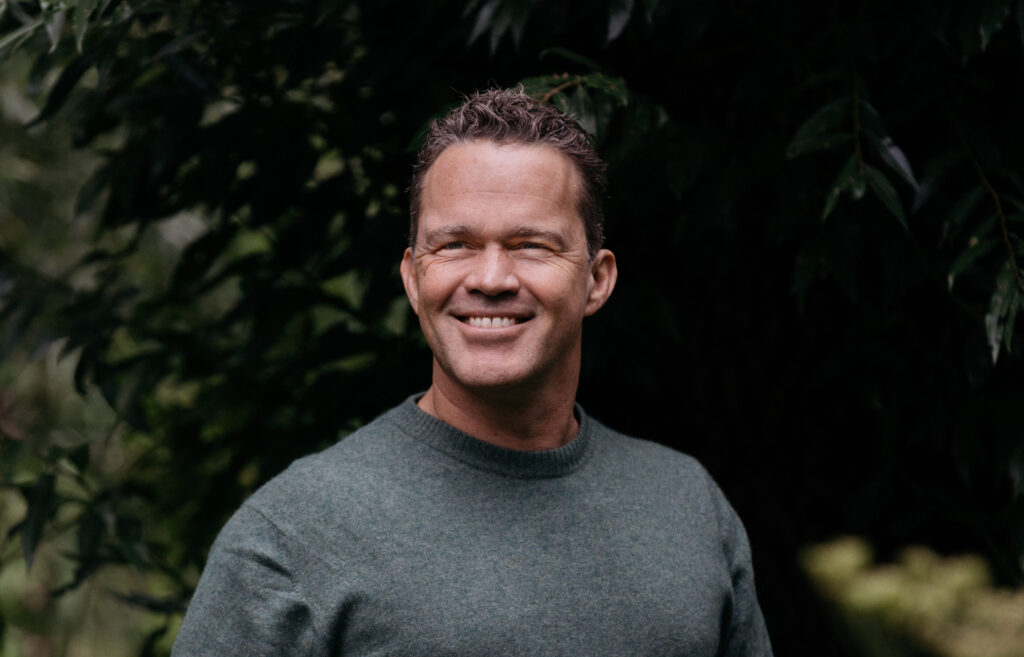 “It’s not just about food. It’s about the air we breathe, the surfaces we touch, and the extent to which we remain in contact with life around us.” Photographer: On a hazy morning
So, it’s really about restoring biodiversity in our environment as a whole.
“Exactly, because it’s not just about food. It’s about the air we breathe, the surfaces we touch, and the extent to which we remain in contact with life around us. We’ve become increasingly isolated from the natural world – and that has consequences for our biology.
For example, in those same hunter-gatherer communities, scientists found that one of the dominant bacterial species in the gut – never observed in any Western population – came from the animals themselves. During hunting season, people were in constant contact with the zebras they tracked and carried, and the bacteria on the animals’ hides were directly shaping their gut microbiome.
It shows how much of our microbiome is influenced by what we physically engage with in the web of life. When we lose that contact – when we no longer touch the animals we eat, or engage with the ecosystems that sustain us – something fundamental shifts. Food becomes more inflammatory, the microbiome loses key inputs, and the relationship breaks down.
Today, many children have no idea that food comes from living systems – that a carrot grows in the soil, that meat comes from an animal. In that sense, the crisis in our gut health is really an extension of a much deeper disconnection from the macrobiome.”
Uitgelichte quote
What struck me again and again was a kind of ungrounding – a loss of connection
 Zach Bush: “It points again to the importance of connection – not just socially, but biologically and ecologically.” Photographer: On a hazy morning
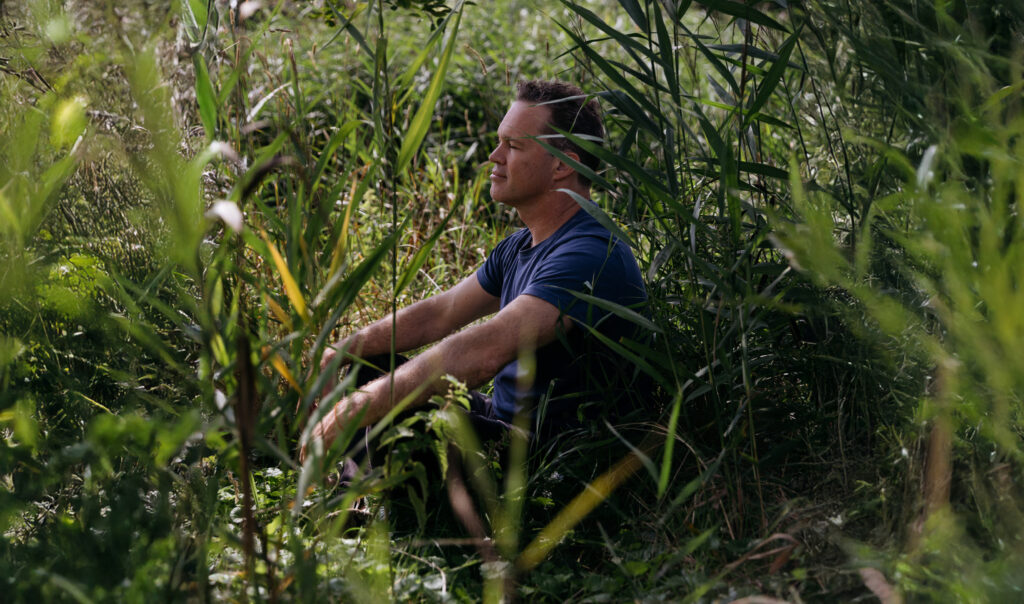 “That, to me, is the deeper story of gut health: it’s not just about what’s happening inside the body, but about our relationship to the living systems around us.” Photographer: On a hazy morning
How does this disconnection from nature show up in mental health?
“I think, as a society, we’ve become increasingly disconnected from ways of living that help us stay rooted – in relationship, in balance. I saw the consequences of that up close during the years I worked in psychiatric wards.
What struck me again and again was a kind of ungrounding – a loss of connection, not just to themselves, but to the world around them. As those connections weaken, we see rising levels of anxiety, depression and distress, particularly among younger generations.
It’s a difficult and complex reality. But to me, it points again to the importance of connection – not just socially, but biologically and ecologically. Without that grounding, we become far more vulnerable.”
Uitgelichte quote
The transition away from chemical agriculture takes time – often 15 to 20 years – because farmers are working within systems they’ve been taught to depend on
And yet, much of our food system still moves in the opposite direction – further away from nature. How do you see the continued reliance on pesticides, monocultures and synthetic fertilisers?
“I’m very confident there’s no need for them in a regenerative future. To me, their persistence is less a biological issue and more a psychological one. The transition away from chemical agriculture takes time – often 15 to 20 years – because farmers are working within systems they’ve been taught to depend on, and now rely on because of their long-term use.
These chemicals act as potent antibiotics. As the biology of the soil degrades, farmers become increasingly dependent on external inputs to compensate for what the soil can no longer do. That creates a cycle: weaker soils produce weaker plants, more vulnerable to pests and disease, which in turn drives further chemical use. It’s a system that reinforces itself – economically and biologically.
What doesn’t help is framing this as a battle. Telling farmers they’re the problem tends to entrench positions rather than change them. If we stay in an anti-chemical mindset, we risk reinforcing the very system we’re trying to move beyond. The shift has to be towards biology: not less chemistry, but a different paradigm altogether.
And that shift is already underway. Large agricultural companies are investing in biological inputs – bacteria, fungi and other living systems that can restore soil function. Regenerative farmers are returning to a healthy relationship with the land. Consumers are becoming more aware.
But the deeper change is cultural. As long as we remain consumers, dependent on distant systems for our food, the demand for chemical agriculture remains. If even a small percentage of people began growing food again – even five percent – the system could shift quickly.”
Uitgelichte quote
Ultimately, regeneration isn’t just a technical process. It’s a cultural one
You often emphasise the role of storytelling in this transition.
“Yes, exactly. When you focus heavily on science – trying to show the impact of chemical agriculture on human health and ecosystems – you quickly realise that information alone doesn’t create change. You can present data on soil loss, disease, or health impacts, and it doesn’t necessarily shift behaviour. Story does.
That’s why, in 2019, we launched Project Biome and its initiative Farmer’s Footprint: to create space for farmers to tell their own stories – through short documentaries, conversations, shared experiences.
Because for most of human history, this is how we’ve learned: sitting around a fire, listening to one another, passing on knowledge through story and relationship. And I think that’s where regeneration really begins: not just in the soil, but in the stories we tell about who we are, and how we belong within the living world.
What we’re trying to do now is scale that shift in narrative — creating spaces, through film and gatherings, where people can reconnect not just intellectually, but physically and emotionally. Because ultimately, regeneration isn’t just a technical process. It’s a cultural one. It requires us to feel our way back into relationship.”
Uitgelichte quote
Almost every dream I hold – for myself and for humanity – remains unrealised
You’ve spent decades building organisations aimed at systemic change. Do you have any unfulfilled dreams?
“Almost every dream I hold – for myself and for humanity – remains unrealised. That brings both heartbreak and a strange sense of clarity: it reminds me that my presence here still has purpose.”
Uitgelichte quote
I still feel a deep sense of wonder. And in many ways, that’s what keeps me going
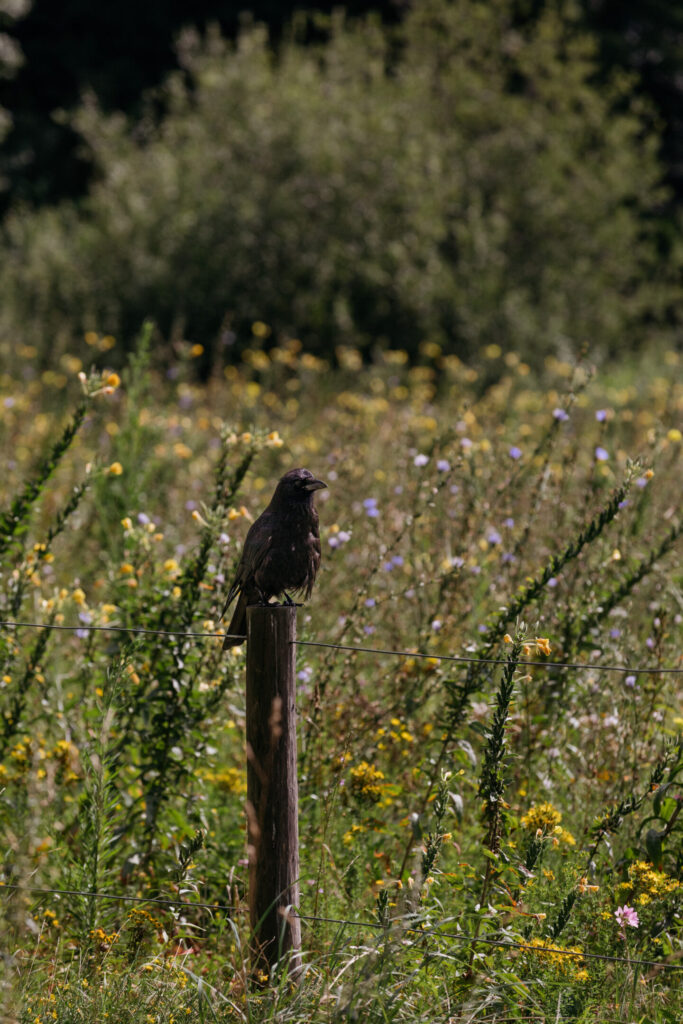 Zach Bush: “We have the ability to act as a keystone species – capable of recognising and increasing vitality and diversity wherever we go.” Photographer: On a hazy morning
 “We’re the only species that will stand to watch a sunset.” Photographer: On a hazy morning
And yet, surely there must be things you feel proud of?
“In all honesty, I feel more heartbreak than pride. No matter how much energy I’ve put in – or the extraordinary work of the teams around me – I still see systems accelerating towards breakdown and destruction. It’s hard to look at that and feel proud.
What I can say is that I still feel a deep sense of wonder. And in many ways, that’s what keeps me going: a sense of awe for the beauty of this planet, despite everything.”
Uitgelichte quote
I don’t think transformation will come through more technology or more systems. It will come through stillness
 Zach Bush: “Where I find myself now is letting go of the idea that I can change the world at scale.” Photographer: On a hazy morning
 Fotograaf: On a hazy morning
Is that sense of wonder part of what defines us as a human species?
“What sets us humans apart is that we carry both the vulnerability and the gift of feeling separate from nature. In that perceived separation, we gain a unique perspective – the ability to look back and recognise beauty.
We’re the only species that will stand to watch a sunset. Elephants on the savannah don’t stop in the same way, because they experience themselves as part of it. For us, there is distance, and from that, the recognition of beauty. In that sense, we have the ability to act as a keystone species – capable of recognising and increasing vitality and diversity wherever we go. But if we’re not careful, that same separation places us in an adversarial relationship with the natural world around us, and we end up wounding it through the systems we’ve built – our institutions, our economies – where we often see dysfunction rather than harmony.
So, where I find myself now is letting go of the idea that I can change the world at scale. The work becomes more immediate, more local: tending to the soil beneath my feet, growing food, paying attention to the life around me. If I can do that well, then perhaps I’m part of the future I want to live in.
Ultimately, I don’t think transformation will come through more technology or more systems. It will come through stillness – through slowing down, and learning to listen again. And perhaps it takes moments where our systems begin to falter for us to return to that – not as collapse, but as an invitation: to step back into relationship, into stewardship, and into a different way of being human.”
Original publication date: 22nd of April, 2026. Latest update: 6th of August, 2026.