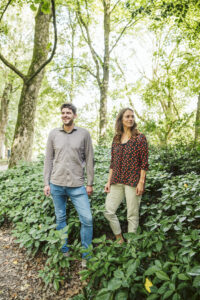
Koen van Seijen
Activities:Podcast maker and expert in impact investing
Founder:Koen van Seijen
Launched:2016

Introductie
As founder and host of the Investing in Regenerative Agriculture and Food podcast and relationship manager at Toniic – one of the world’s largest impact investing networks – Koen van Seijen serves as a bridge between regenerative pioneers and (impact) investors. In his podcast, he explores how money can be used to finance and accelerate the transition to regenerative agriculture.
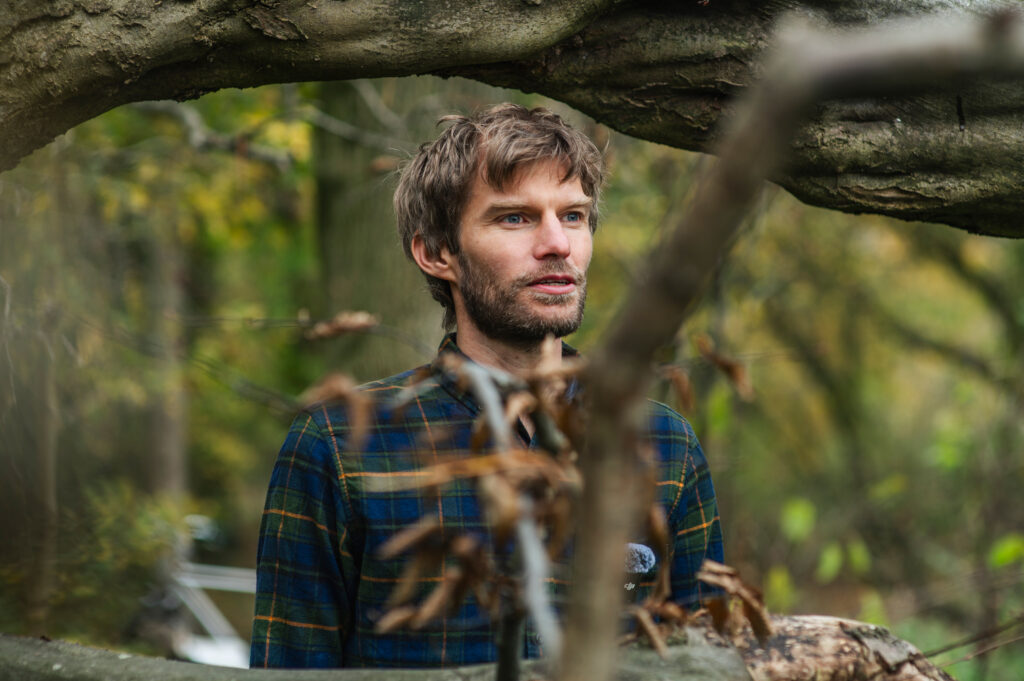
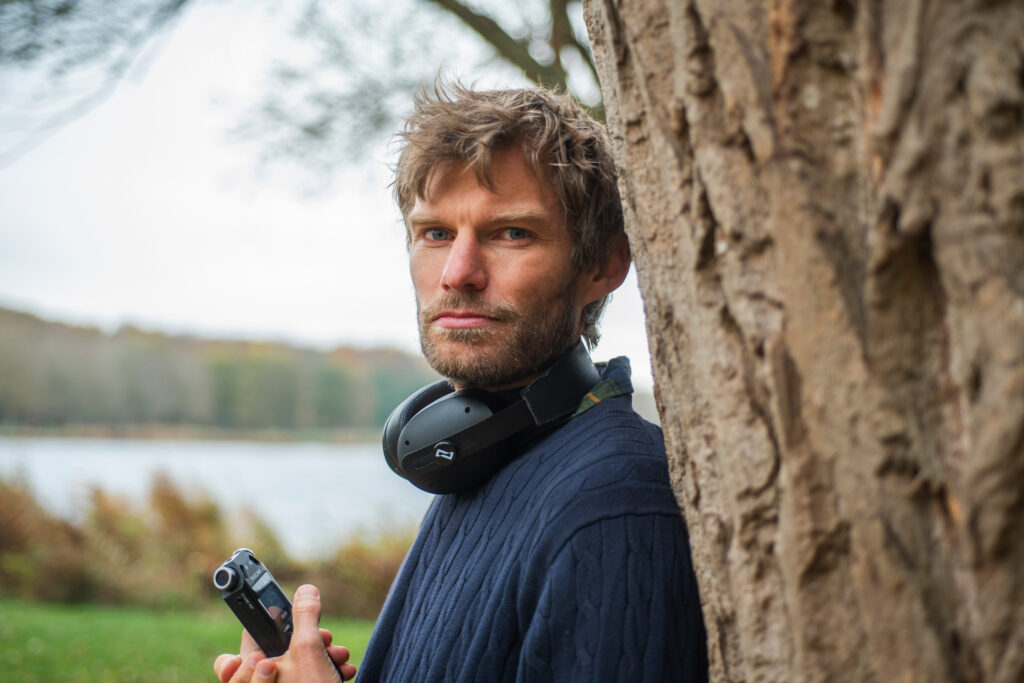 Koen van Seijen: “A good excuse to spend hours talking to all kinds of interesting people.” Photographer: Gabriela Hengeveld
“I didn’t grow up on a farm”, Koen begins, “nor in an entrepreneurial family, or in a world where investments played a major role. But my father loved to cook, and food mattered in our family. It was mainly about flavour and organic food. We lived more or less by the principles of slow food: good, pure and fair. We believed that if we all made slightly better choices about what we bought, things would eventually work themselves out.”
Although Koen gradually became more immersed in climate issues, his early interest lay primarily in energy systems. That changed in 2011. “I read An Optimist’s Tour of the Future by Mark Stevenson. One chapter focused on carbon farming – storing CO2 in the soil through land management. When I saw food, climate, agriculture and finance come together in a single sentence, something clicked. I’m definitely not a soil scientist, but with a few quick calculations on the back of an envelope, I could immediately see the logic. ‘Why is nobody talking about this?’, I asked myself. And also: ‘Why am I personally so little engaged with the food system?’”
“At the time, I was already working with impact investors, but it was only then that I realised how deeply climate, food, agriculture, biodiversity, health, inequality and so many other issues are intertwined. Regenerative agriculture revealed itself as a vast, fascinating and deeply personal field – and in 2011, remarkably little was happening in that space.”
Uitgelichte quote
Can we use money as a tool to accelerate the agricultural transition?
 Koen van Seijen: “Why is nobody talking about this?” Photographer: Gabriela Hengeveld
 Photographer: Gabriela Hengeveld
Finding a role in the transition
“I never had the ambition to become a farmer, and I certainly didn’t have the capital to be a major investor”, Koen continues, “but I did want to contribute as an entrepreneur. That’s why I started the Investing in Regenerative Agriculture and Food podcast: it was a good excuse to spend hours speaking with fascinating people and asking them about the role of money in regenerative agriculture. In searching for my role, it gradually became clear: to investigate the subject and share what I learn.”
By now, Koen has spoken to more than 400 pioneers. “We talk to some of the most interesting people working in regenerative agriculture and food. Conversations about soil and biodiversity almost always lead to something deeper: our relationship with nature. The realisation that we are part of it – even though many people have lost that connection. It’s remarkable that this is my job. We’re not the ones doing the hard work – they are. But we tell their stories and, in doing so, help move things forward.”
Koen publishes weekly, reaching around 20,000 listeners per episode; last year that amounted to roughly 1.2 million in total. About 40 per cent of listeners are based in the United States, another 40 per cent in Europe, and the remaining 20 per cent spread across the rest of the world. “English is our working language because we want to reach a global audience. And because in 2011, in the Netherlands, very little was happening in regenerative agriculture and food. Thankfully, the Dutch have woken up too.”
Uitgelichte quote
The destructive agriculture and food system is very good at using money as a tool
 Koen van Seijen: “Can we even persuade the most cynical investors to step into regenerative agriculture?” Photographer: Gabriela Hengeveld
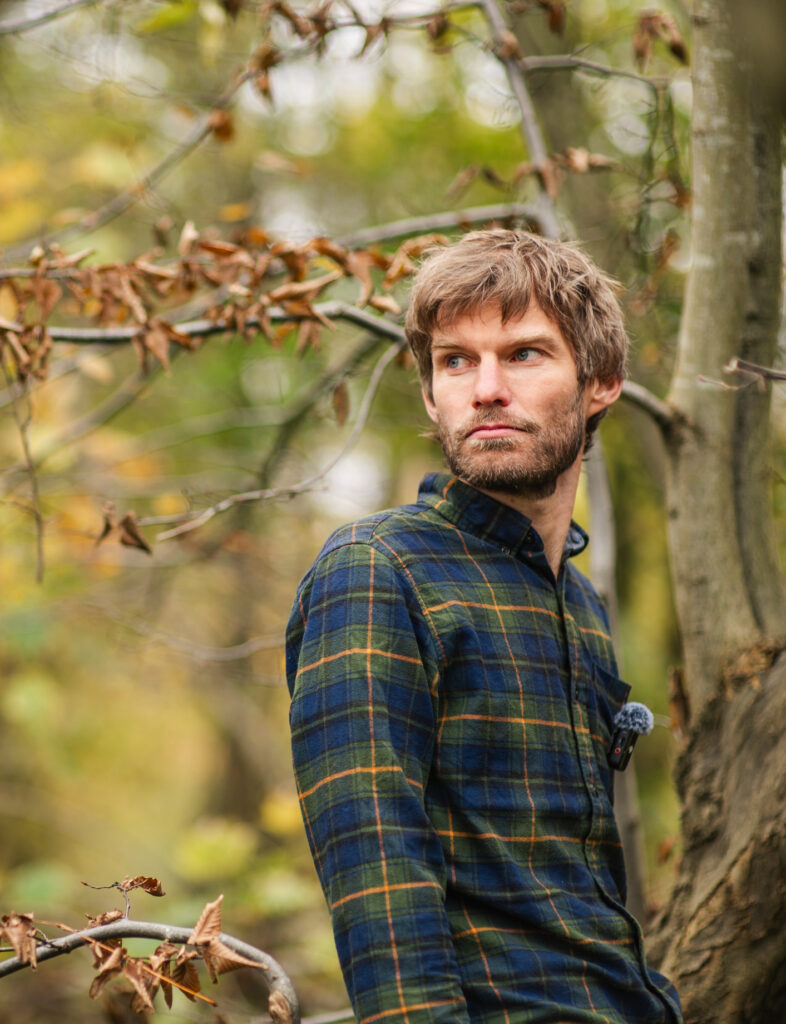 Photographer: Gabriela Hengeveld
“The financial system is devilish”
‘Can we use money as a lever to accelerate the agricultural transition – and if so, how?’ That is the central question of the podcast. “‘The financial system and everything to do with money is devilish’, we often hear”, Koen says. “In many cases that response is understandable. But there are also elements within the system we can use. We cannot wait for capitalism to change – by then we’ll have no soil left. We don’t have that luxury; we have to act now. The destructive food and agriculture system is very good at using money as a tool. Can regenerative agriculture do the same? In our first 100 episodes, we found the answer: yes. Now the question is: how?”
Uitgelichte quote
Can we build a retail chain made up exclusively of sustainable and regenerative brands?
 “Suppose we get BlackRock on board – we could achieve a great deal. But are we comfortable with that?” Photographer: Gabriela Hengeveld
On the podcast, Koen explores steward-ownership, alternative financing models, profit-sharing, and whether regenerative agriculture can deliver financial returns. And: is it attractive to investors who are not impact-driven, but simply seeking profit? “That pool of capital is far larger than the one earmarked for impact investing. Can we even persuade the most cynical investors to step into regenerative agriculture? Suppose we get BlackRock on board – we could achieve a great deal. But are we comfortable with that? And at what point are we no longer comfortable? Should small pioneers aspire to be acquired by large players such as Unilever, or not? Can we build a retail chain made up exclusively of sustainable and regenerative brands? In short: how do you engage with the current financial system consciously and strategically? These are the questions that have kept us going for more than 400 episodes.”
Uitgelichte quote
The most successful entrepreneurs understand both the principles permaculture and how to attract attention on the capital market
 Photographer: Gabriela Hengeveld
 Koen van Seijen: “How do we ensure supermarket shelves remain stocked over the next decade?” Photographer: Gabriela Hengeveld
The (mis)match between regenerative pioneers and investors
Because Koen also works as a relationship manager at Toniic, he quite literally sits on both sides of the table. “Entrepreneurship is essential”, he emphasizes. “The most successful founders understand both the principles of permaculture and how to capture attention on the capital market.”
“What I often see is that regenerative pioneers and investors simply don’t speak the same language. Pioneers rarely have twenty years of detailed financial records – understandably, that hasn’t been their focus. But if they want to attract investors, they have to show that their approach makes financial sense too. For instance, by demonstrating that regenerative agriculture carries fewer risks and is more resilient. Think of land that can better absorb extreme rainfall, or systems where trees provide shade for grass-fed cattle, enabling them to stay outdoors year-round. This is about food security: how do we ensure supermarket shelves remain stocked over the next decade? The data is still limited – yet that is exactly what investors want to see.”
Uitgelichte quote
In real estate, long-term models are standard – so why not in agriculture?
 Koen van Seijen: “Many investors come from the software world, where you can iterate daily.” Photographer: Gabriela Hengeveld
 “How do you engage with the current financial system consciously and strategically?” Photographer: Gabriela Hengeveld
 Photographer: Gabriela Hengeveld
Koen sees another structural mismatch. “On the investor side, there is often little understanding of basic biology – photosynthesis, soil processes, what actually happens in the field. A refresher course in agriculture wouldn’t hurt. Time is another obstacle. Many investors come from the software world, where you can iterate daily. On a farm, that’s impossible. Biological processes unfold at their own pace. Yet many investment funds are structured around seven to ten years. For agroforestry, that horizon is simply too short. In real estate, long-term models are standard – so why not in agriculture? A tree is, in the end, a structure as well – one with thousands of ‘solar panels’ converting sunlight into value. Why can’t we finance that? Surely a thousand-year-old chestnut tree can fit into a spreadsheet.”
Uitgelichte quote
The bubble is still small, but it is definitely growing

A new wave of regenerative pioneers
“I’m seeing a new wave of regenerative pioneers who previously built successful companies in other sectors. They understand entrepreneurship and can speak the language of investors”, Koen says. “A lot of innovation is coming from that group right now. We haven’t reached a tipping point – the bubble is still relatively small – but it is definitely growing. This is the moment to lay the foundations of regenerative agriculture and build a strong base, so we’re prepared when attention and capital inevitably shift. And I believe they will.”
Also read the opinion piece by Koen van Seijen and Antonella Ilaria Totaro on why regeneration needs to start speaking the language of finance – and how.