Jennita Jansen
Activities:Growing regenerative and organic flowers
Founder:Jennita Jansen
Launched:2020
Location:Scherpenzeel, the Netherlands

Introductie
People who live near industrial flower bulb farms find agricultural chemicals in their hair, household dust and even in their children’s nappies. Yet it can be done differently, shows organic and regenerative flower grower Jennita Jansen. On 1,000 square metres, she cultivates over fifty different species of field flowers, without pesticides or artificial fertilisers and grown outdoors in the open soil. “What you take and what you give must be balanced.”
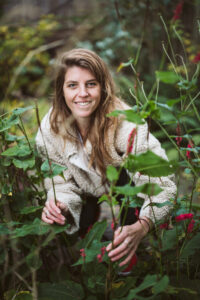
 Jennita Jansen in her garden. Photographer: Diane van der Marel
When Jennita Jansen found herself at home with a burnout, she began growing vegetables in an allotment. To attract pollinators, she planted a few flowers among them, but soon realised she liked the flowers even more. As she worked increasingly with nature, she also began to reconnect with herself. “That’s when I started looking for a piece of land where I could expand the cultivation, and slowly it got out of hand.”
Today, Jennita is a full-time organic and regenerative flower grower. At her flower nursery, located on the border between the Dutch provinces of Utrecht and Gelderland, she grows dozens of field flowers, saves her own seeds and gives courses. “I ended up at an estate in the middle of a village, with a large garden where vegetables and flowers were once grown for the family who lived here”, Jennita says. She works alongside an organic vegetable grower who focuses on food crops. “In the garden we alternate strips of vegetables and flowers. The flowers attract beneficial insects and help protect the unsprayed vegetables. And underground, the vegetables create more life and diversity, which in turn benefits the flowers.”
Uitgelichte quote
If you walk around here in summer, you encounter hundreds of butterflies
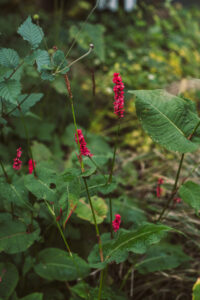
 Jennita Jansen’s flowers support biodiversity. Photograph: Diane van der Marel
“If you walk around here in summer, you encounter hundreds of butterflies. And when people call me whilst I’m in the garden, they’re always struck by the birdsong in the background – that’s how many animals live here.” This abundance is no coincidence: the garden is pesticide-free and biodiversity is actively encouraged. Hedges line the edges of the plot and a pond has been created, home to both toads and ducks, which eat the slugs in the beds.
Many of the flowers Jennita grows are native species – plants that naturally occur in the Netherlands. “As an organic grower, you’re looking for flowers that thrive here – in this specific place and climate – and that naturally leads you to many native species”, she explains. “But I also grow sunflowers, zinnias and dahlias: they’ve stolen my heart.”
Flowers as a seasonal product
Jennita’s harvest season runs from March to September. “Some people say: ‘But then I can’t put flowers on the table every single week.’ That’s true. At least if you don’t want to contribute to an industry that grows flowers in gas heated greenhouses or flies them in from faraway places. Because that’s the reality of a bunch of roses in winter.”
To meet people halfway and supplement her income, she sells dried flowers in autumn and winter. “I harvest those in summer, hang them to dry and make bouquets from them. But fresh flowers really need to be seen as a seasonal product – just like strawberries. You don’t buy those in February either.”
 Jennita Jansen grows all her flowers herself, from seed to bloom. Photograph: Diane van der Marel
 Photograph: Diane van der Marel
Uitgelichte quote
Many people want a bunch for a few euros, like in the supermarket. Because of the way I produce, that’s not an option
Seeds
Another area Jennita focuses on is seeds. She wants to remain independent of major seed companies, which manipulate seeds so that flowers no longer produce their own seeds at all. But her focus on seeds also grows naturally out of the way she works. “I always leave part of the flowers for the insects, and those flowers go to seed”, she explains. “It feels strange to put them on the compost heap, because there is so much potential in that seed, literally lying up for grabs.”
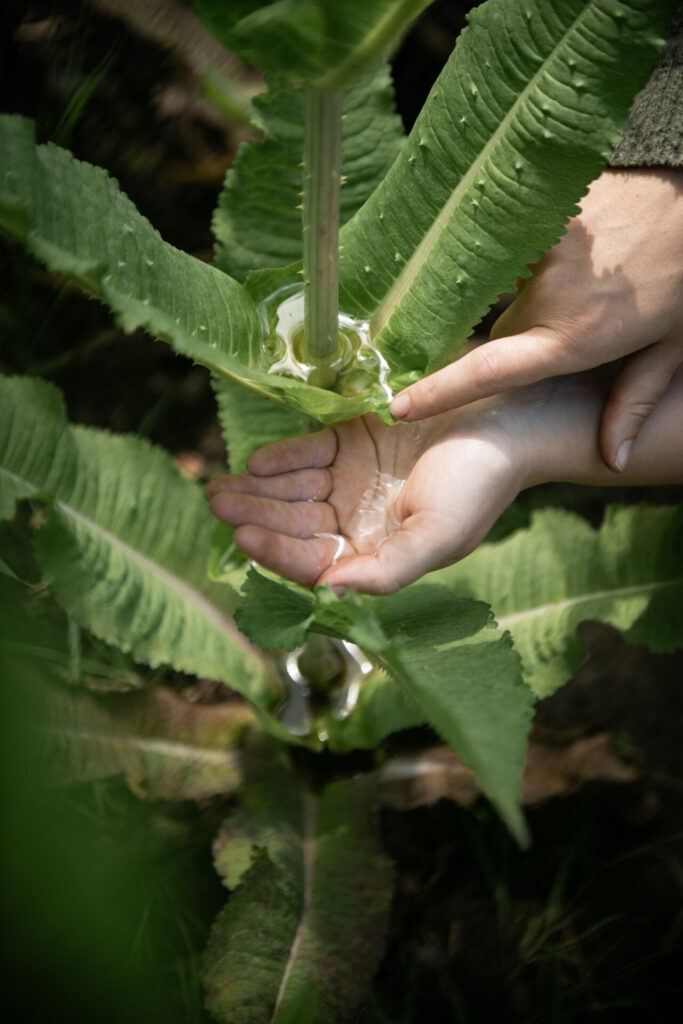 Photograph: Diane van der Marel
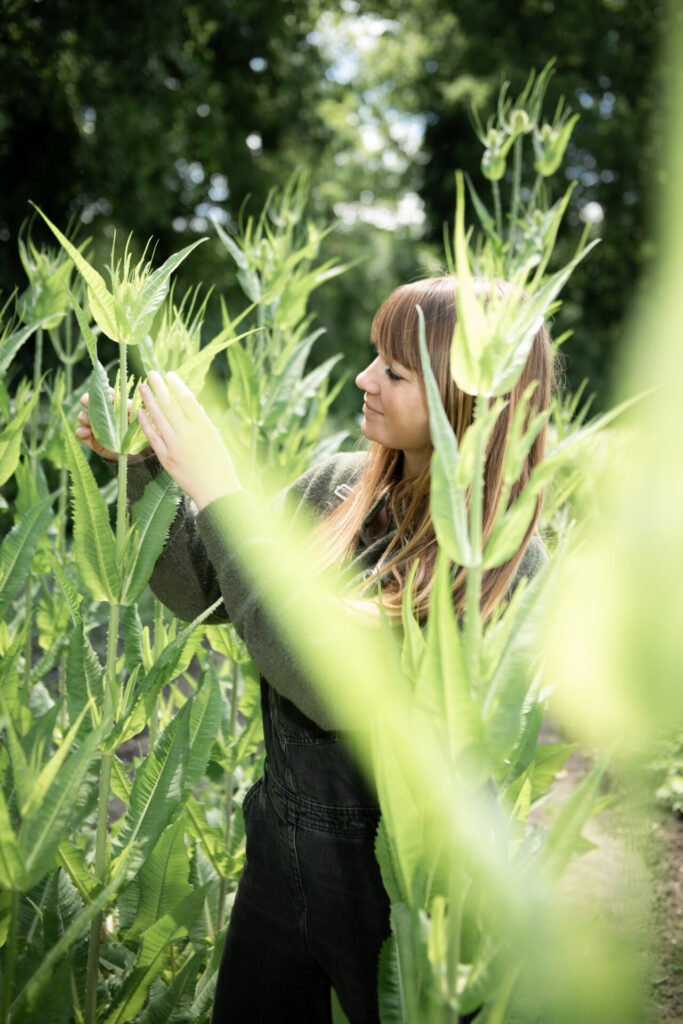 In her regenerative and organic market garden, Jennita Jansen found herself again. Photograph: Diane van der Marel
An alternative
Jennita still finds it hard to grasp just how unnatural and unhealthy conventional flowers are. Especially when you realise that the Netherlands exports 4.2 billion euros’ worth of cut flowers every year, grown here in pesticide-heavy monocultures – causing pollution and health risks locally, while ending up on tables abroad. At the same time, Jennita knows how difficult it is for conventional growers to switch to organic and regenerative methods. “They’re often stuck in a system passed down from generation to generation, and they’re trying to stay afloat”, she says. Rather than criticising conventional cultivation, she focuses on offering an alternative. “So that people who want to enjoy flowers, but don’t want to contribute to pollution, have somewhere to go.”
Uitgelichte quote
Conventional growers are stuck in a system that has been passed down from generation to generation
Regeneration
“In the early morning it’s magical here. Flowers that close at night open, the sun comes up and the birds start to sing. Those are the moments when I think: what kind of dream am I living in – is this really my work?”, Jennita shares. “The people who come here are consciously looking for that connection with nature. They often say: ‘I haven’t bought flowers in years, but I’m so glad I can support this.’”
Still, finding enough customers willing to pay the true price isn’t always easy. “Many people still just want a bunch for a few euros, like in the supermarket. Because of the way I produce, that’s not an option – which makes your potential market much smaller”, Jennita says. “That puzzle occupies me every day.”
“For me, regeneration is about creating balance. Doing nothing about aphids so ladybirds can solve it. Feeding the soil with green manure after the flowering season. It’s actually a very logical way of working, with care and attention. So that what you give and what you take don’t get out of balance, and you’re consciously engaged with the piece of planet that you steward – whether that’s your balcony or an entire market garden.”
Also dive into our story of Sprinklr, a regenerative enterprise who makes organic plants available to all.
Originally published on the 3rd of July 2024. Latest update: 21st of April 2026.