Géraud Dumont de Chassart
Activities:Regenerative agriculture
Founder:Géraud Dumont de Chassart
Location:Grez-Doiceau, Belgium
Introductie
When it comes to the future of farming, Géraud Dumont de Chassart believes we have forgotten something essential: nature sets the rules. The challenge is not to control it, but to learn how to work with it. “If we want to speed up the transition, we have to do it together.”
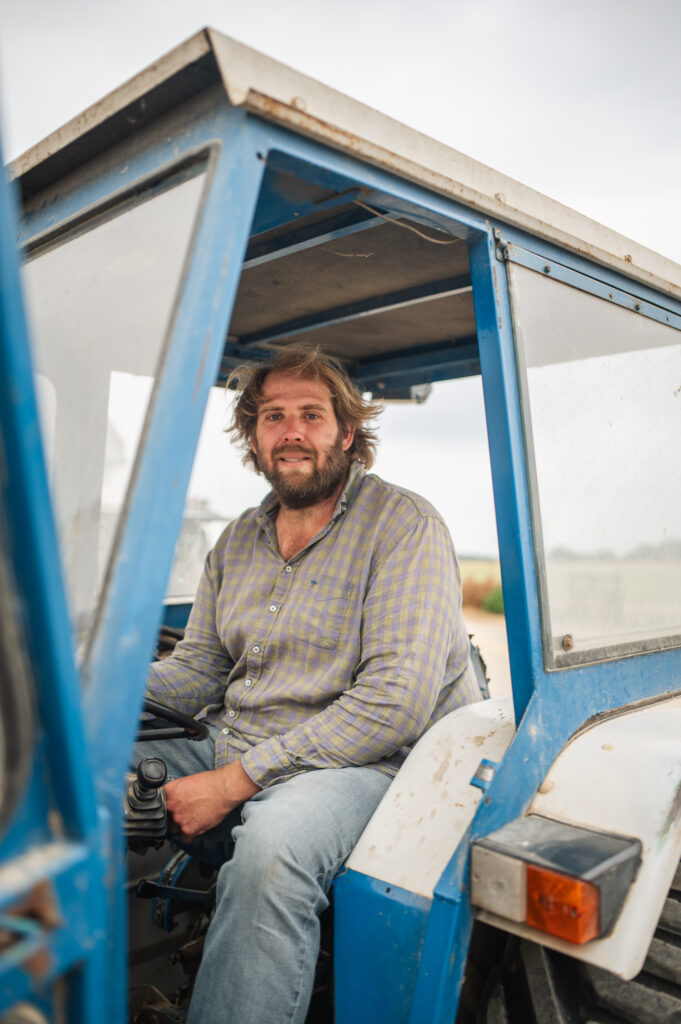
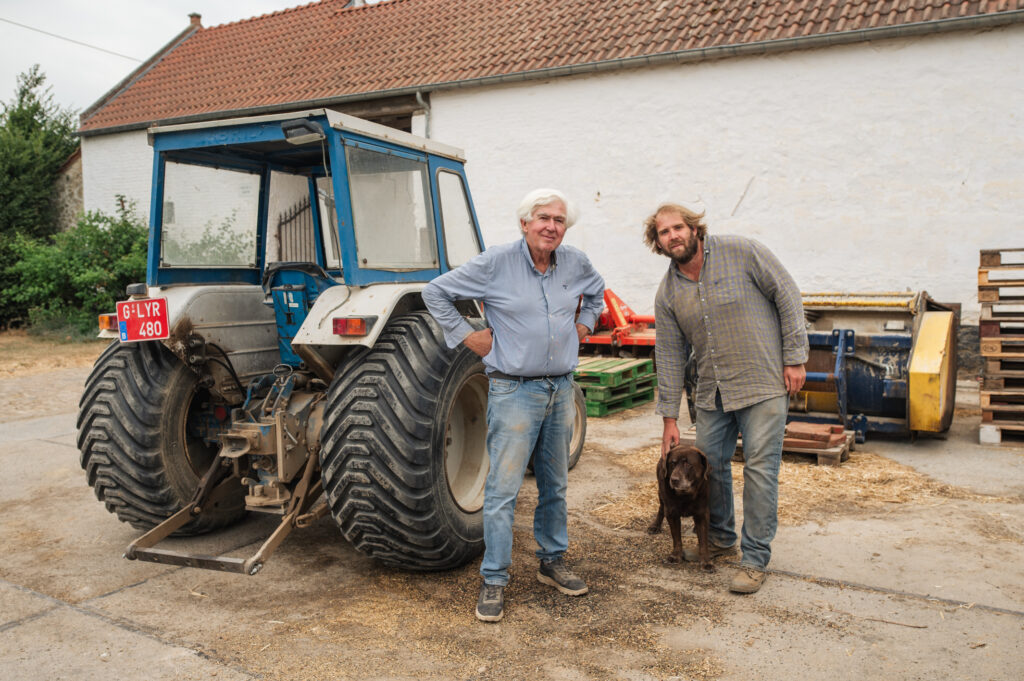 Géraud and his father at Ferme de la Sarte. Photographer: Gabriela Hengeveld
For Géraud Dumont de Chassart, becoming a farmer was never a question of if, but when. As a third-generation farmer, he grew up on Ferme de la Sarte, a Belgian family farm, often sitting beside his father on the tractor. Now, as he has just welcomed his first son, he is already thinking about what he hopes to pass on to the next generation. That future, he believes, depends as much on healthy soils as on healthy finances.
Those two goals are inseparable, Géraud explains: “A farm can only be sustainable if it is both environmentally and economically viable.” Unlike many farmers entering regenerative agriculture today, Géraud did not have to make the initial transition himself. He inherited a farm that was already on that journey: more than thirty years ago, his father began moving Ferme de la Sarte towards conservation agriculture, making the farm one of the early pioneers of the approach in the region.
Géraud has spent the past fifteen years pushing it further, convinced that healthier soils, lower inputs and stronger biodiversity ultimately lead to a more resilient business. Today, the farm operates a no-till system, uses permanent cover crops to keep living roots in the soil, experiments with compost-based biological inputs and continuously searches for ways to reduce fertilizers and chemical inputs.
“My long-term ambition is to combine no-till farming with organic practices”, Géraud says. “But I also know that there is no such thing as a perfect system: farming with nature means constantly adapting, learning and improving. Every year we learn more and understand different things. As a farmer, you’re always in transition.”
Uitgelichte quote
A farm can only be sustainable if it is both environmentally and economically viable
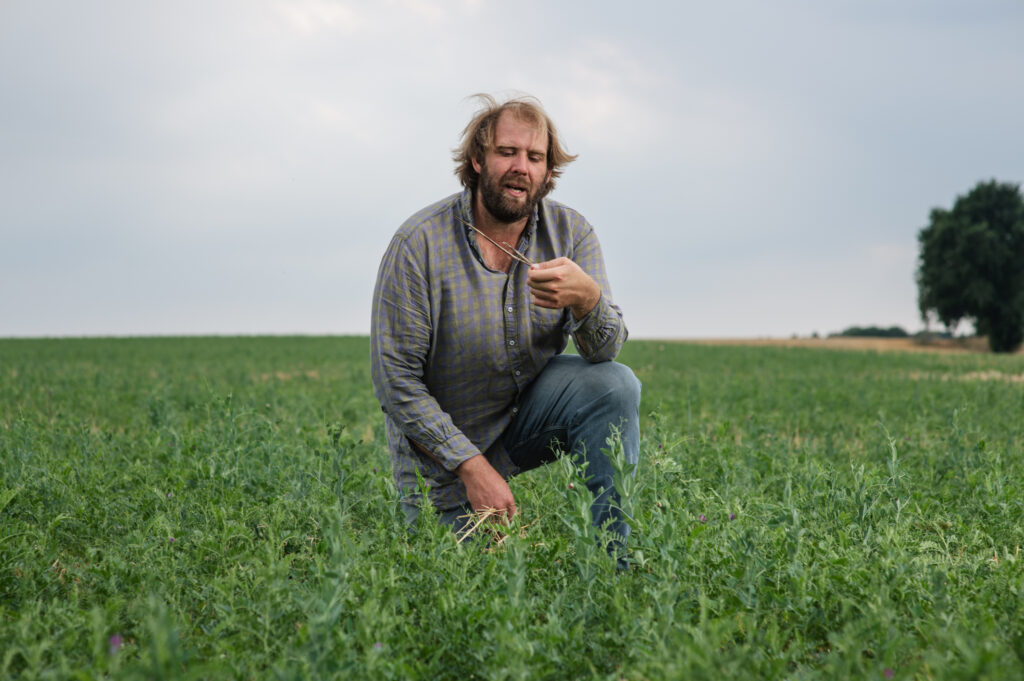 Photographer: Gabriela Hengeveld
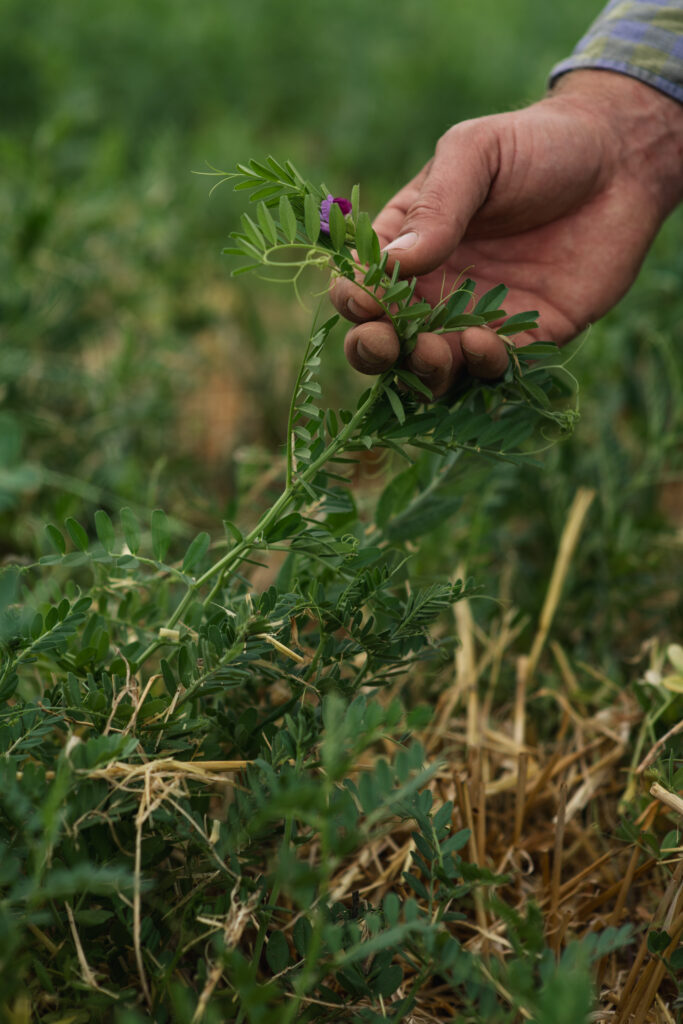 “My long-term ambition is to combine no-till farming with organic practices.” Photographer: Gabriela Hengeveld
Building a regenerative farming movement
When Géraud’s father began his journey, there were very few examples to follow and little knowledge to share. Today, farmers across Europe are connected through networks, field visits and online communities, allowing new ideas to spread much faster than before. For Géraud, that exchange of knowledge is essential. “Thirty years ago, making a change could take five to ten years”, he says. “Now, in five years, we can make a really big change.” That’s one of the reasons why he became involved with the European Alliance for Regenerative Agriculture (EARA). As one of its founding farmers, he works with 90 fellow farmers across Europe to share knowledge, support others who want to start their transition and help build a stronger regenerative farming movement.
But if knowledge is spreading faster than ever, why are so many farmers – even those who want to make the transition – still struggling to do so?
Uitgelichte quote
Policy, however, is often built around fixed dates and prescribed actions. That is where things don’t match
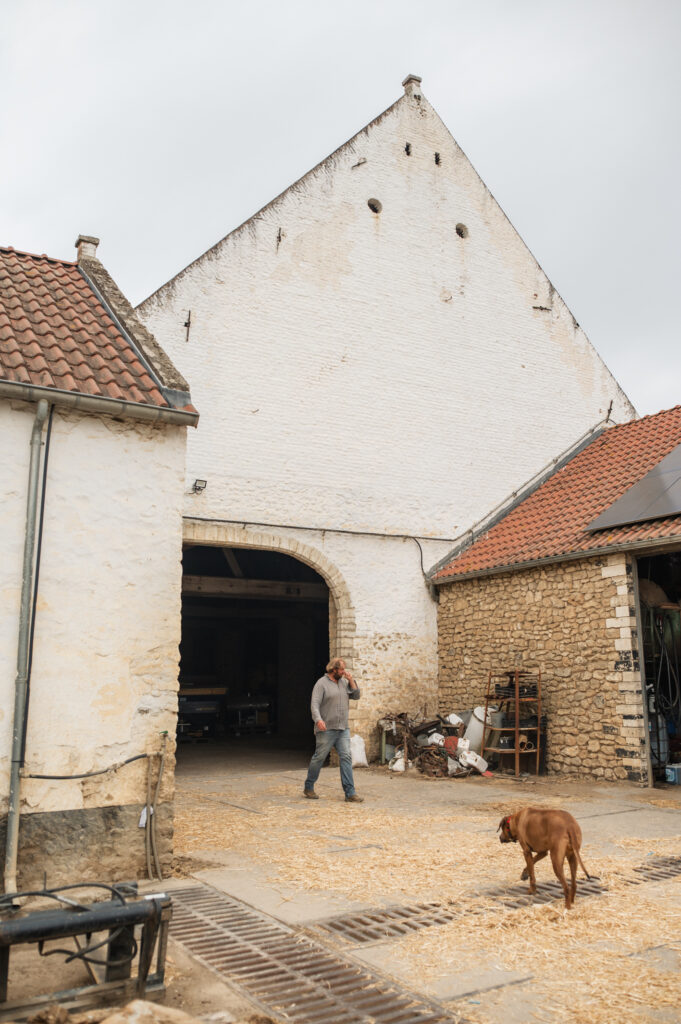 “Sometimes, regulations that are meant to support the transition end up slowing it down instead.” Photographer: Gabriela Hengeveld
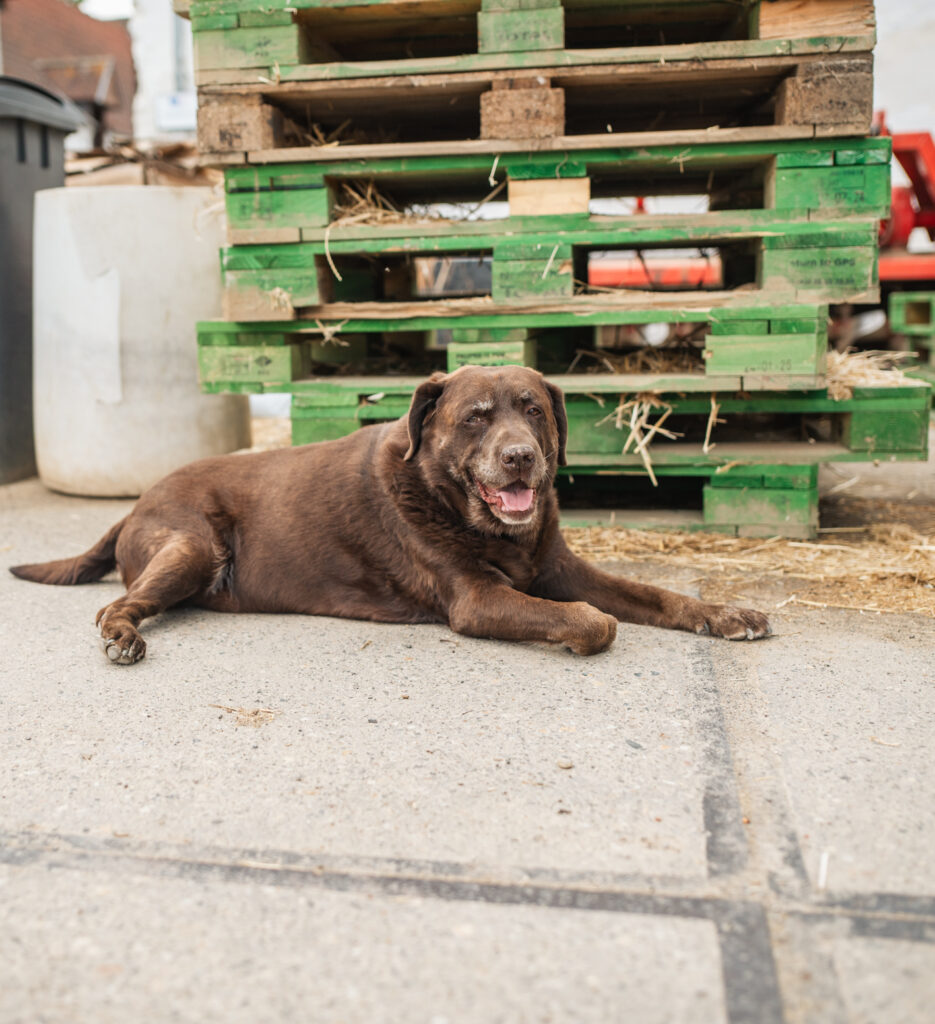 “For instance, when the weather gives us the perfect window to act, but the rules say we have to wait.” Photographer: Gabriela Hengeveld
Nature sets the rules
The biggest obstacles are mostly rooted in Brussels, where agricultural policies are shaped. “The intention is often good”, says Géraud, “And I understand why we have these regulations. We want to protect water quality, reduce pollution and encourage more sustainable farming practices. The issue is that we often forget that nature is the one that ultimately sets the rules.”
“As farmers, we work with nature and we have to respond to weather, soil conditions and timing”, he explains. “Policy, however, is often built around calendars, fixed dates and prescribed actions. That is where things don’t match.”
“Take the Common Agricultural Policy (CAP), which is built around fixed schedules and deadlines. Sometimes the weather gives us the perfect window to act, but the rules say we have to wait. Then it starts raining for two months and the opportunity is gone. In the end, following the rules can be worse for both the crop and the soil. The same happens with biodiversity schemes. I had a field with a diverse mix of clovers, grasses and flowering plants that was thriving. It was supporting biodiversity, feeding the biology in the soil and doing exactly what it was supposed to do. But because the scheme required me to re-sow it after three years, I had to destroy it and plant a new mix. For me, that makes little sense. Sometimes, rules that are meant to support the transition end up slowing it down instead.”
Uitgelichte quote
Nature has been doing this for millions of years. We are the newcomers
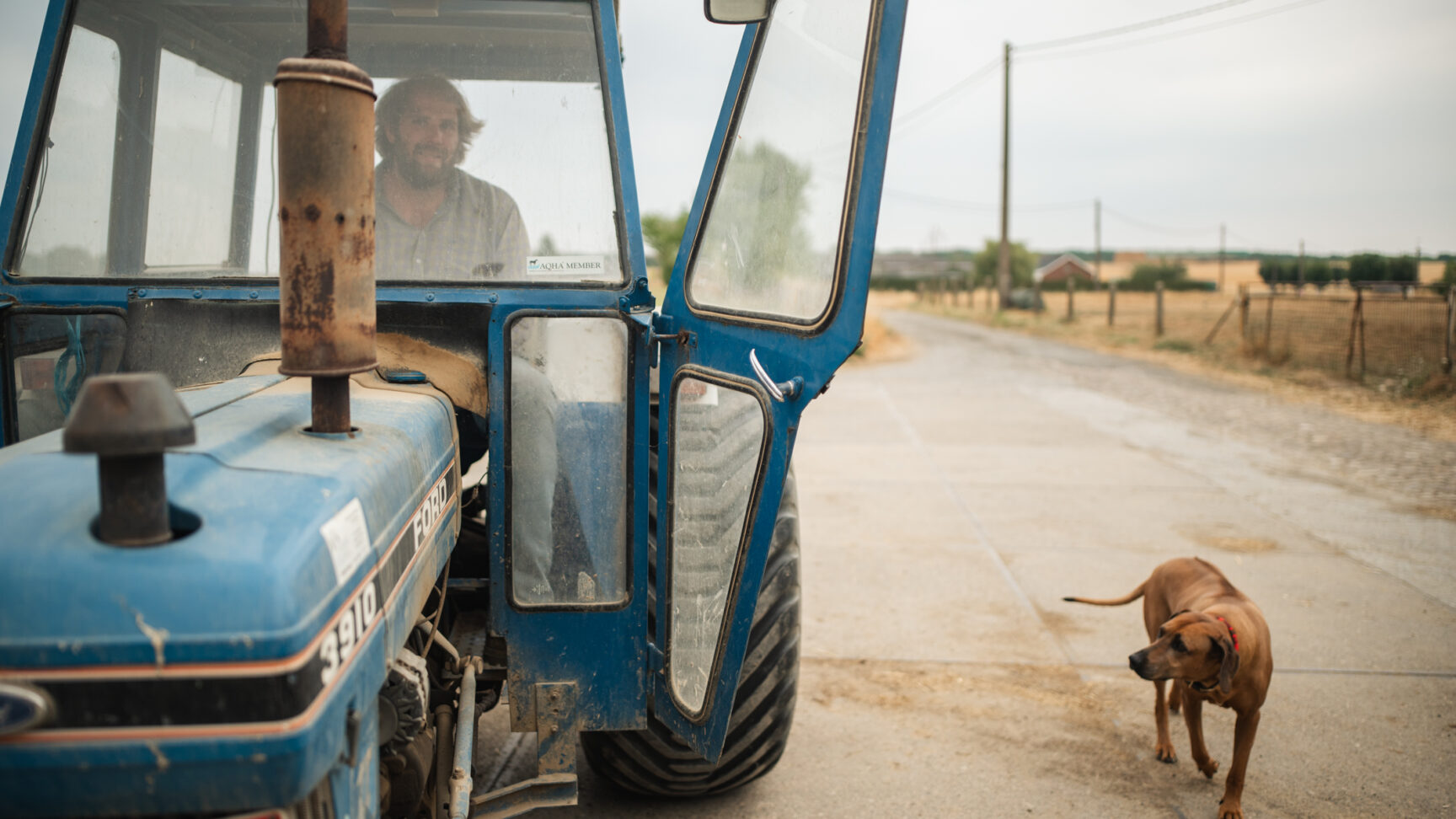
Speeding up the transition together
“Farmers, scientists and policymakers are often working towards the same goals, but they don’t always understand each other’s reality.” That is one of the reasons why Géraud regularly travels to Brussels, where he shares farmers’ experiences and discusses how policy can better support the transition. For Géraud, collaboration is not a nice extra; it is a necessity: “If we want to speed up the transition, we have to do it together.”
Just as farmers can learn from researchers and policymakers, policymakers also need to understand what happens in the field. That is why he believes farmers have an important role to play. Not as managers of nature, but as participants in it. “The humbler we are, the more we can learn,” he says. “Nature has been doing this for millions of years. We are the newcomers.”
Uitgelichte quote
The task of one generation is not to perfect the system, but to leave it a little healthier
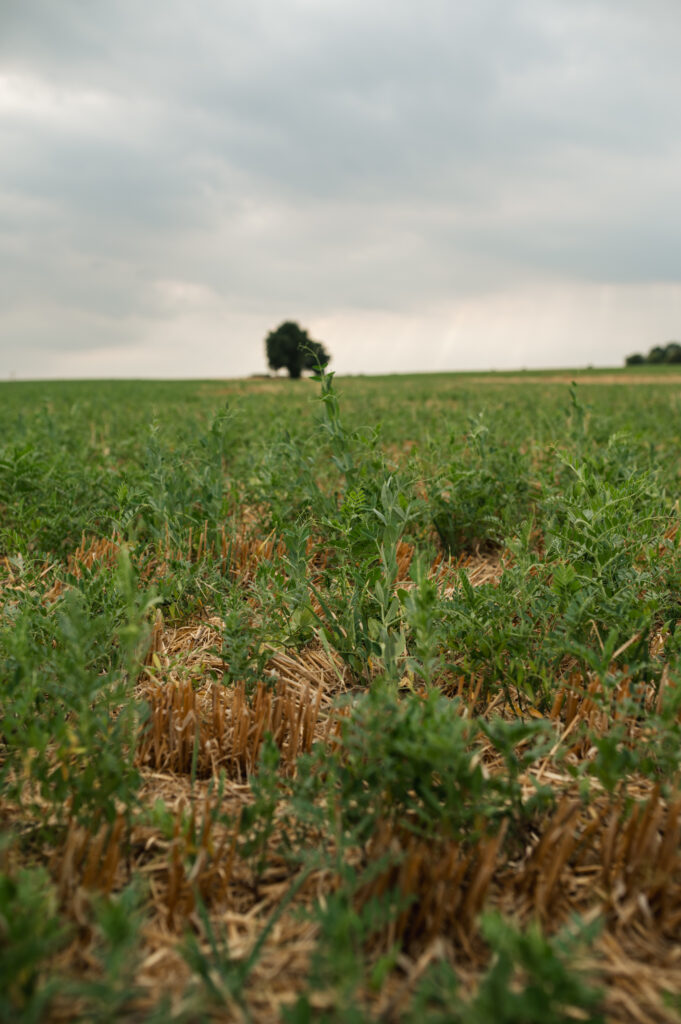 “Many of today's environmental challenges are the result of seeing individual problems in isolation.” Photographer: Gabriela Hengeveld
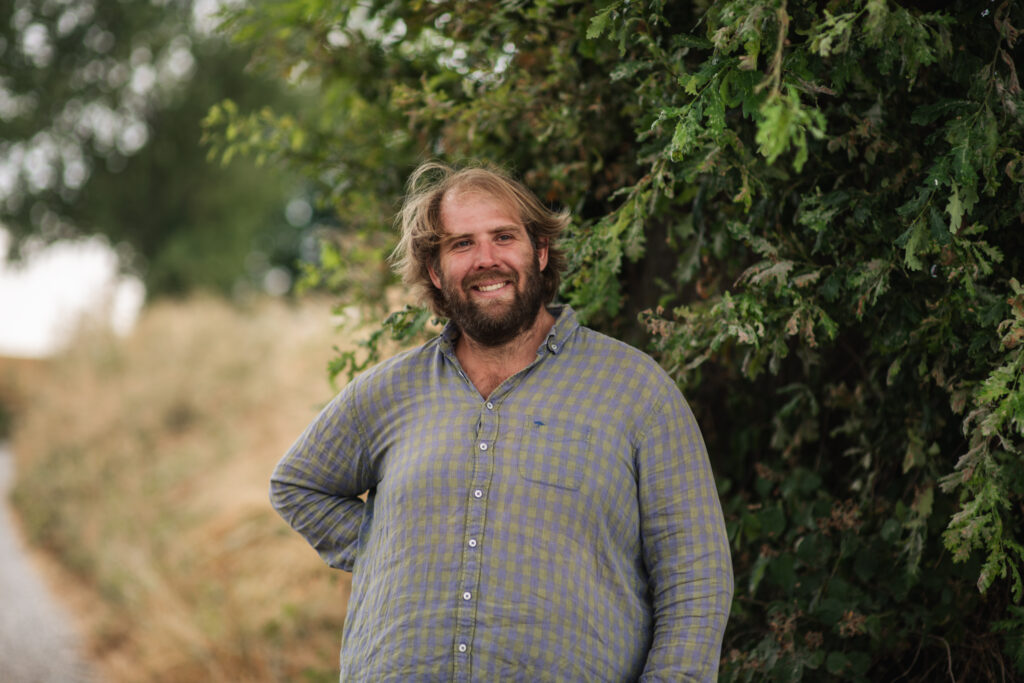 “We need to recognise the countless relationships that connect soils, plants, animals and people.” Photographer: Gabriela Hengeveld
We don’t have to be perfect
Gérauds humility comes from a deeper lesson he has learned over the years. The more he observes nature, the more he realises how little we truly understand it. “We think we know how everything works,” he says. “But nature is much more complex than that.” In his view, many of today’s environmental challenges are the result of seeing individual problems in isolation, rather than recognising the countless relationships that connect soils, plants, animals and people. “I think the biggest issue is that we forget to observe nature. We forget to take time, and we forget to enjoy it.”
Perhaps that is also why Géraud is reluctant to talk about end goals: “In farming, there is no final destination, only a continuous process of learning, adapting and improving. The task of one generation is not to perfect the system, but to leave it a little healthier, more resilient and better understood for the next. That is my wish for the farm and my newborn son.”
Also read our story of regenerative farm ‘t Gagel, another member of the EARA network.