Josh Kröse &
Splinter Dreesmann
Activities:Fermentation
Founder:Josh Kröse en Splinter Dreesmann
Launched:2025
Location:Amsterdam
Introductie
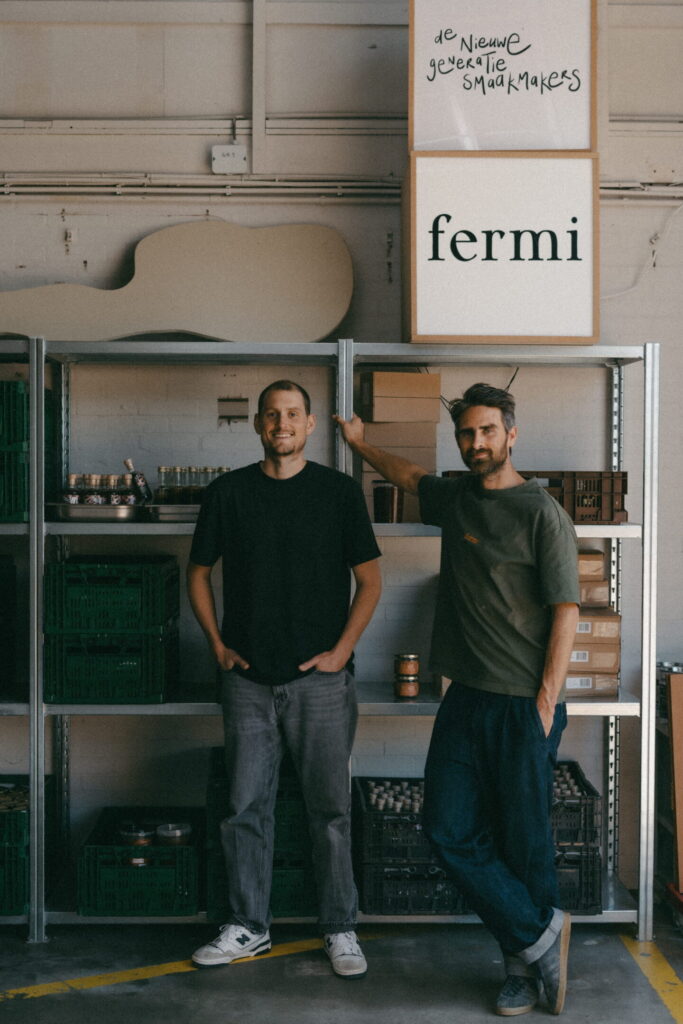
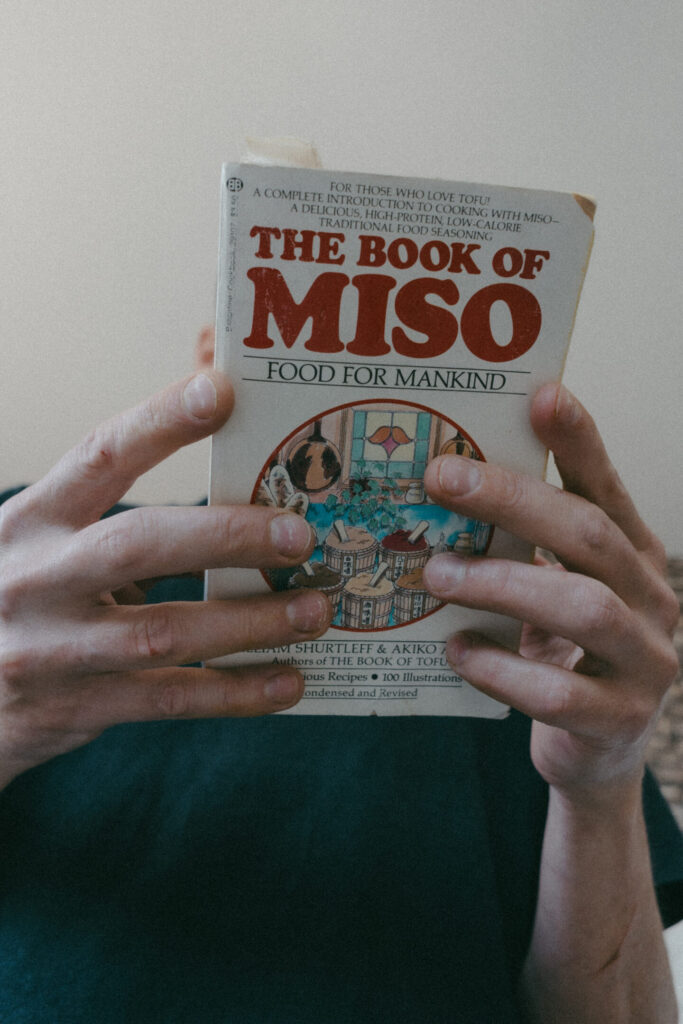
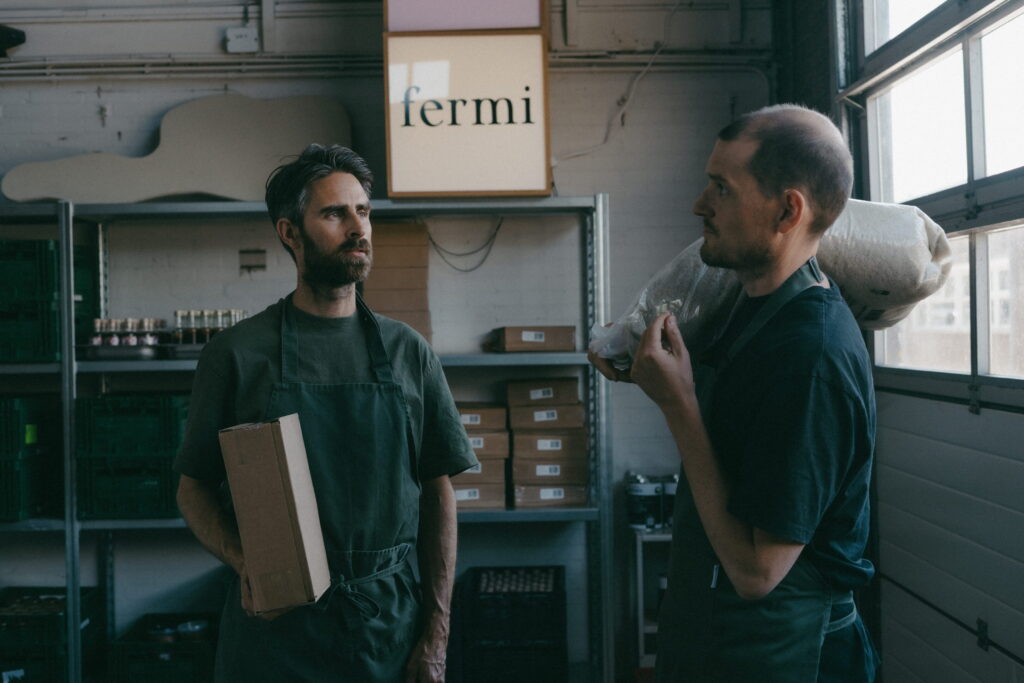
What began with a jar of homemade miso has grown into a serious mission: creating flavourful products that make it easier for everyone to cook delicious, healthy and regenerative meals. Since 2025, Josh Kröse and Splinter Dreesmann have been leading Fermi Foods, producing fermented foods while helping to prevent food waste and accelerate the transition towards regenerative agriculture. “Fermentation offers a logical solution to many of the problems facing our food system.”
 “Food and sustainability felt like two separate worlds, and I did not yet know how to bring them together.” Photographer: Renata Chede
“Food has always been important to me,” Splinter Dreesmann begins, “but for a long time I had no idea what I wanted to do with that. While studying business administration, I worked in restaurants and ran a catering company. After graduating, I looked for a job in sustainability, but I was never entirely sure that was the right path either. Food and sustainability felt like two separate worlds, and I did not yet know how to bring them together.”
“During the pandemic, I started baking bread at home and became fascinated by fermentation. I realised that fermentation is fundamentally about giving things time”, Splinter continues. “It was the complete opposite of one of the bakeries where I had worked, where bread was produced as quickly as possible using improvers, ready-made dough mixes and all kinds of dubious additives. I was drawn to the natural process instead: you let nature do its work, and the product becomes both more flavoursome and healthier.”
Uitgelichte quote
Over time, the work began to feel increasingly detached. What I was doing just wasn’t very tangible
The route to fermentation
Josh Kröse arrived at fermentation by a different route. Rather than food and health, he was interested in new ideas about how society and the economy might work. After starting out in online marketing, he spent eight years at Spotify. But over time, the work began to feel increasingly detached. “What I was doing just wasn’t very tangible,” he explains.
He left without a clear plan and began exploring different fields through a series of internships, including in food. Working first with a farmer experimenting with fermentation, and later with a fermentation specialist, sparked something in him. “That was when I decided I wanted to do something with fermentation. Around the same time, I met Splinter.”
Uitgelichte quote
When others were just as impressed, the pieces began to fall into place
Reconnection
Josh and Splinter were united by a belief that many of today’s problems can be traced back to the widening distance between people and the natural world. “People are deeply unhealthy, largely because of what we eat. At the same time, nature is in a terrible state,” Splinter says. “We began asking what we could do to help people like us, living in cities, feel closer to nature again.”
While batting ideas back and forth, they decided – mostly for fun – to make a jar of miso from fermented field peas and barley. “Two very humble ingredients that do not have much flavour on their own,” Josh says. “We just wanted to see what would happen. We put the jar away and opened it a few months later, having almost forgotten about it. When we finally tasted it, it was a revelation. It was so delicious, with such an incredible depth of flavour. We could hardly believe it.” When others were just as impressed, the pieces began to fall into place.
Uitgelichte quote
Fermentation offers a logical response to many of the problems in our food system
Fermentation, an age-old solution
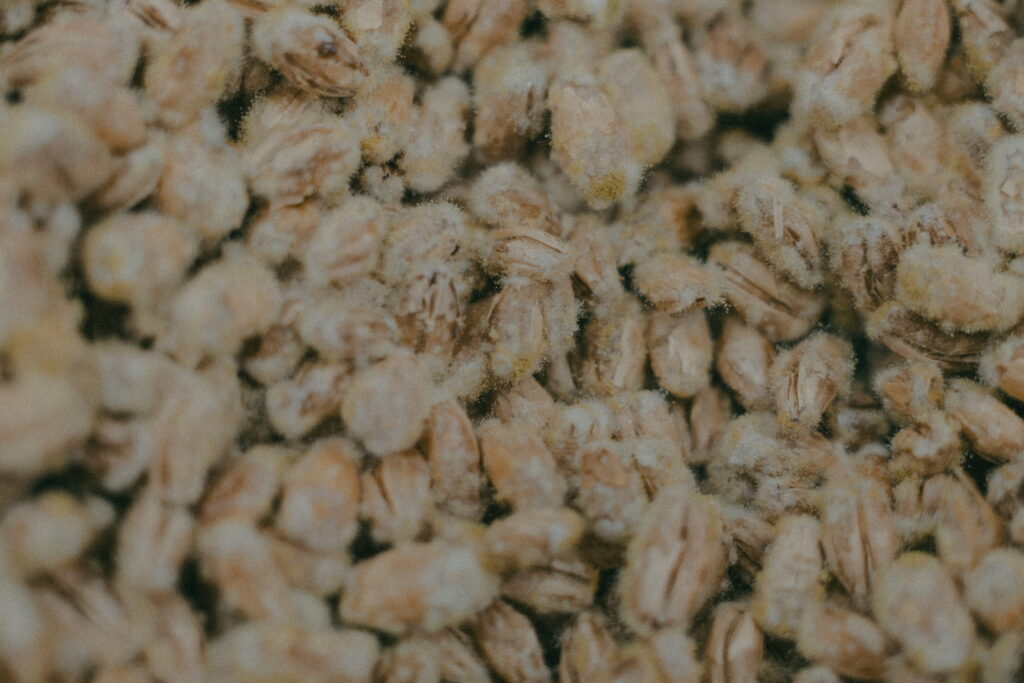
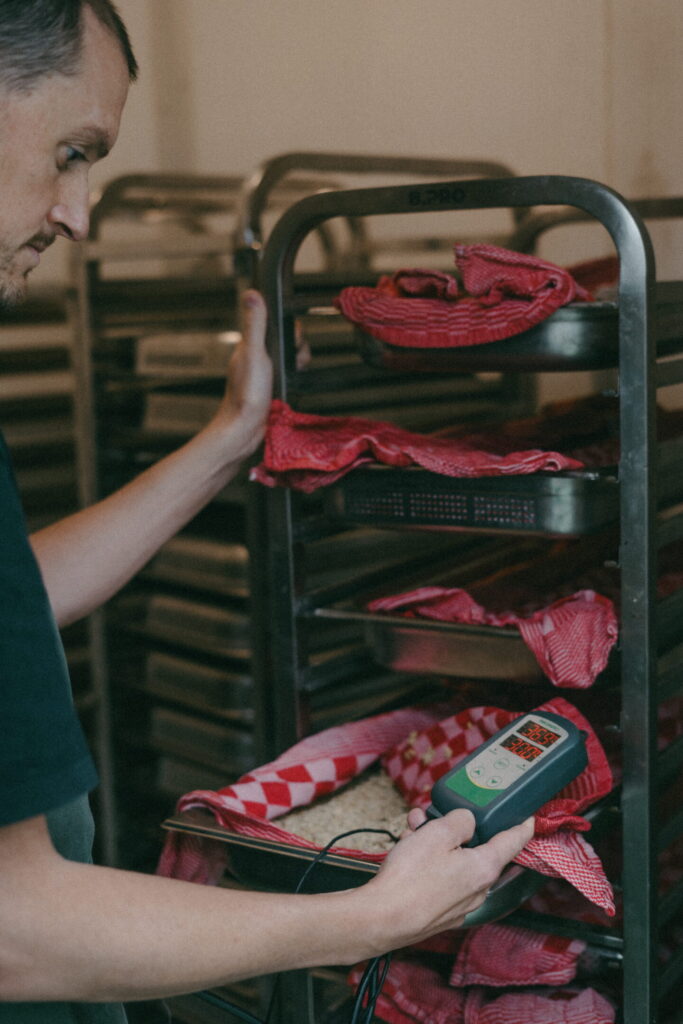
Fermentation is behind familiar foods such as yoghurt, kimchi and sauerkraut. During this age-old natural process, microorganisms such as bacteria and yeast slowly transform ingredients. “It is similar to what happens inside the body,” Splinter explains. “Substances are broken down so that we can absorb them. With fermentation, part of that work has already happened in the jar: the food is, in a sense, pre-digested. This makes its nutrients easier to absorb, while creating entirely new layers of flavour.”
“That first jar of miso brought everything together for us: a naturally made product that was delicious and healthy, both for people and the planet. Fermentation offers a logical response to many of the problems in our food system: we no longer had to choose between flavour, health and regeneration. And it is not another technological fix. Instead, we looked back to how food was made before the system began to lose its way.”
Uitgelichte quote
If something does not taste good, it has no reason to exist
 “Our ambition is to work entirely with regeneratively grown ingredients in the future.” Photographer: Renata Chede
 “We are already very close.” Photographer: Renata Chede
Making fermentation mainstream
With Fermi Foods officially up and running, Josh and Splinter faced a new challenge: getting products made from fermented local ingredients and food by-products into as many kitchens as possible. They drew up plans, made projections and filled whiteboards with ideas – only to discover how difficult it is to build a viable food business.
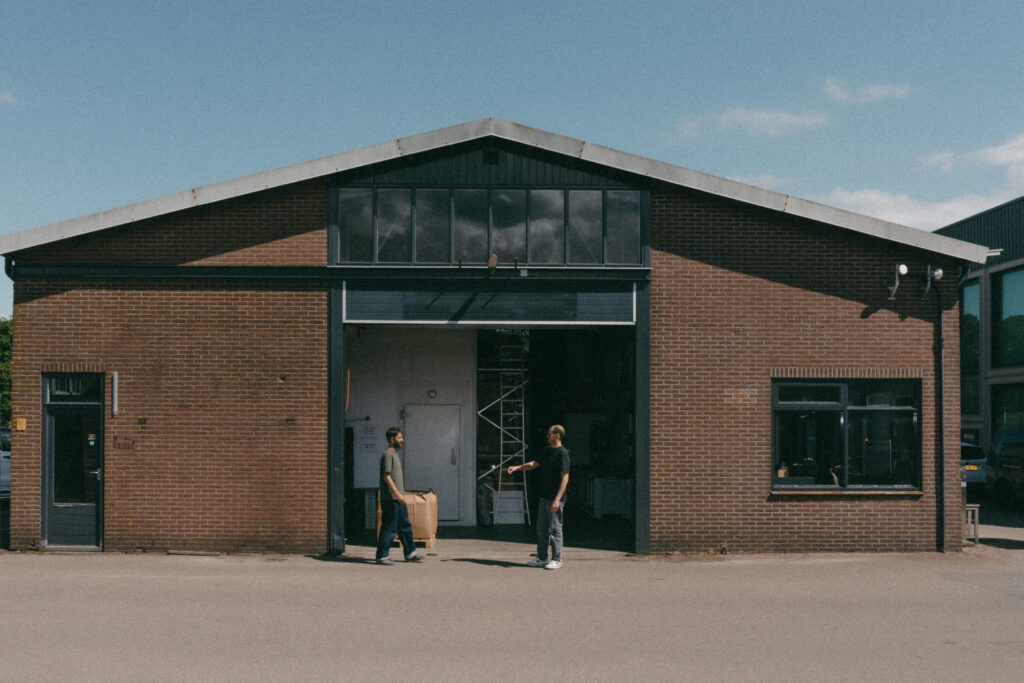
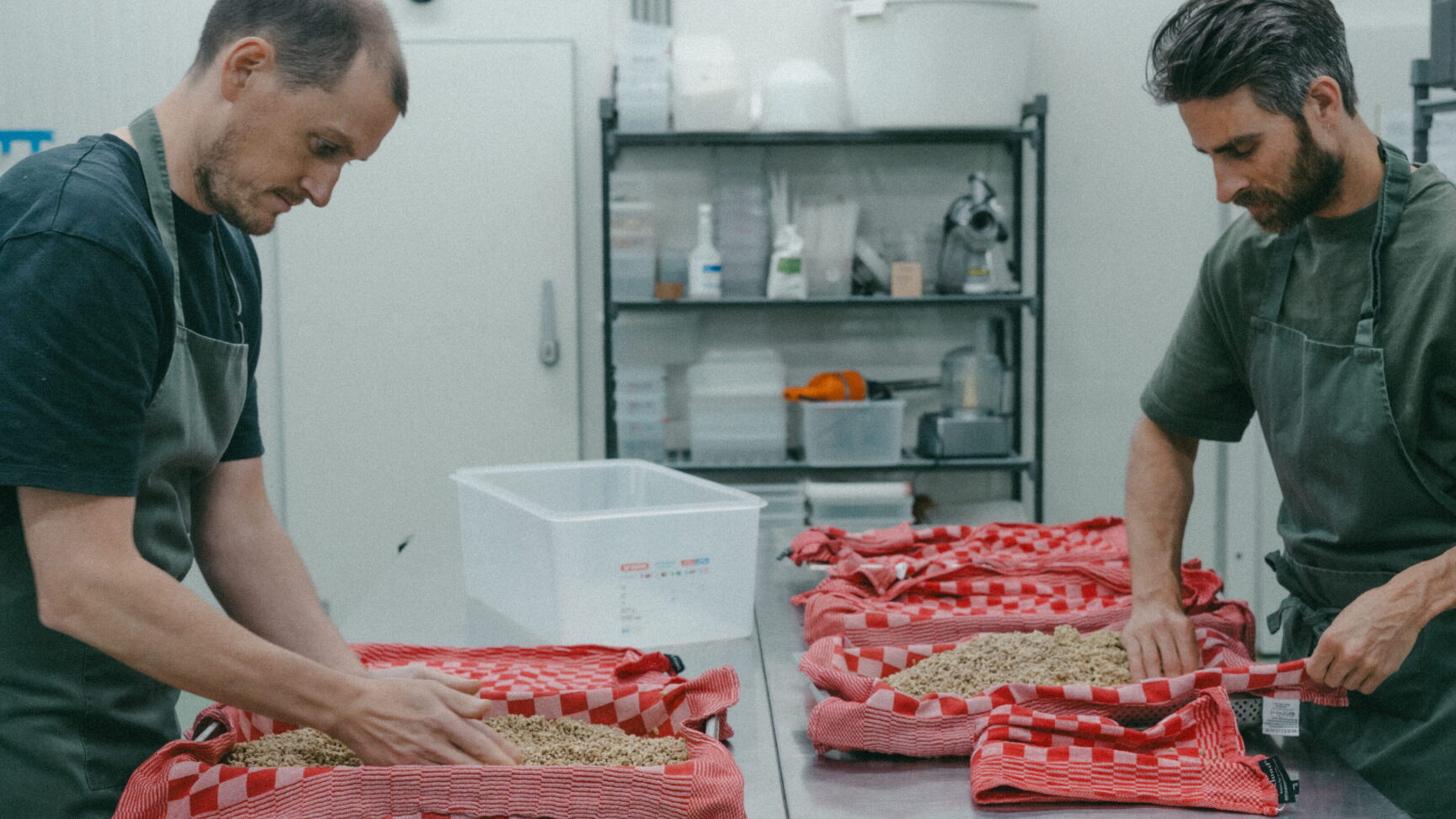
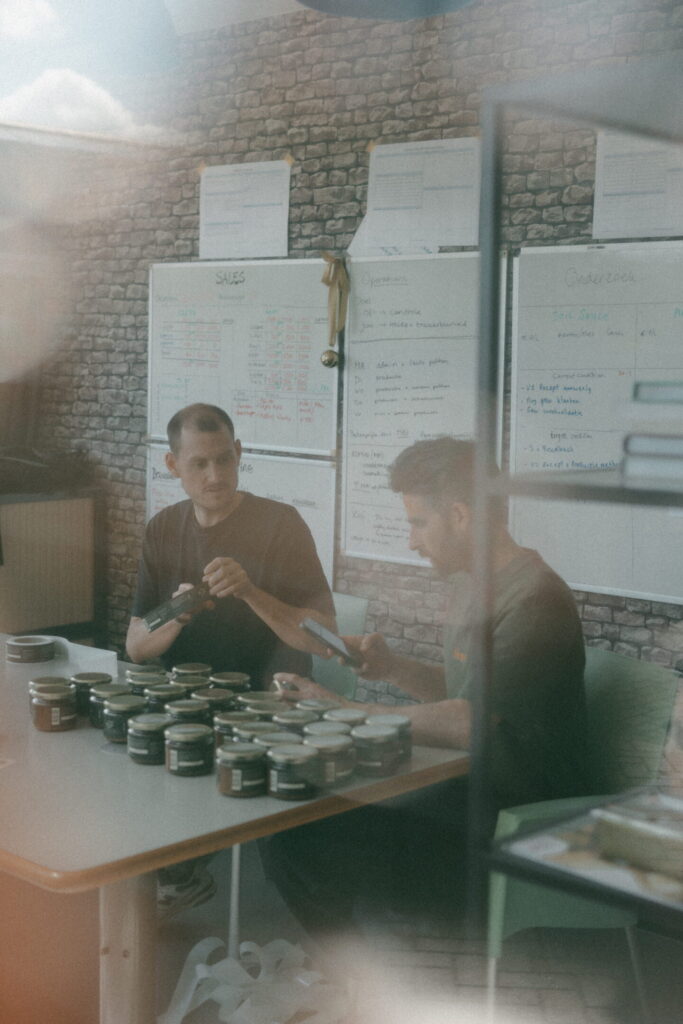
“As soon as you start producing at scale, you run into all kinds of obstacles,” Josh explains. They quickly needed a production site of their own and ended up building much of the fermentation facility themselves, because there were hardly any companies in the Netherlands equipped to do it. But their greatest challenge was not technical. It was deciding how to tell their story.
“Our products bring together flavour, health and regeneration,” Splinter says. “To us, the connection is obvious. Ingredients grown in healthy, living soil are more nutritious and more flavoursome. Fermentation draws out even more flavour and can make them healthier still. You can approach it from different angles, but to us it’s one story.”
“However, most people do not see it that way yet”, he continues. “Flavour, health and regeneration are still separate reasons to buy a product, each requiring its own message. So how do we tell our story in a way that resonates with a broad audience?”
“We want to stay away from dystopian narratives. They are so negative, while food is something joyful that brings people together. We have found that personal health resonates most strongly. But flavour remains non-negotiable: if something does not taste good, it has no reason to exist. The beauty of fermentation is that it can create an extraordinary depth of flavour naturally. You do not need artificial additives to achieve it.”
Uitgelichte quote
We are returning to something fundamental: knowledge that has always been there, but that we in the West have forgotten
Building the food system they want to see
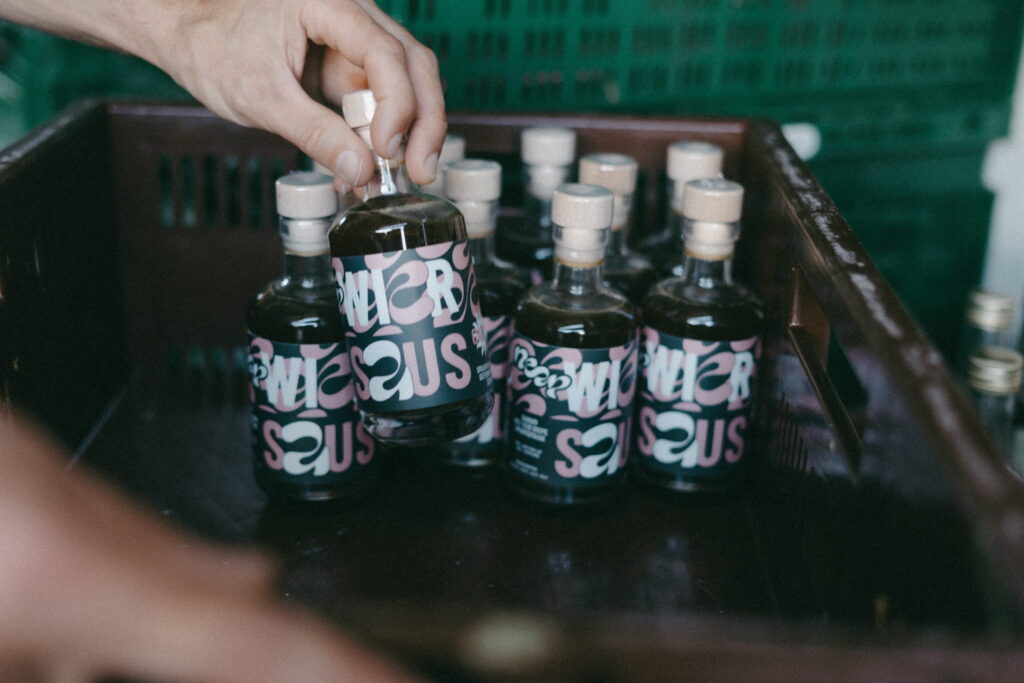
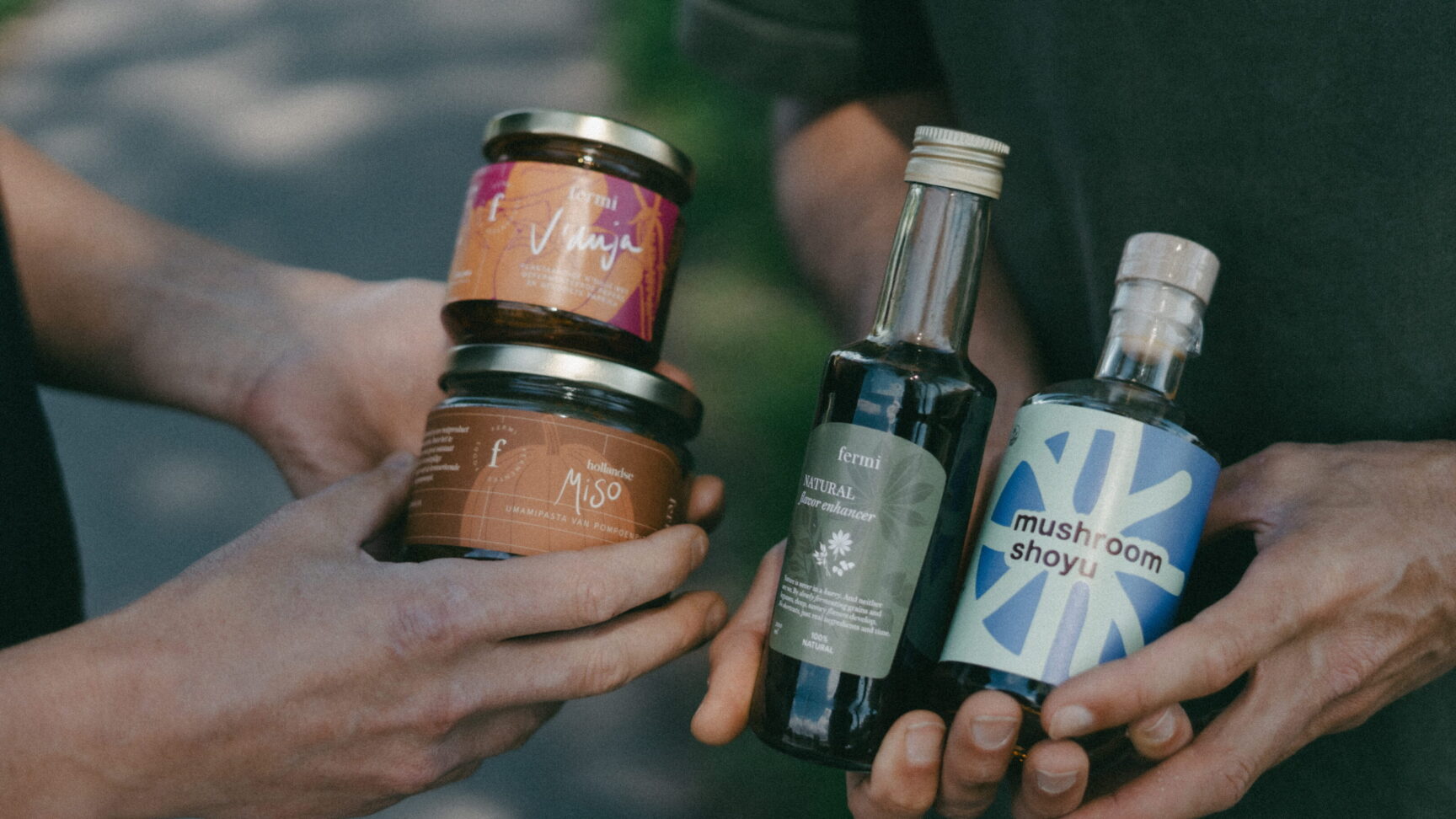
Josh and Splinter are highly selective about the ingredients they use. “We are very conscious of what our choices support. Rather than reinforcing old ways, we want to help build a food system that depends less on animal protein. We also try to use as many regeneratively grown ingredients as possible”, Splinter says. “Regenerative grains, white cabbage and beans are fairly easy to source in the quantities we need. Chinese cabbage and chillies for our kimchi are more difficult.”
“But if we can buy a surplus batch of conventionally grown cabbages and prevent it from being wasted, we will do that too”, he adds. “Our ambition is to work entirely with regeneratively grown ingredients in the future – and we are already very close.”
They see the regenerative movement gaining ground in the Netherlands, alongside a growing interest in the bacteria, fungi and enzymes naturally present in our food. “Perhaps some of it is a trend,” Josh says, “but I also think we are returning to something fundamental: knowledge that has always been there, but that we in the West have forgotten. We are beginning to understand again that many of the ways we once grew and prepared food made perfect sense. And once that understanding returns, we will not want to go back.”
Also read our interview with Tomasu: a regenerative micro-brewed soy sauce company that values craftsmanship above all else.