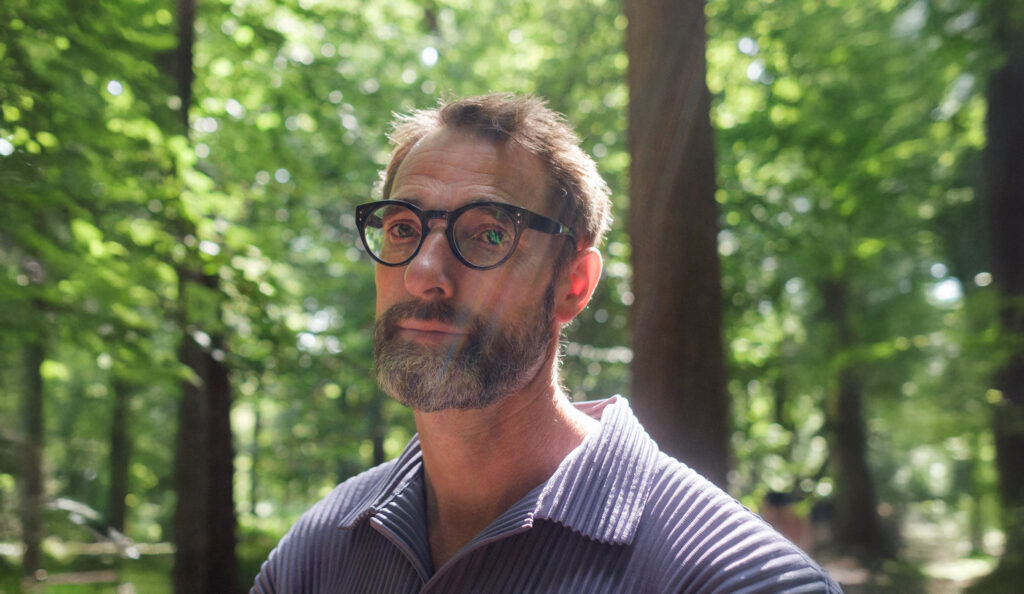
Ammy Vogtlander: “Think of the economy as an ecosystem, in all its complexity”
Pursuing stability, fear of uncertainty, continuously benchmarking to find ‘the very best’ — Ammy Vogtlander, advisor on New Economic & Complexity Thinking, calls for a fundamentally different approach. According to her, economic thinking is still dominated by the assumption that the world is ‘static’: a world that can be known, predicted, and ultimately controlled. It’s high time, Ammy argues, to view the economy as a living ecosystem that we help shape — one in which dynamics and uncertainty are understood not as threats, but as signs of vitality.
We shouldn’t treat the economy as if it were static. What exactly do you mean by that?
“If you look closely at how companies and investors operate, you see an implicit assumption that the world simply exists, and that we can observe, analyse, and optimise it without fundamentally changing it. In science – and certainly in economics – that’s still the dominant perspective: you observe the system from the outside, collect data, derive laws, seek solutions, and optimise.
Thinking in terms of solutions and working with data is of course essential – don’t get me wrong. But it’s not the full picture. Problems arise when we forget that our decisions also change the world. Investors do not sufficiently realise that through their investments and financial models they continuously influence and shape the world, for better or for worse. But that is exactly what is happening.”
Uitgelichte quote
Think of the economy as an ecosystem, in all its complexity
What is the alternative?
“I advocate for a more dynamic perspective. Think of the economy as an ecosystem, in all its complexity. The word ‘economics’ itself begins with ‘eco’, but that crucial part of the term is often forgotten. Intuitively, we know that a living ecosystem is constantly changing, yet this understanding is largely absent from modern economics.
The best model for a sustainable economy is a healthy ecosystem, like we see in nature. A healthy economy is not a system with little change and great stability, but one with a lot of variety and uncertainty. In nature, a healthy ecosystem experiences small crises all the time. That is actually a sign that things are going well. An ecosystem constantly evolves over time. The good can turn bad, and the bad can lead to something better again. There is no optimum or stable endpoint – it is a continuous process. At its core, a healthy ecosystem is dynamic and unpredictable.
In business and among investors, I see a strong emphasis on optimisation (first profit, now also CO2 reduction), stability, and certainty. Uncertainty – often referred to as ‘volatility’ – is associated with risk and therefore avoided. That’s unfortunate, because that’s precisely where things go wrong. Too much stability eventually leads to too much instability, and that’s when the ecosystem collapses.”
Uitgelichte quote
Too much stability eventually leads to too much instability, and that’s when the ecosystem collapses
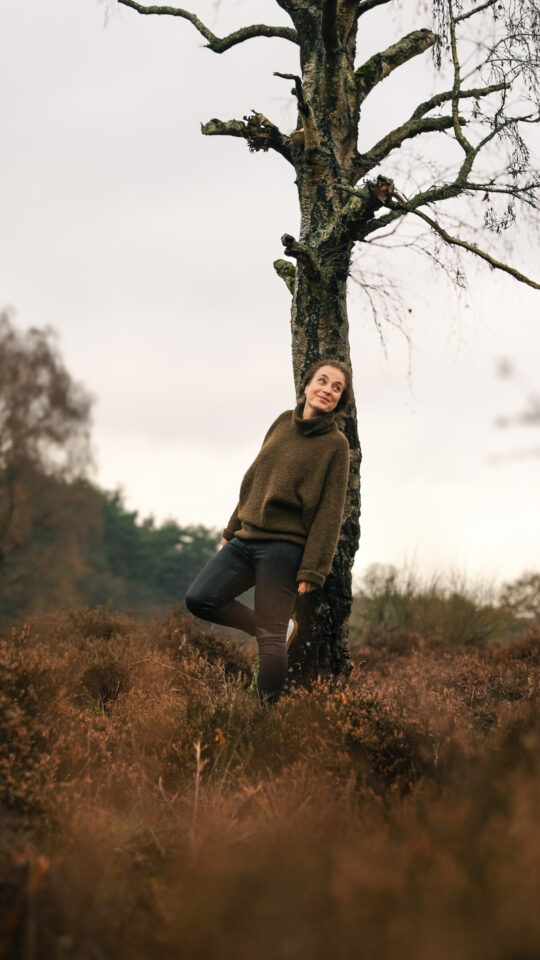
 Photographer: Fleur Jongepier
 Ammy Vogtlander: "Lots of movement, plenty of failures, but also progress and change. All hallmarks of a healthy ecosystem." Photographer: Fleur Jongepier
So, a bit more instability is actually a good thing?
“Yes, up to a certain point. Take the dairy industry. The milk industry is an extreme monoculture in which everyone has placed their bets on the same option. There is a high degree of efficiency but little diversity. Seen as an ecosystem, the milk sector doesn’t look particularly healthy. Meanwhile, the alternative milk sector – oat, rice, or almond milk – offers many options, lots of movement, plenty of failures, but also progress and change. All hallmarks of a healthy ecosystem. Perhaps less stable, but healthier.
In nature, you occasionally may find places where the most efficient plant or animal species dominates, and a ‘stable’ optimum appears to have been reached. You can imagine a small pond where one fish thrives exceptionally well. But that’s extremely rare, because such an ecosystem eventually collapses; a sustainable, healthy pond is not a stable monoculture.”
Uitgelichte quote
Despite the enormous diversity of bananas, the entire world has converged on this one type
 Ammy Vogtlander: "Monocultures make change difficult." Photographer: Fleur Jongepier
 Photographer: Fleur Jongepier
Can you give a concrete example where static thinking leads to problems?
“The Cavendish banana is a good example. This single variety accounts for more than 95 per cent of the global market. Despite the enormous diversity of bananas, the entire world has converged on this one type. Now it is threatened by a fungus that is destroying crops worldwide – yet no one moves.
It’s understandable everyone sticks with the Cavendish – in many ways it was the best option, and it remains the most efficient. But over the long term, this obsession with stability and optimisation is destructive – and that’s true for most sectors. Simply introducing a new banana that everyone then focuses on is not the solution either. The problem is not the Cavendish banana itself. What you want to avoid is a market that becomes too efficient and too stable. Monocultures make change difficult. The entire system is organised around a single solution, making it hard to introduce alternatives. Supply chains are tightly intertwined, and everyone depends on everyone else. No one can move unless the others move as well – and as a result, systemic change stalls.
What we tend to overlook is the value of dynamics and diversity, even though they are the basis of resilience. Large investors such as pension funds and insurance companies should take this more seriously and shift their perspective: less focus on individual results and more on the health of the ecosystem as a whole. This could start with rethinking risk models, shifting the focus away from uncertainty itself toward systemic risks like low diversity or limited adaptability, and including those factors in investment decisions.”
Uitgelichte quote
It comes from a deeply ingrained habit of thinking in terms of solutions
Why does this happen so little in practice?
“I think it comes from a deeply ingrained mindset: the tendency to think in terms of solutions. Some get lost in benchmarking CO2 emissions, others pursue the fairest business model, and others still see reaching certain SDGs as the holy grail. As if sustainability were something solvable – an optimal endpoint that we can identify and reach.”
Let me guess: there isn’t one?
(Laughs) “No, I don’t think it works that way. Regeneration has no endpoint. It requires continuous evolution, and that’s fundamentally different. We need a new way of thinking.
The biologist Francesco Varela put it beautifully: ‘The chance of surviving with dignity on this planet hinges on the acquisition of a new mind.’ That starts with the realisation that all interactions in the world – and in the economy – matter. And shape the world.”
Uitgelichte quote
Through the choices we made, we collectively changed reality
That still sounds rather abstract.
“Let me give a concrete example: solar panels. When I ask people – for instance, those working in the energy transition – ‘Why do you think we didn’t seriously consider solar panels in the 1990s as a replacement for fossil fuels?’, they usually say: ‘because at the time we didn’t have enough knowledge to understand solar power could replace fossil fuels.’ Even the most optimistic experts thought it would never happen – and in the context of that time, they were right.
The reason things are different now is not so much that we know more, but that we have changed the world. We started driving electric cars, which led to new battery technologies, which in turn improved our infrastructure, and so on. Gradually, an ecosystem of solar-related technologies and new norms emerged in which solar panels could flourish.
The claim that ‘solar panels cannot replace fossil fuels’ may once have been true. But through the choices we made, we collectively changed that reality. That is the kind of thinking I would like to see more of: the awareness that together we create outcomes – that together we shape the world.”
Uitgelichte quote
What is ‘best’ is not fixed, but emerges from our interactions
 Photographer: Fleur Jongepier
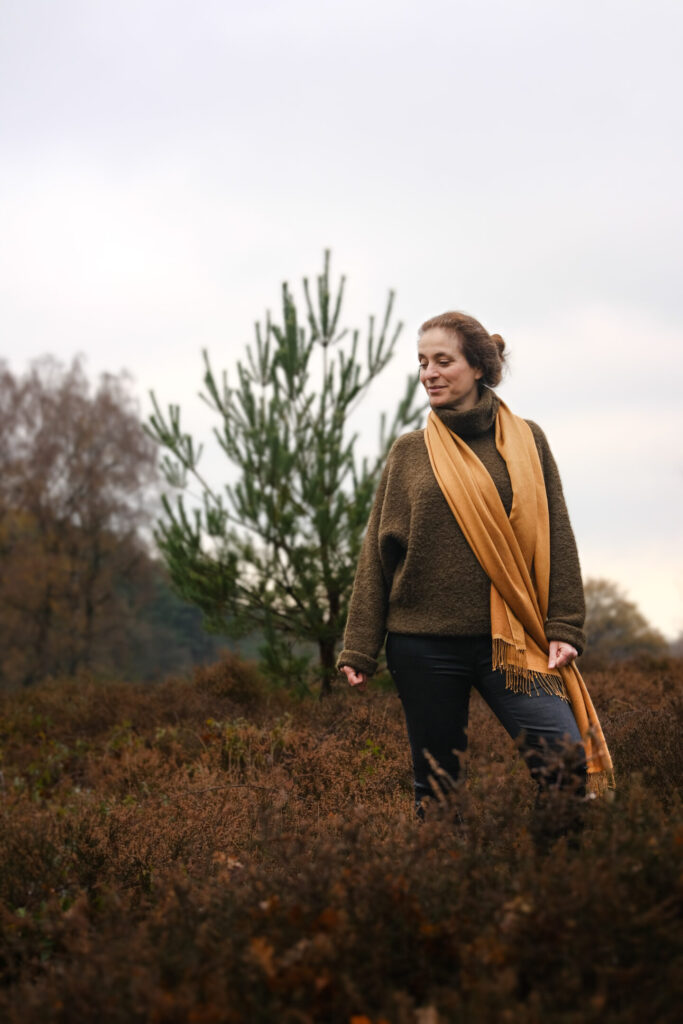
 Ammy Vogtlander: "The awareness that together we create outcomes – that together we shape the world.” Photographer: Fleur Jongepier
But aren’t we all aware that what we do influences the world?
“Yes and no. We understand it in the abstract, but we rarely act on it. I certainly don’t see it much among large investors. I think we have a strong desire for predictability – we assume we can know what the future will look like if we choose A or B, and then determine which option is objectively best.
Sometimes I challenge the idea of ‘an objectively best solution’ with a simple example: metronomes. Each metronome starts at its own pace; its own ‘ideal’ rhythm. But as they interact and influence each other, they gradually synchronise into a single rhythm. Once they reach that point, they no longer deviate; it becomes the only rhythm that is possible.
Anyone seeing this for the first time thinks: ‘That must be the best rhythm for the group.’ But it isn’t. Run the experiment again and the same metronomes, in the same conditions, can end up in a completely different rhythm.
This shows something we are insufficiently aware of: what is ‘best’ is not fixed, but emerges from our interactions. Companies choose solution A – a particular banana – not necessarily because it is better than B, but because others already chose A. The more companies follow, the stronger A becomes. Yet because we underestimate the impact of these interactions, we start to see its superiority as fixed and underestimate the alternatives.”
Uitgelichte quote
Do our investment models actually allow for fundamental change?

How do you look at the transition today? Companies increasingly include ‘people’ and ‘planet’ in their plans.
“That’s true, but it still falls short. And that is why I doubt whether the change we need is truly underway. Even if you add more P’s to your business model, the underlying way of thinking remains the same: optimise everything as much as possible, only now on the basis of more P’s. Think about ESG benchmarks – everyone is still searching for the proverbial best banana. The same rigidity in thinking is visible there as well, among investors and more broadly.
I think, as a society, we have gone too far in our focus on control and predictability. We’re scared of what might happen if we loosen our grip. It would make a big difference if investors, for example, did not only look at outcomes such as CO2 reduction, but also started to see a sector’s ability to change as a goal in itself. You should ask: Is a sector structured in such a way that it can evolve towards something better? And more importantly: do our investment models actually allow for fundamental change?”
Uitgelichte quote
I think, as a society, we have gone too far in our focus on control and predictability
You partly grew up in India. Did that shape your view of the world and economic systems?
“I did spend part of my childhood in India, and later in Switzerland – two completely different countries with very different ways of organising things and looking at the world. In India, it wasn’t unusual to see cows wandering onto the highway, and the power would regularly cut out – every day was a surprise, yet somehow things worked. India is not ideal either, but there is a greater capacity to adapt to change and a tolerance for messiness that we in the West could learn from.
In Switzerland, everything is tightly organised: everything is insured, and the government even holds coffee in reserve ‘just in case.’ It appears stable and predictable, but in major crises, it can backfire: people are no longer accustomed to the system failing.”
Uitgelichte quote
Healthy ecosystems come with uncertainty and complexity, and we need to get more comfortable with that
 Ammy Vogtlander: "It appears stable and predictable, but in major crises, it can backfire.” Photographer: Fleur Jongepier
 Photographer: Fleur Jongepier
So, a bit more India?
“Maybe a little less Switzerland wouldn’t hurt from time to time, yes. That said, focusing on solving today’s problems, using ESG benchmarks, or analysing CO2 data isn’t bad at all. What worries me is that it often seems to be the only way we think about things. Healthy ecosystems come with uncertainty and complexity, and we need to get more comfortable with that.”
Who is Ammy Vogtlander?
Ammy Vogtlander (1970) has a background as a theoretical physicist and is an advisor on Complexity & New Economic Thinking at The Rethink Lab. She is affiliated with the Centre for Complex Systems Studies (CCSS) at Utrecht University and has held several strategic and management roles within multinationals and consulting firms in the United States, the Middle East, and Europe.
Through her work, she became fascinated by the relationship between economic theory and long-term value creation. In her view, conventional economic theories are no longer adequate in our current era of radical change toward a regenerative future. What we need, according to Ammy, are economic models in which finance and economics are grounded in complexity and natural dynamics.
READ MORE:

Nora Bateson: “How our ways of knowing shape our collective future”
8 April 2026