Benedikt Bösel
Activities:Regenerative agriculture
Founder:Benedikt Bösel
Launched:2016
Location:Alt Madlitz, Germany
Introductie
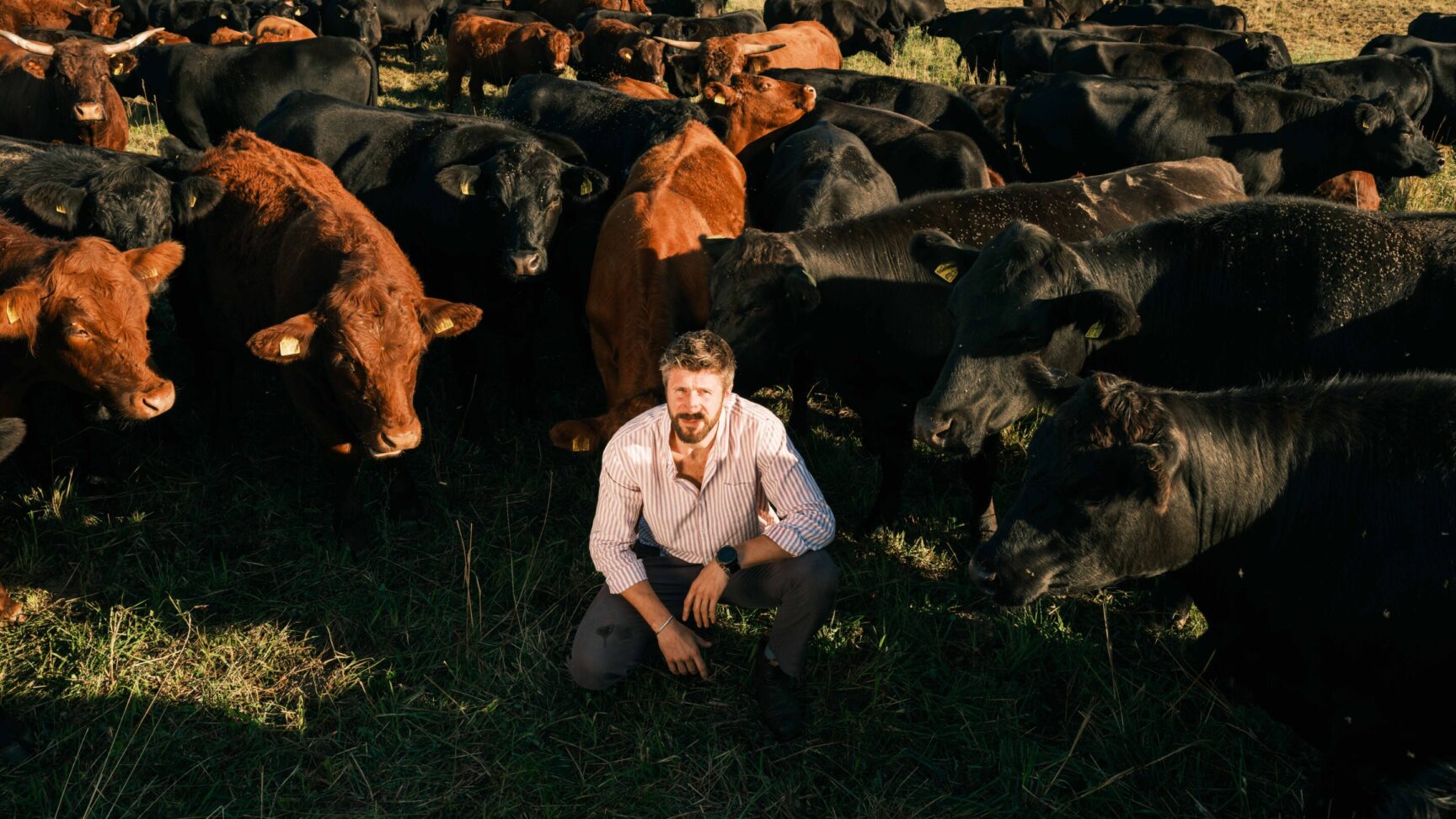
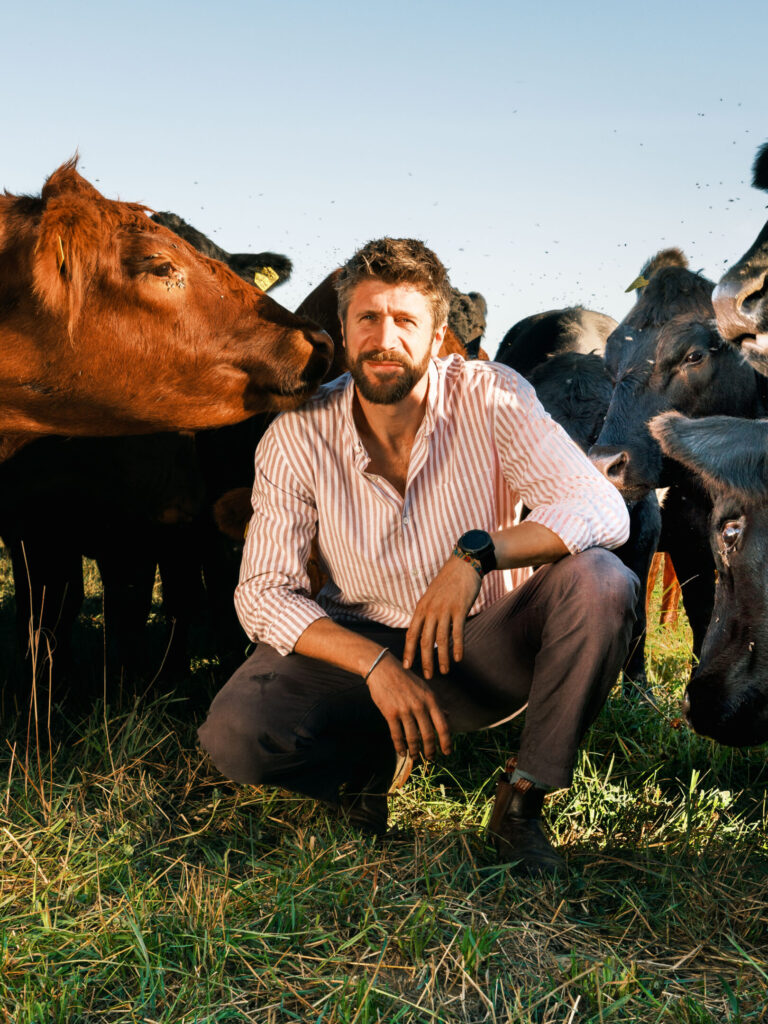
Just outside Berlin, in former East Germany, lies Gut&Bösel: a 3,000-hectare estate spanning both farmland and forest. Here, 350 cattle graze outdoors year-round, crops grow between rows of trees, and different forms of agroforestry are being tested. It is a place where agriculture, forestry and nature are gradually being woven back together.
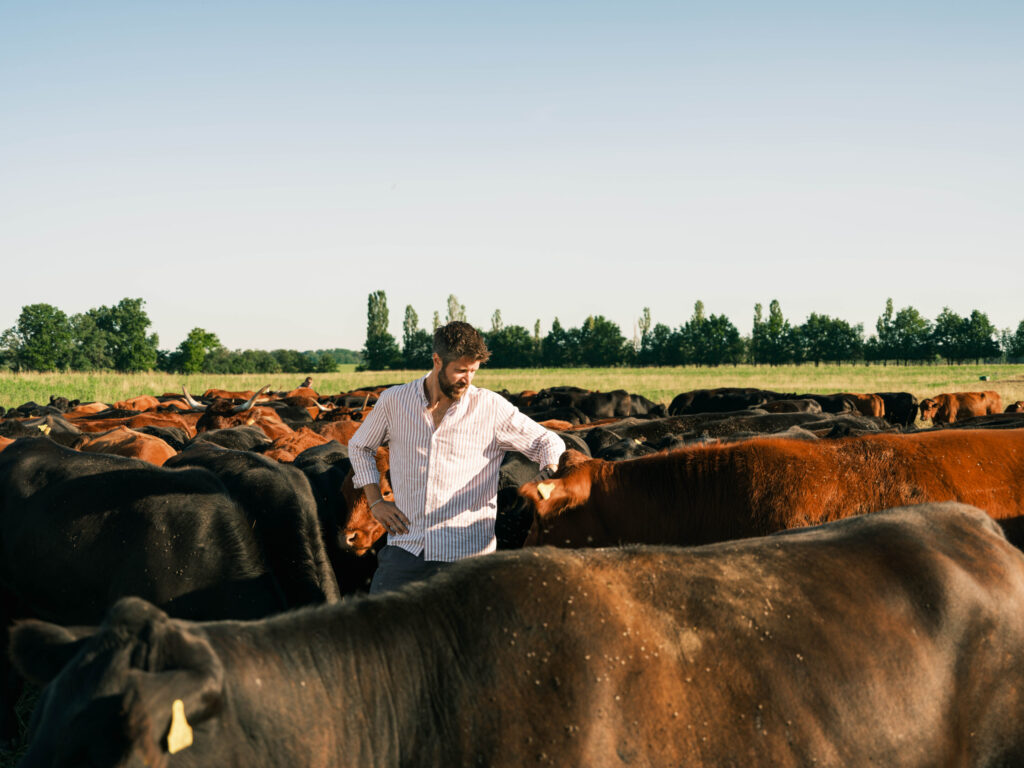 Benedikt Bösel at his regenerative farm. Photographer: Julian Loopstra
Driving this transformation is Benedikt Bösel, who took over the family estate in 2016. The farm, in Alt Madlitz, had belonged to his step-grandfather’s family for 250 years. After fleeing the Soviet-occupied region in 1945, his step-grandfather returned after the fall of the Berlin Wall and bought back the land together with Benedikt’s parents. From the age of fourteen, Benedikt – who was born and raised in Munich – spent nearly every holiday and free day in ‘Madlitz’, hunting, raising animals and simply being outdoors.
“Nature was always my passion. I always had a crazy connection with animals, the land and the family estate,” he explains. “Yet when I was nineteen, the idea of doing ecological agriculture in eastern Brandenburg was not very sexy to me.”
Uitgelichte quote
For three years I was just creating PowerPoint presentations that no one ever looked at
 Photographer: Julian Loopstra
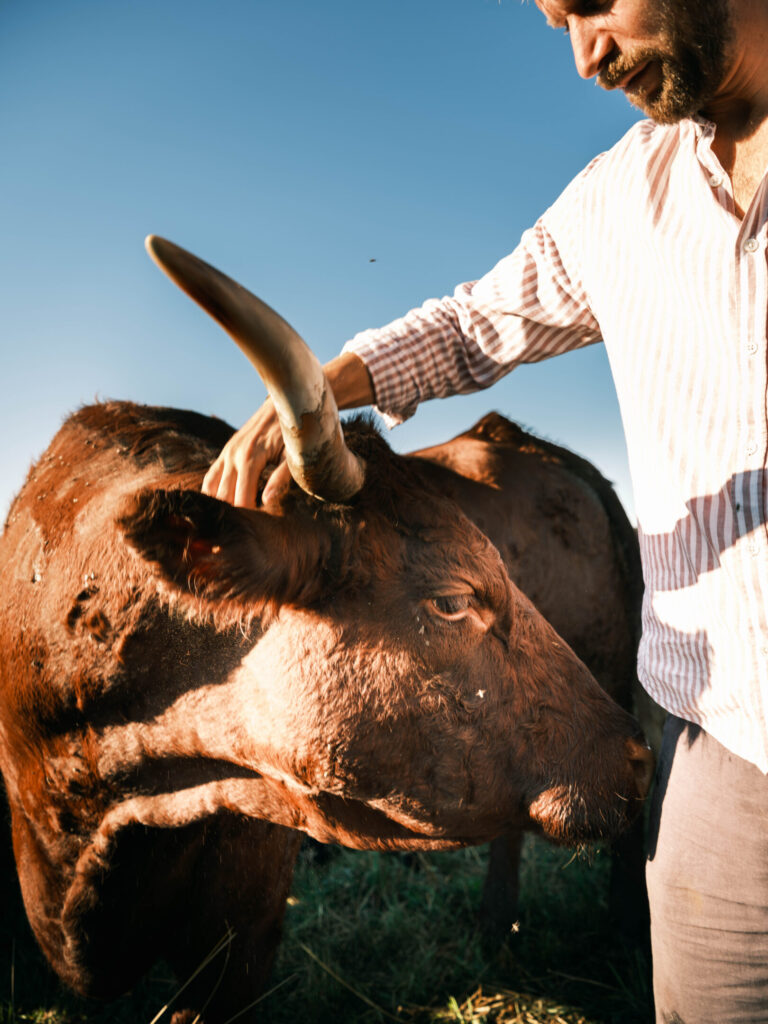 “I always had a crazy connection with animals, the land and the family estate.” Photographer: Julian Loopstra
Redefining capital
Instead, Benedikt chose a very different path. He studied economic mathematics in England before starting work at an investment bank. “It always sounds cool, but for three years I was really just creating PowerPoint presentations that no one ever looked at”, he recalls. “My luck was that the financial crisis hit a year after I started. So I saw how the whole financial system collapsed and how people treat each other when things are going badly. Although I wasn’t a great banker, that time was very valuable to me. It made me think about what I wanted to do with my life, how I wanted to work and what kind of industry I wanted to be part of.”
After leaving banking, Benedikt studied agricultural economics and gradually found his way back to the family estate. His initial idea was to turn it into a testing ground for agricultural start-ups, where new technologies could be developed and tested in practice. But just as he was considering investing 1.5 million euros, a severe drought hit.
“For nine weeks, there was no rain at all. I stepped out onto the field and everything was brown. There was not a single insect, and you could see the heat shimmering over the land. I remember thinking: ‘What exactly am I about to do?’ Invest all this money in technology, when the real capital I depend on as a farmer is the soil. So, I realised: this can’t be it.”
Uitgelichte quote
We want a field to become an ecosystem in itself
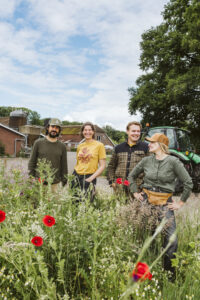
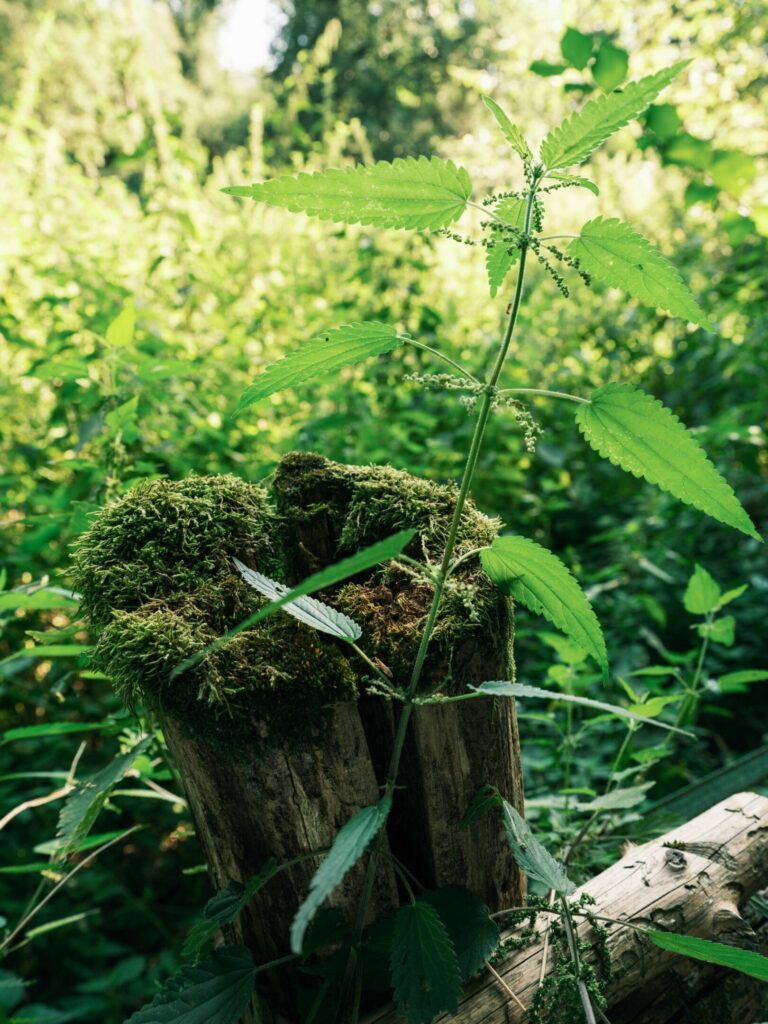 At Gut&Bösel, agriculture and nature come together. Photographer: Julian Loopstra
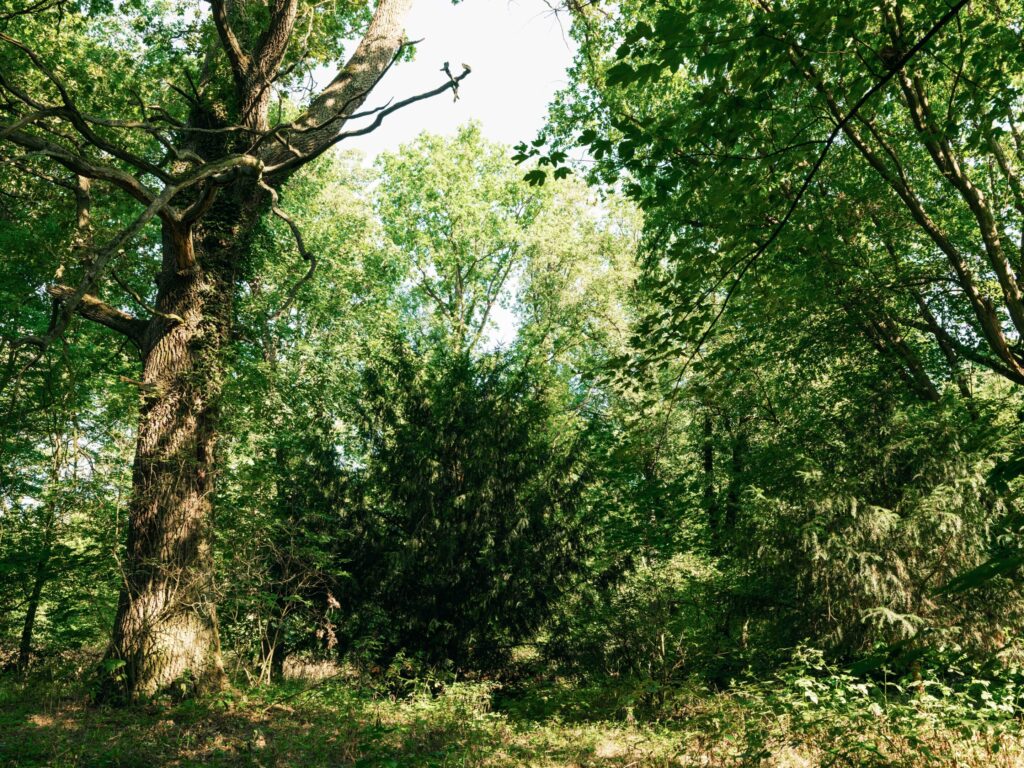 Photographer: Julian Loopstra
A living lab of regeneration
From that moment on, Benedikt began looking for ways of farming that focused on restoring the soil and wider ecosystem, rather than simply on what could be produced from the land. In his search for solutions, he came across pioneers in regenerative agriculture such as Ernst Götsch, Gabe Brown and Allan Savory, and began experimenting with their ideas.
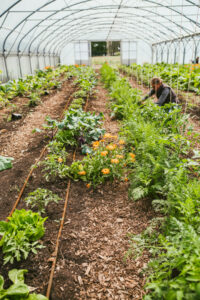
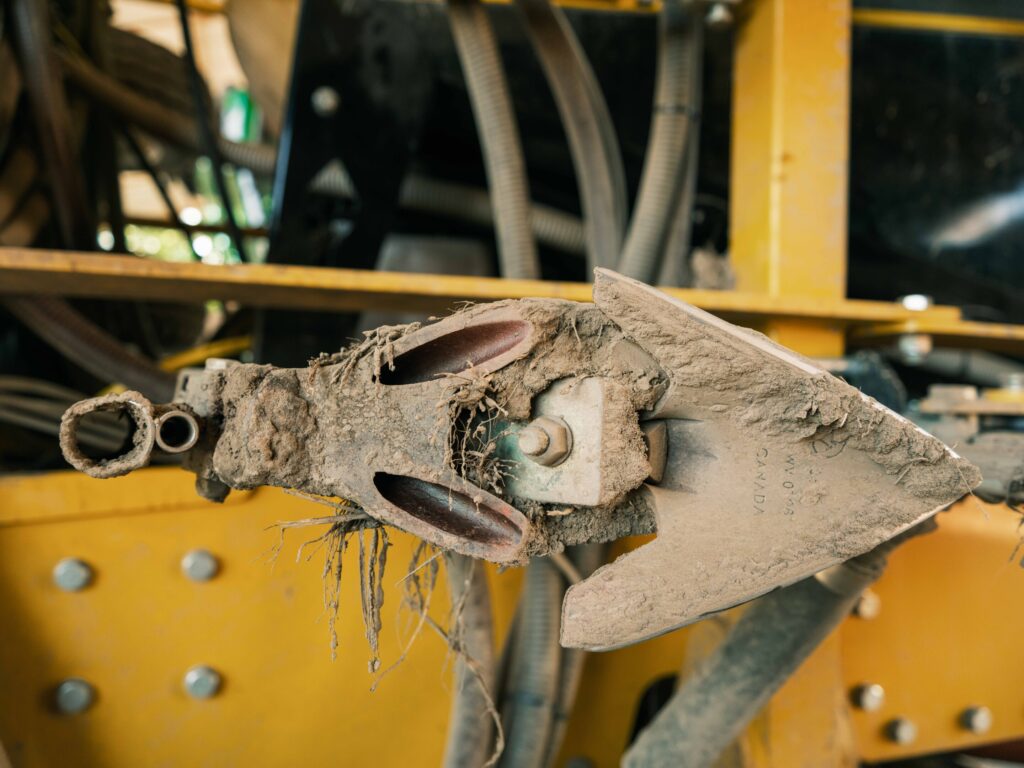
What started on a small scale gradually grew into what Benedikt describes as a ‘living lab’, where different forms of regenerative agriculture are tested in practice. The farm has shifted towards no-till practices and composting, while ten distinct agroforestry systems combine trees, crops and livestock in different ways. Rather than treating these as separate parts of the farm, Benedikt is trying to understand how they can work together as one system.
“We want a field to become an ecosystem in itself. In one year, on one field, we would have arable farming with a harvest, agroforestry rows and the cows. In healthy natural ecosystems, all these things are integrated, and we’re trying to bring that integration into a productive agricultural system.”
Uitgelichte quote
You cannot grow soil better than with cows
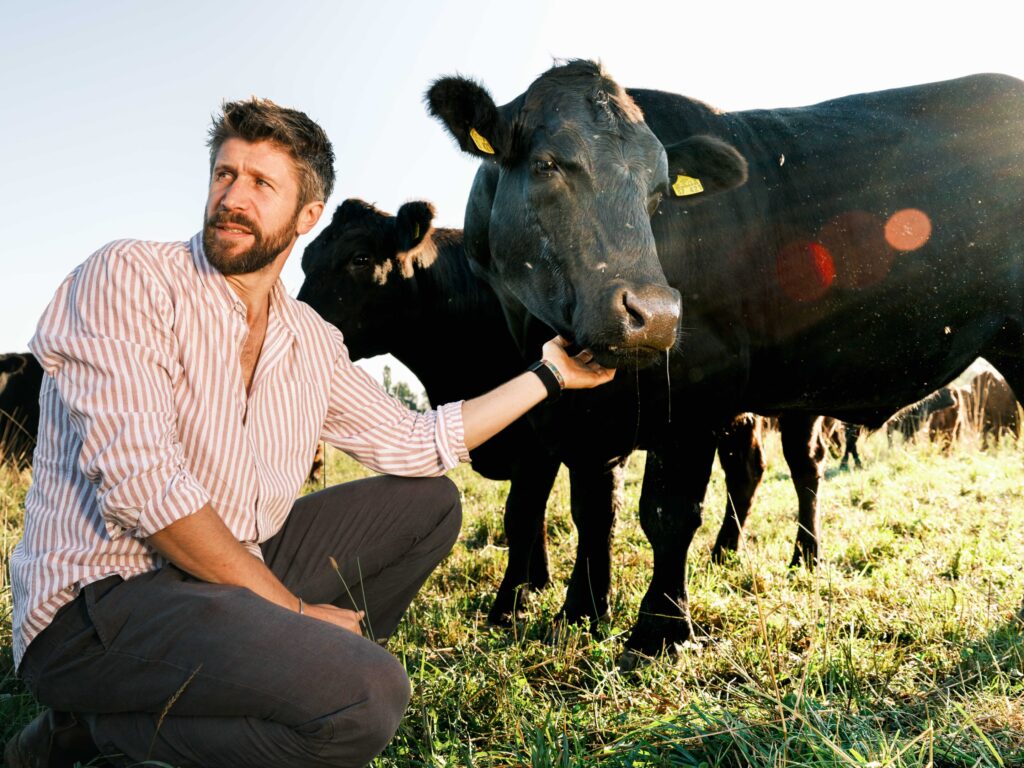 Rebuilding an ecosystem takes time – and Benedikt admits he doesn’t always know whether it will all be enough. Photographer: Julian Loopstra
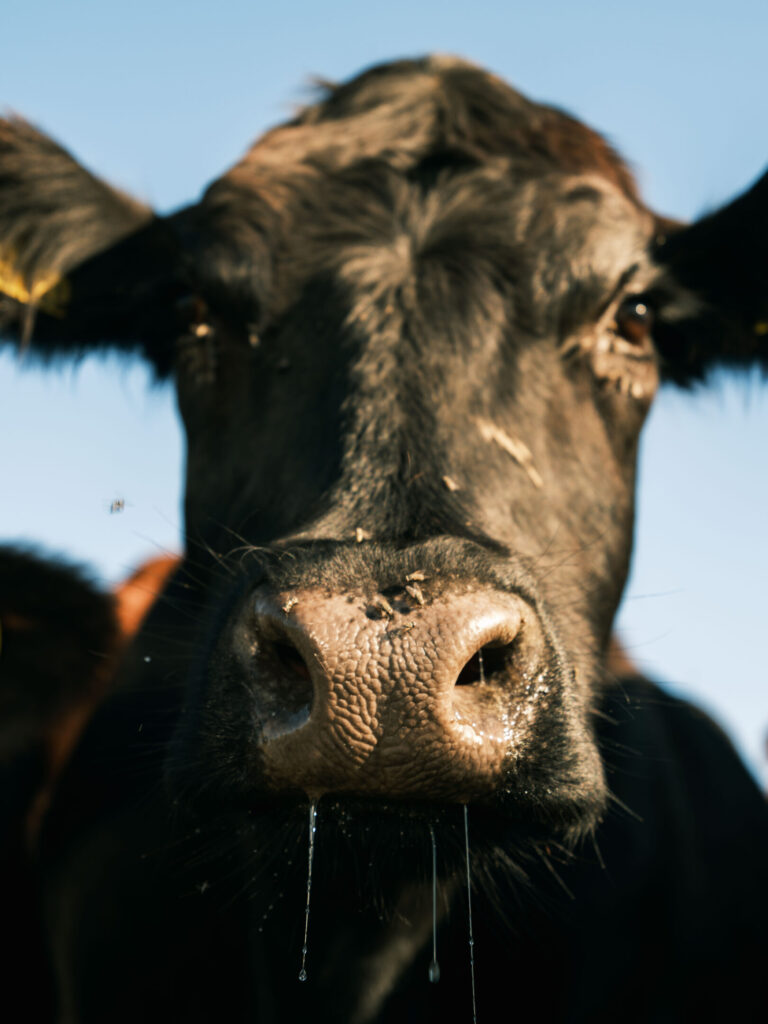 “Sometimes I think: what the fuck am I doing?” Photographer: Julian Loopstra
The secret of growing soil
When asked which experiment fascinates him most, Benedikt starts talking about the cattle and lights up. “We started off with 50 cows and one bull, and now we have 350 cattle. Most of them were born on the farm and have spent their entire lives with us. They know each other, they know us. To us, they’re not a production cohort. They’re a living system within a bigger living system.”
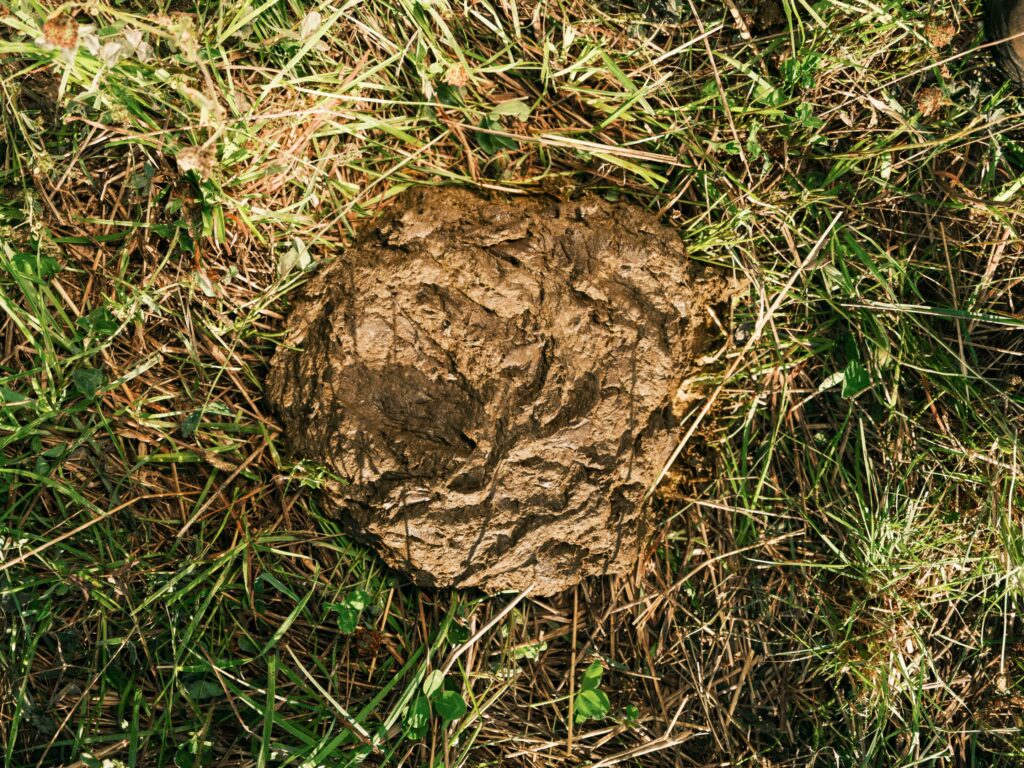
“And you cannot grow soil better than with cows”, he continues. “We move them once or twice a day, and they eat a diverse mix of grasses, herbs and legumes. They graze the plants without killing them, allowing them to grow back, photosynthesise, develop new roots and feed the microorganisms in the soil. That helps the soil absorb and store more water, which ultimately makes the whole system more resilient.”
But rebuilding an ecosystem takes time – and Benedikt admits he doesn’t always know whether it will all be enough. Especially in Madlitz, one of Germany’s driest areas, with incredibly sandy soils, the transition to no-till farming can initially mean lower yields while the soil slowly restructures itself – a process that can take six to eight years.
“Sometimes I think: what the fuck am I doing? It makes me question whether we are moving fast enough, whether the farm can carry the financial burden until it becomes more resilient, and whether our efforts will ultimately be sufficient in a changing climate.”
Uitgelichte quote
I grew up thinking that success in life meant financial success
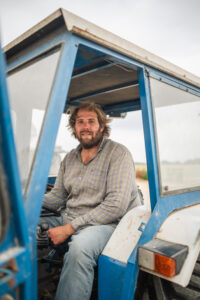
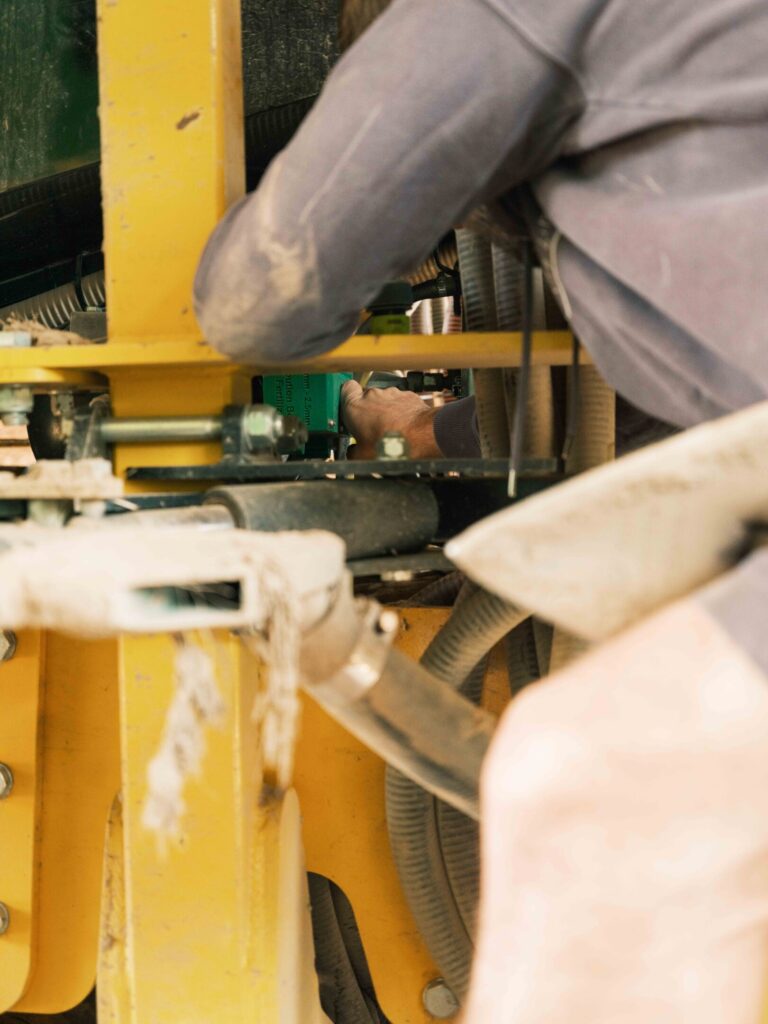 "I have the freedom to decide how to spend my days." Photographer: Julian Loopstra
 Photographer: Julian Loopstra
Changing perspectives
“I grew up thinking that success in life meant financial success. I feel fortunate that my experiences taught me that this isn’t what success or happiness is really about. Sure, I don’t make as much money as my friends in banking, but I love what I do. I have the freedom to decide how I spend my days, I can be with my kids, and I have a sense that my work is valuable.”
“I do this because I believe it’s the right thing to do. If someone comes to the farm and takes something valuable from it, or reads my book and it gives them hope, that is already enough. We can be the best we can in our own context and hope that others do the same.”
Over the coming months, we’ll be sharing the stories of more farmers like Benedikt who are part of the European Alliance for Regenerative Agriculture (EARA), a farmer-led network working to advance regenerative agriculture across Europe.
Also read our interview with Belgian farmer Géraud Dumont de Chassart and Dutch farmer Anne van Leeuwen – and sign up for our newsletter so you won’t miss the next one.