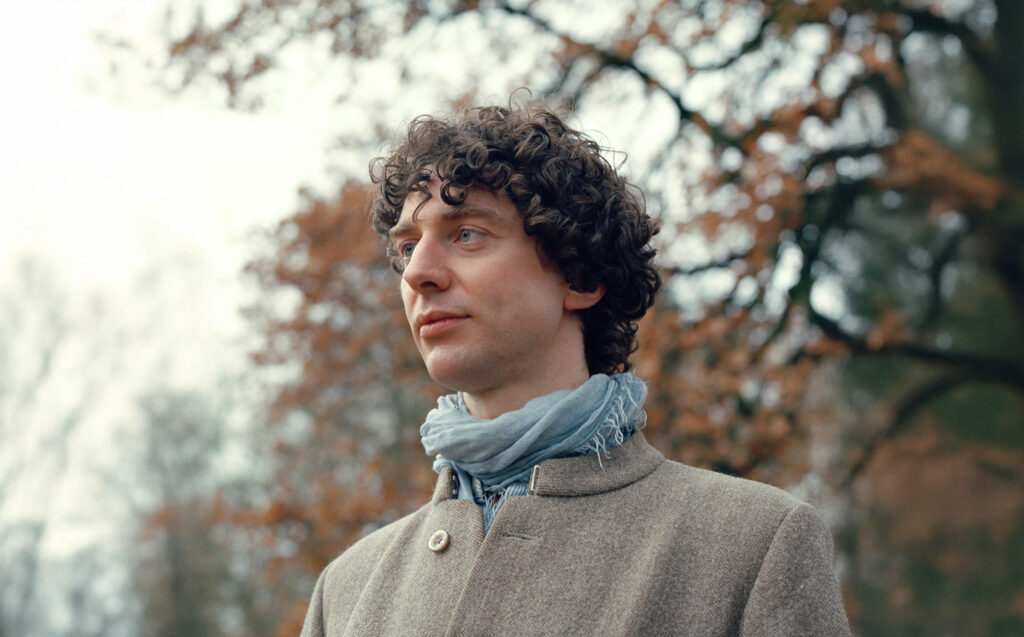
Nadina Galle: “This tree is linked to less crime, lower medication use and better school performance”

People who live in greener environments tend to live longer. Trees reduce stress, strengthen our immune system and improve concentration and school performance. And yet, we rarely treat urban nature as critical infrastructure. Ecological engineer Nadina Galle is here to change that. With technology, she argues, we can not only protect nature in cities, but actively strengthen it. “Nature should sit at the heart of every aspect of our lives.”
Where does your love of nature come from?
“I grew up in Canada, where being outdoors isn’t an activity – it’s simply part of everyday life. We lived on the edge of a forest, and I would spend hours playing there with friends and my younger sister, come rain or shine. During the summer holidays, my father would take us canoeing: when the water ended, we carried the canoe to the next lake. That rugged landscape – seeing wolves, moose and bears as a child – stays with you.
The decision to turn that love into my work came later. I used to walk two kilometres to school every day, at first through forest and along farmland. But within a few years, everything had been cleared. A suburb appeared, with rows of grey houses and names like ‘Forest Hills’ and ‘Flower Meadow’, even though the forest and the wild flowers themselves had vanished. The irony of that struck me.
On our walks, my father would ask: how would you design this differently? That’s where my interest in urban planning began.”
Uitgelichte quote
That rugged landscape – seeing wolves, moose and bears as a child – stays with you
 Nadina Galle: “In Canada, being outdoors isn’t an activity – it’s simply part of everyday life.” Photographer: Diane van der Marel
 Photographer: Diane van der Marel
You’re an ecological engineer. What does that mean?
“Ecological engineering is the science of designing ecosystems for both human and non-human species. It’s about shaping our living environment according to natural principles, with plenty of room for ecological processes to unfold. So instead of a conventional water treatment plant, you work with wetlands, and instead of air conditioning, you use trees to provide cooling.
In essence, it forms the scientific foundation of what we now often call ‘nature-based solutions’. That was also the focus of my PhD research, in which I explored how technology can support and strengthen these human-made urban ecosystems.”
Uitgelichte quote
We still don’t perceive nature as critical infrastructure
That combination of ecology and technology often meets resistance.
“Many ecologists do say: ‘I want nothing to do with that – nature and technology don’t even belong in the same sentence.’ You hear the same hesitation from arborists and others who design and care for ecosystems in the field. That resistance isn’t technophobia, but responsibility: anyone who works with living ecosystems knows how complex, context-dependent and vulnerable they are.
Nature isn’t just another layer of infrastructure – like streetlights or public transport – that can be optimised or scaled in the same way. It is the living foundation that makes the city function in the first place.
And precisely because of that, technology can have value. Not as a replacement for nature, but as a tool to better understand, monitor and strengthen it – especially in urban environments where space is limited and pressures are high.”
Uitgelichte quote
Never would we accept that kind of missing baseline data for cables, bridges or tram lines
 Photographer: Diane van der Marel
 Nadina Galle: “Trees are the keystone species of urban nature.” Photographer: Diane van der Marel
Can you give an example?
“Think of sensors that identify which young trees are at risk during drought, or heat maps that reveal where additional greenery could directly improve public health.
Citizen science apps also hold enormous potential: they map biodiversity and show urban residents what lives and grows around them – information that was previously unavailable. New AI cameras, for example, can monitor insects and detect shifts in biodiversity, enabling cities to respond more quickly and strengthen their policies. Digital tools can also forecast the future value of trees – in terms of cooling, water retention and improved health outcomes in twenty, forty or even sixty years. And with 3D mapping technologies such as LiDAR, we can chart an entire urban forest in a matter of days rather than years.
Many cities still lack a proper tree inventory: a clear record of where each tree stands, what species it is, and its condition and age. We would never accept that kind of missing baseline data for cables, bridges or tram lines – yet when it comes to trees, we do. Because we still don’t perceive nature as critical infrastructure…”
Uitgelichte quote
Newly planted trees are linked to improved health outcomes, such as higher birth weights and fewer preterm births
While urban nature brings enormous benefits – including for our own health.
“There is a growing body of evidence to support that. One of the most striking studies, from Colorado State University, shows that an increase in greenery in the immediate living environment is associated with a longer life expectancy. The researchers looked specifically at proximity to nature, independent of factors such as socioeconomic status and education level. They used what’s known as the NDVI – a measure of the amount of greenery within 500 metres of someone’s home. For every 0.1-point increase on that index, the risk of premature death decreases by around four per cent.
Additional studies by, among others, Geoffrey Donovan show that changes in tree cover are associated with changes in public health. In the United States, for example, large-scale tree loss coincided with increases in mortality from cardiovascular and respiratory diseases. At the same time, research into urban tree planting – including in Portland – indicates that newly planted trees are linked to improved health outcomes, such as higher birth weights and fewer preterm births.
Uitgelichte quote
Contact with biodiversity – through soil, plants and microorganisms – can support the immune system
Why is that?
“Yes… that’s the big question. The mechanism behind why greenery is so strongly associated with health is still very much the subject of scientific debate. We are fairly certain that there is an effect, but exactly how it works turns out to be complex.
There are several plausible explanations, however. One important factor is that greenery can reduce exposure to fine particulate matter and air pollution, which are directly linked to cardiovascular disease and respiratory problems. Stress reduction likely plays a role as well: people report lower stress levels in green environments, which in turn affects a range of physiological processes.
But it goes further than that. In greener neighbourhoods, people tend to move more, spend more time outdoors and recover more quickly on a mental level. There are also indications that contact with biodiversity – through soil, plants and microorganisms – can support the immune system.
And then there is the fascinating field of research into substances released by trees and plants, such as phytoncides: volatile compounds that may influence our immune system, for example through natural killer cells (which fight cancer!). That research is still evolving, but it underscores an important point: greenery likely works through multiple mechanisms at once, not through a single explanation.”
Uitgelichte quote
Studies in countries like Belgium show that children who grow up near green spaces score, on average, 2.2 points higher on IQ tests
In children, it also positively affects school performance.
“That’s another remarkable finding. Studies in countries like Belgium show that children who grow up near green spaces score, on average, 2.2 points higher on IQ tests. That may sound modest, but differences like that can meaningfully shape educational trajectories and opportunities.
Similar effects are observed in concentration and overall learning performance. If you let children play for fifteen minutes in a green environment – or even simply look at greenery – and then have them take a test, they perform better than they would without that green interval.
Uitgelichte quote
Walking meetings in green surroundings lead to better ideas and sharper insights
 Photographer: Diane van der Marel
 Nadina Galle: “People report lower stress levels in green environments, which in turn affects a range of physiological processes.” Photographer: Diane van der Marel
What does this show, in your view?
“That we, as human beings, come from nature. Our DNA originates there – we are nature. So it’s hardly surprising that we function better – physically, mentally, emotionally and cognitively – when we stay connected to it.”
Uitgelichte quote
We need to see nature as a central and self-evident condition of everything we do
We’re increasingly able to measure these positive effects – and even monetise them. Is that desirable?
“In principle, I’m not in favour of putting a price tag on nature. Nature deserves protection because it is nature, full stop. But in an urban context, things are more complicated. You’re dealing with high land values, multiple stakeholders and a persistent failure to recognise nature as essential infrastructure. In that setting, hard data – and yes, even the language of money – can help.
If you can express the value of a tree in euros and demonstrate that this tree is linked to lower medication use, less crime and better school performance, you’re in a stronger position to protect that tree. Health, educational performance, productivity – these are the things our current economic system knows how to value.”
Uitgelichte quote
I would like to see hospitals and schools use nature as a fully fledged intervention
How do we design cities from the understanding that we are nature?
“If you truly begin from the idea that we, as humans, are nature, then nature should sit at the heart of every aspect of our lives. That means integrating as much greenery as possible into new housing developments, but also weaving it back into existing neighbourhoods. Green roofs, preserving mature trees and creating more urban parks would simply become no-brainers.
I would also like to see hospitals and schools use nature as a fully fledged intervention. And that parks and urban forests would automatically become the places we gather. Many meetings – parent groups, for example, or AA-meetings – still take place in gym halls. Why not move them outdoors? The same goes for work or school appointments. Research shows that walking meetings in green surroundings lead to better ideas and sharper insights.
We need a fundamental shift in perspective: to see nature as a central and self-evident condition of everything we do. Not as a place we briefly visit for a jog before retreating back indoors.”
Uitgelichte quote
Apps such as NatureDose are increasingly used by GPs and psychologists to prescribe nature

Much depends on political decisions. What can people already do themselves?
“It’s true that these changes largely depend on urban planners and policymakers. At the same time, citizen initiatives often play a crucial role in protecting nature. People can, for example, apply for a tree to receive protected or heritage status. That’s more straightforward than it sounds: if there’s a tree – on public or private land – that’s under threat, you can take action. You simply need to demonstrate its cultural or ecological value, and then it can be granted protection – provided the landowner gives permission. That last condition needs to change, and I’m currently working on policy to make that happen. After all, far more people benefit from a tree than just the owner of the land it stands on.
Anyone can also take part in the City Nature Challenge, which last year took place in 700 cities worldwide. It’s a bottom-up initiative where people spend four days outdoors identifying and photographing species, collectively mapping urban biodiversity.
And let’s not forget that, on average, we spend 90 per cent of our time indoors. It’s therefore hardly surprising that apps such as NatureDose are increasingly used by GPs and psychologists to prescribe nature. But of course, you can also download them yourself – as a small nudge to spend more time in green spaces.”
Uitgelichte quote
We know that nature is good for us – but which type of nature has the greatest impact?
 Nadina Galle: “Together with forty partners, I am working on a European research project examining the relationship between health and nature.” Photographer: Diane van der Marel
 Photographer: Diane van der Marel
Which project are you immersing yourself in next?
“Together with forty partners, I am working on a European research project examining the relationship between health and nature. We know that nature is good for us – but which type of nature has the greatest impact? Dense woodland, tiny forests, large urban parks? That’s what we’re trying to understand.”
Uitgelichte quote
Instead of losing yourself in vast, fear-inducing global challenges, focus on the 500 metres around your home
Last question: in one word, where do we need to go?
“If I had to bring it all together in one word, it would be: hyperlocal. Instead of losing yourself in vast, fear-inducing global challenges, focus on the 500 metres around your home. That’s where most of our lives take place – at home, in your neighbourhood, at your children’s school. That’s where regeneration begins.”
Who is Nadina Galle?
Nadina Galle (1992) is an ecological engineer working at the intersection of nature, technology and urban development. She studied Ecology and Evolutionary Biology in Toronto, followed by a master’s degree in Earth Sciences at the University of Amsterdam in the Netherlands and a promotion in ecological engineering, partly with the Senseable City Lab of MIT.
In her book The Nature of Our Cities she introduces the Internet of Nature and explores how technology can help protect and strengthen urban ecosystems. Her book became an international bestseller and positions nature as a crucial urban infrastructure – just as essential as roads, bridges and cables. Through her work, she connects science, policy and practice, with health, quality of life and the climate as a guiding thread.

READ MORE:

Helena Norberg-Hodge: “More hands and hearts per hectare, it’s what the land needs to heal”
12 January 2026