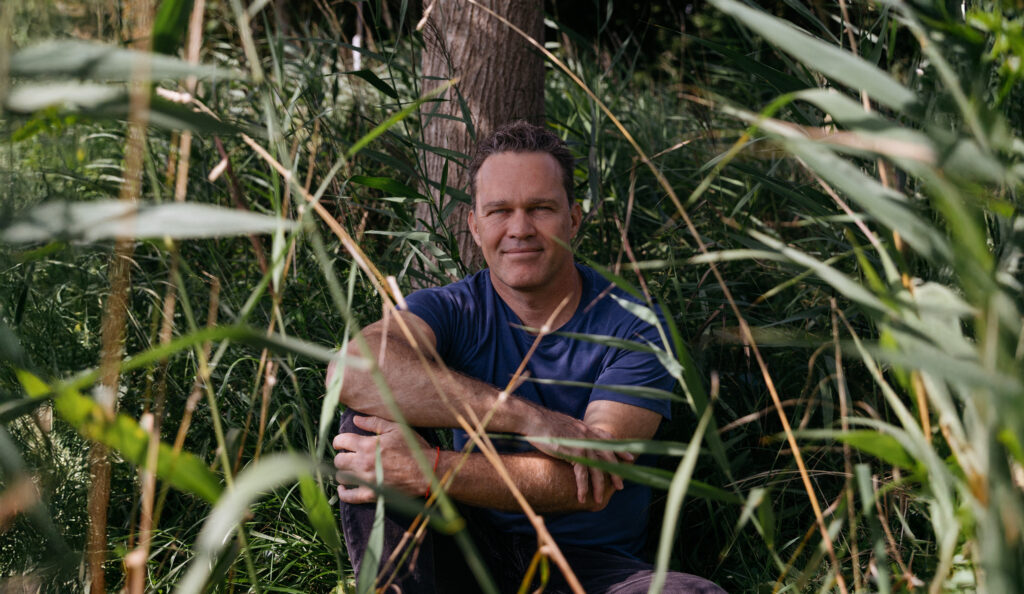
Matthijs Schouten: “We should weigh our human interests against the interests of non-human beings”

For the future wellbeing of all life on Earth, it is essential that we rediscover meaningful ways of living and working with nature, argues nature philosopher and ecologist Matthijs Schouten. In this guest essay, he makes his case for a ‘nature contract’ as the foundation of our agricultural and food systems.
For over twenty-five years, I have worked with students in the Burren, a karst landscape on Ireland’s west coast. Tourist brochures describe the area as ‘a true Irish wilderness’. Nothing could be further from the truth. Around 6,000 years ago, farmers settled here, cleared the forests that once covered the land and began using the landscape primarily for grazing livestock. And for six millennia, that practice has continued. To this day, cows still graze the Burren. It is not a wilderness, but an ancient agricultural landscape.
That the Burren is so often labelled wilderness has everything to do with its extraordinary richness in wild plants and animals. Within an area of no more than 500 square kilometres, more than eighty per cent of Ireland’s biodiversity is represented.
This is a telling observation. When we examine the European Habitats Directive, we see that ecosystems with the highest levels of biodiversity are generally what conservationists refer to as ‘semi-natural’. The term denotes traditional agricultural landscapes in which human use has remained largely unchanged for centuries.
Uitgelichte quote
Ancient cultural landscapes are so rich in biodiversity largely due to traditional farming practices
 Matthijs Schouten: “In traditional agricultural systems, humans and nature worked together in ways that allowed both to flourish.” Photographer: Diane van der Marel
 “Those practices produced landscapes of exceptional ecological richness and beauty.” Photographer: Diane van der Marel
Bio-cultural diversity
The same pattern emerges on a global scale. Regions that harbour an exceptionally high diversity of wild plants and animals are often also places of great cultural diversity, where different cultural traditions have coexisted over long periods of time. In scientific terms, this is known as bio-cultural diversity.
That ancient cultural landscapes are so rich in biodiversity is largely due to traditional farming practices. Until relatively recently, artificial fertilisers and pesticides were unknown. What farmers primarily did was remove biomass through grazing, mowing, burning and sod-cutting. Under such forms of land use, highly competitive plant species are unable to crowd out weaker ones. As a result, plant diversity per unit area is often greater than in the original natural system – which in much of Europe consisted largely of forest. Greater plant diversity, in turn, supports richer communities of insects, birds and mammals.
In short: in traditional agricultural systems, humans and nature worked together in ways that allowed both to flourish.
Uitgelichte quote
For the future wellbeing of the great symphony of life on this planet, it is vital that we seek conviviality in our food systems
Working together with nature
Environmental philosophy has long distinguished between two values of nature. The first is instrumental value – the value nature holds for human wellbeing. Nature feeds us, it provides medicines, building materials and beauty, to name just a few. The second is intrinsic value – the value nature has in and of itself, independent of its usefulness to humans.
More recently, a third value has gained recognition: relational value. Humans and nature can interact in ways that generate mutual benefit. This form of coexistence is referred to in scientific literature as conviviality.
Uitgelichte quote
The global loss of semi-natural landscapes is one of the principal drivers behind the dramatic decline in biodiversity worldwide
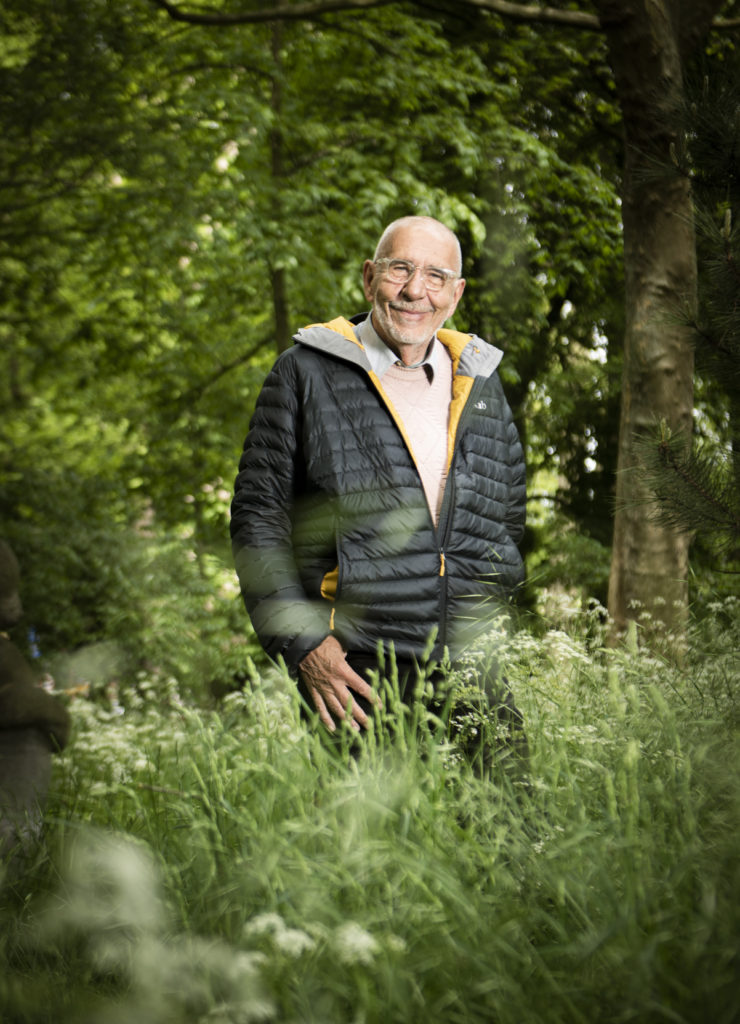 Matthijs Schouten: “Ecosystems with the highest levels of biodiversity are generally what conservationists refer to as ‘semi-natural’.” Photographer: Diane van der Marel
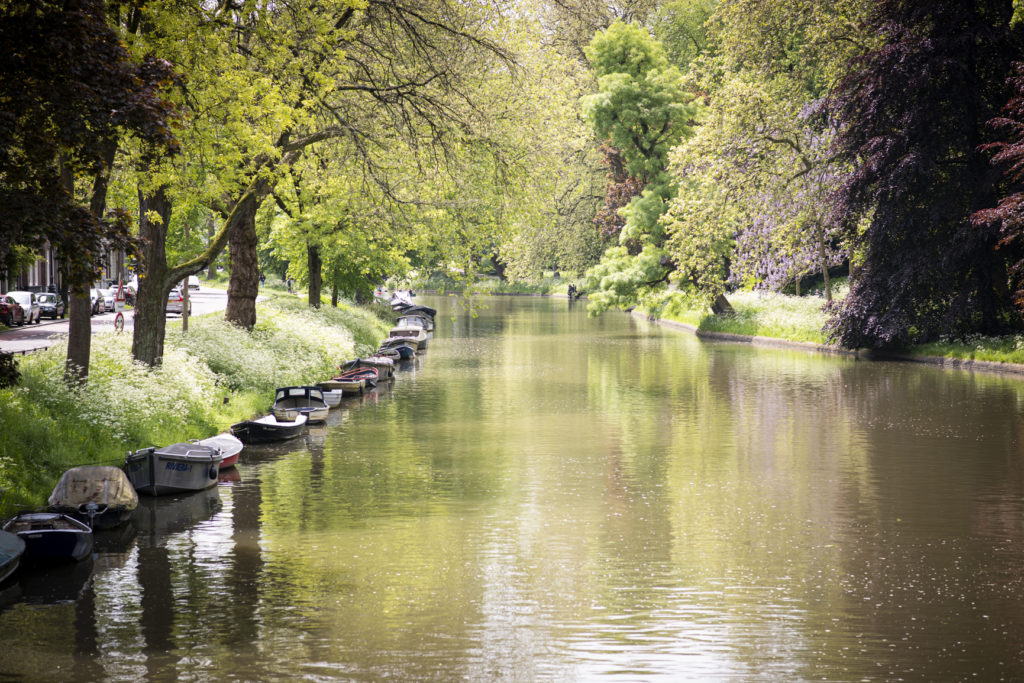 “Humans and nature can interact in ways that generate mutual benefit.” Photographer: Diane van der Marel
Traditional agriculture was not consciously designed to increase biodiversity. That outcome emerged, as it were, as an unintended by-product of earlier farming practices. Yet those practices produced landscapes of exceptional ecological richness and beauty.
With the intensification of agriculture, such landscapes are now disappearing worldwide at an accelerating pace. In the Netherlands, they survive largely within nature reserves, where land managers are effectively required to farm as their nineteenth-century predecessors once did. The global loss of semi-natural landscapes is one of the principal drivers behind the dramatic decline in biodiversity worldwide.
For the future wellbeing of the great symphony of life on this planet, it is therefore vital that we now consciously seek conviviality in our food systems – a genuine form of living and working with nature.
The French philosopher Michel Serres proposed the idea of a nature contract. The social contract, in which individual wellbeing is weighed against that of others, forms the binding force of a well-functioning society. At its core lies restraint.
In the same way, Serres argued, we should weigh our human interests against the interests of non-human beings when we act in the world.
The nature contract, then, becomes the foundation for the wellbeing of all forms of life.
Originally published on the 18th of March 2024. Latest update: 7th of May 2026.

READ MORE:

Vandana Shiva: “In a living economy, we participate in the natural world as equals”
26 February 2026