Yanniek left the Netherlands to regenerate 1,100 hectares in Spain: “The more you invite nature back, the less you have to do”

For Altiplano farmer Yanniek Schoonhoven, the choice between wildness and yield is a false one. Since she arrived a decade ago, over a hundred ponds have been dug, the deer have come back, and the harvest has never been better.
Can you tell us about where you are?
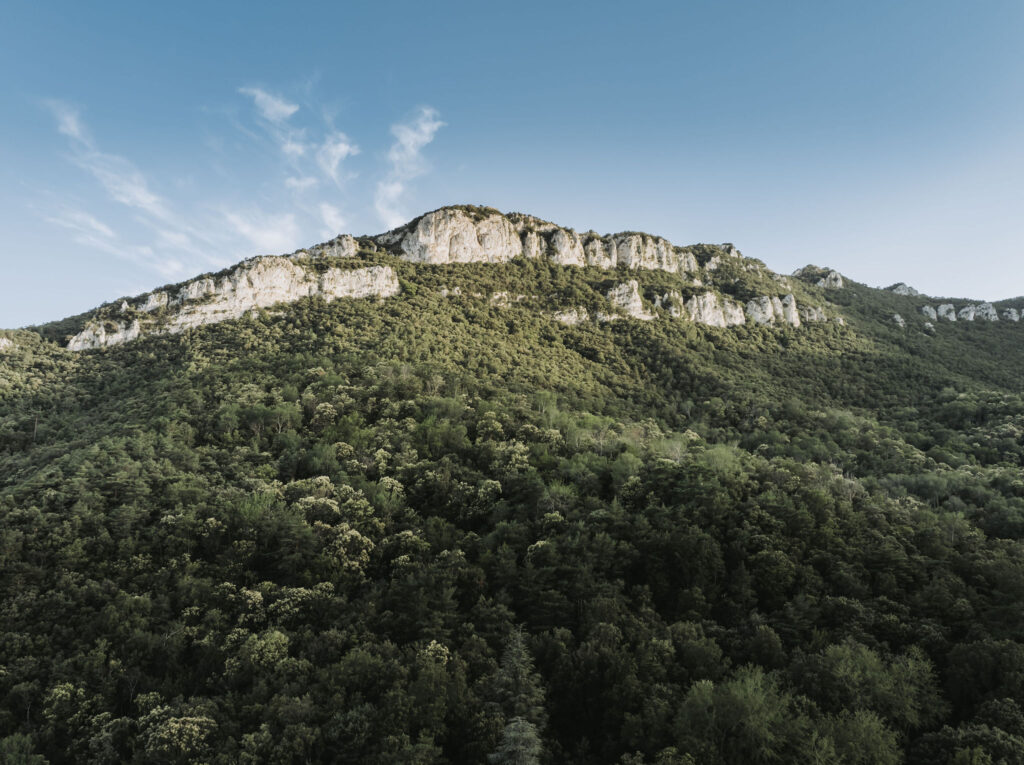
“We’re in the Altiplano in the south of Spain. We’re in a place that many would consider the middle of nowhere. Our farm is 1,100 hectares. We’re a small community of people who love the outdoors and like to live in the wild.
The Altiplano is a territory with a very wide, open landscape. Some call it hostile because there’s a lot of wind – when the wind is there, it’s a lot; when the sun is there, it’s a lot; and when the rain is there, which doesn’t happen that often, it’s a lot. You don’t see fencing anywhere. You could just walk for hours without having to stop because of a fence or the feeling that the land is owned by anyone.”
Uitgelichte quote
All these needs that society has created fill your mind. Here, that doesn’t exist
What is it that motivates you to participate there?
“For me, a big part of what I love about this place is the emptiness. I love that there’s not so much influence from capitalism. When you go to a city, you feel like you should buy things – you look at yourself and think, “Maybe I need new clothes,” or “Oh, my skin…” Suddenly you can’t think of anything else. All these needs that society has created fill your mind. Here, that doesn’t exist. You go to the supermarket once a week, buy what you need, and that’s it. The rest of the time you’re not preoccupied with all of these manufactured wants.”
Uitgelichte quote
Now that I live here, this life is rough and wild in itself
 Yanniek Schoonhoven: “We're a small community of people who love the outdoors and like to live in the wild.”
 "We talk about life, about animals, about how that's part of everything."
What does “wildness” mean to you?
“Before I lived here, wildness meant going to places not so touched by humans. Where I came from, everything was built, managed, fixed. You really had to travel somewhere to say, ‘I’m in the wild.’ Now that I live here, this life is rough and wild in itself. You’re constantly connected to life and death.
My daughter is the perfect example of a little wild human. When we had a cow that died and had to stay there a while before being collected, every day she wanted to go and check on it. She wanted to see how it looked, what was happening to it. No fear. We would walk out together and talk about life, about animals, about how that’s part of everything.”
 “You become much more attuned to what's happening around you.”
 Yanniek Schoonhoven: “Before I lived here, wildness meant going to places not so touched by humans.”
Do you sense things differently now? Do you pay attention in different ways than before, given that you grew up in the Netherlands?
“Definitely. In the beginning, nobody is aware that there are still hazards in nature – scorpions, snakes, bees, wasps. You have to learn to see them. Now when I walk, I’m always aware of where I see a lot of bee or wasp activity, because there’s probably a nest somewhere. Before, I might not have noticed and would get stung constantly. With scorpions, sometimes you lift a rock and there’s one, or you sit somewhere and spot one. Before, I never would have seen them. I didn’t even know there were still places in Europe with scorpions. You become much more attuned to what’s happening around you. It happens by itself, through experience.
Uitgelichte quote
There can be a beautiful balance between the wild and farming
Do you see a tension between farming and wildness?
“There shouldn’t be. On our farm, we work a lot with the wild. We’ve built over a hundred ponds across the farm, and that has massively increased biodiversity. We see animals using them constantly – the footprint of a wild boar in the mud, badgers, wildcats. Water is extremely important for all wildlife, especially in a dry area like ours. There can be a beautiful balance between the wild and farming. Through organic, regenerative agriculture, we say our job is not only to produce but also to improve the health and function of the ecosystem at the same time. We can do both.
There’s sometimes a cost to implementing new things, and a cost of experimenting. But in the long run, we are much more resilient to climate change and to any external shocks. Our yield is more stable. We don’t see any downside to doing this, and it’s a lot more pleasant to be here. Why not make something that is a pleasure to be part of, instead of something that is merely productive?”
Uitgelichte quote
You have to be present, look, see what’s happening, and act accordingly
Is there a difference between tending land as a steward and controlling it? Is it sometimes more about letting go than having control?
“A bit of both, I think. In a way, we do want to control our yield – we need a certain level of production to keep farming. But what we also see is that the more you invite nature back in, the less you have to do. The more you can let go, because the system starts to work by itself. That doesn’t mean every year is the same. There are years when you have to give things a big push – because of weather conditions elsewhere, or sudden pest pressure from a particular insect. That’s why I always say you have to be flexible. You can’t do exactly the same thing every year. You have to be present, look, see what’s happening, and act accordingly.”
Uitgelichte quote
An inner sense of wildness is also just going with the seasons
What has the experience of the Altiplano done to your inner life?
“I’ve realized I’m genuinely happy that the life I lead is this rustic. By not being drawn into the current system – into everything cities offer or fail to offer – I feel a lot more free. For me, an inner sense of wildness is also just going with the seasons. Right now it’s been difficult weather for a month and we’re all taking it easier, because you can’t really be outside anyway. That’s fine. We’re not going to sit in an office from nine to five just because that’s what people do. Then spring comes and everyone is busy, doing things in the evenings and weekends. In summer it’s only the evenings, because it’s far too hot. Then the autumn harvest season arrives and everyone is working hard, all together. This sense of being part of the flow is very healthy.”
Uitgelichte quote
I still sometimes find it hard to shake the idea that working means being in front of a computer
 Yanniek Schoonhoven: “There's sometimes a cost to implementing new things, and a cost of experimenting.”
 “We don't see any downside to doing this, and it's a lot more pleasant to be here.”
Has it been hard work to arrive at such a sense of freedom?
“I still sometimes find it hard to shake the idea that working means being in front of a computer. It’s strange how ingrained that is. It took time to learn to respond more to what’s actually needed, and even now I sometimes think, ‘I haven’t done anything’, meaning I haven’t been sitting at a computer – which is strange, because I very much am working.”
Uitgelichte quote
Try for one week to only buy local, organic, from regenerative farms – rewild your shopping list!
What’s the invitation for a reader who feels far from wild land?
“The most important one is: what do you buy? Try for one week to only buy local, organic, from regenerative farms. Look it up, make the effort. The benefit is twofold – for your own health and for the health of the ecosystem. Rewild your shopping list!”
This article is a shortened version of Stewarding the Dry Altiplano featured in Meander Magazine: a regenerative magazine for bioregional culture, slow living, and ecological futures. The story was created in collaboration with Commonland. You can pre-order the third edition of Meander here.
About Yanniek Schoonhoven
Yanniek Schoonhoven is a farmer and regenerative agriculture practitioner based at La Junquera Farm in the Altiplano of southern Spain. There, she also runs the Regeneration Academy, which empowers the next generation of farmers to lead the regenerative movement.

LEES VERDER:

“Bioregions connect us with the living systems we depend on”
3 October 2025