Li An Phoa: “All we need to do is stop working against the wisdom of ecosystems”

From the Meuse to the Thames and the Danube, ecologist Li An Phoa walks hundreds of kilometres along rivers every year. As she walks, she brings together people living within the same catchment, united by a single goal: drinkable rivers. A conversation about rivers as mirrors, dried out landscapes, and why blaming farmers gets us nowhere. Li An: “People are thirsty for community.”
You are the founder of Drinkable Rivers. What is your mission?
“With our foundation we want to create a global movement for drinkable rivers. We do this by organising river walks, from source to mouth. As we walk, we connect people to the water and to one another, helping them realise they are part of the same catchment. And that a river can become drinkable again if they adopt the health of that catchment as their compass. Everything we do on land is reflected in rivers. They are a mirror of how we live.
We also stretch our collective imagination. Most people have fully accepted tap water as the norm, yet seventy years ago there were places where people could drink directly from rivers – even in the Netherlands. During my walk along the Meuse, for example, I met an eighty-year-old man who, as a child on his way to school, drank from the Dommel, a tributary of the Meuse. By sharing these stories, we rediscover how natural drinkable rivers actually are, and how unnatural our current relationship with drinking water and rivers has become.”
Uitgelichte quote
Once we put an end to pollution, the river’s self-healing capacity returns
 Photographer: Diane van der Marel
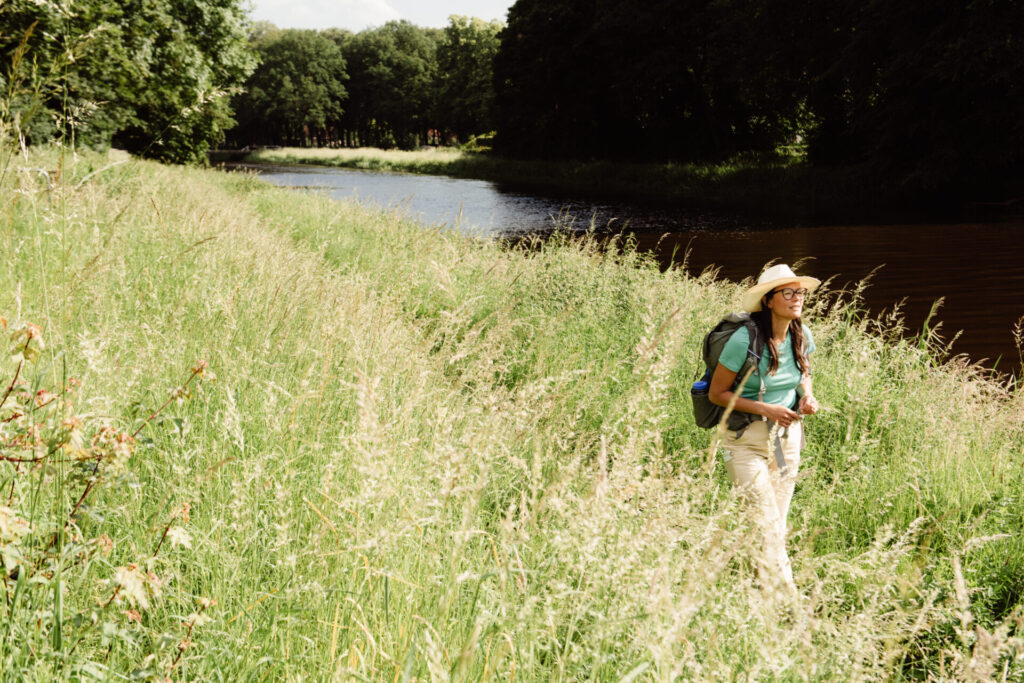 Li An Phoa during her walk along the Berkel. Photographer: Diane van der Marel
How did you discover this yourself?
“In 2004 I travelled to Canada to canoe along the Rupert River for a month with an expedition team, from source to mouth, to draw attention to a megadam that was about to be built in the area. During the journey everyone drank from the river using their hands – that was normal there. That first sip moved me deeply. I had never experienced such beauty. And at the same time the realisation hit me: of course – this is how our ancestors always drank. Why had I never reflected on this before?
At that moment, the river became my teacher. It taught me to think in terms of healthy relationships and made me realise that we need everyone to keep a catchment healthy – but that it only takes one action to pollute a river.
When I returned to the area three years later, the river was no longer drinkable. I was warned from all sides: ‘You can’t drink here – the fish are dying and are deformed, and people are getting sick.’ Despite our efforts, the megadam had been built after all, allowing heavy metals from nearby mining to enter into the water. That shock and frustration – but also the grief and sadness – led me to make a promise to the Rupert at that moment: ‘I will dedicate the rest of my life to drinkable rivers.’”
Uitgelichte quote
If we take good care of freshwater, there is abundance – even in a world with many more people than today
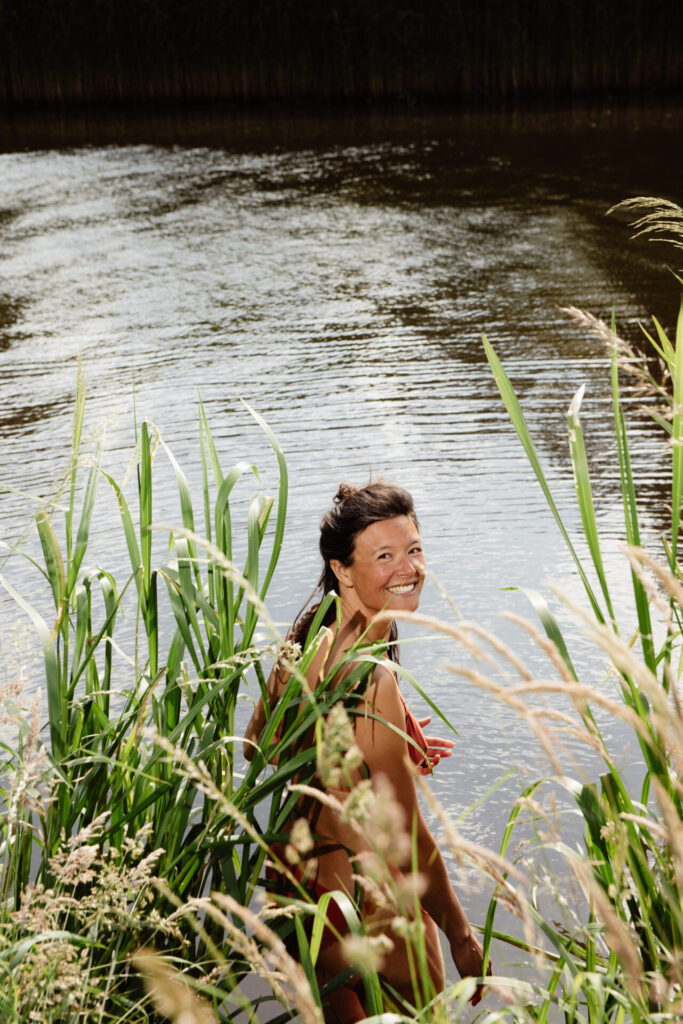
 Li An Phoa in the river Berkel. Photographer: Diane van der Marel
 “I will dedicate the rest of my life to drinkable rivers.” Photographer: Diane van der Marel
Can polluted rivers actually be made drinkable again?
“It takes time and depends on the state of the ecosystem, but in principle this holds true: once we stop the pollution, the river’s self-healing capacity returns. We just have to give her a chance. You can compare it to a wound on our own skin. If all goes well, your body can heal that wound – but only if you stop picking at it. And that is exactly what we are doing to rivers right now.”
Uitgelichte quote
Every 1.6 seconds a new, an unknown chemical substance is introduced into our living environment
What is going wrong?
“One of the major problems is that our landscapes have dried out dramatically. We have removed plants, trees and shrubs from riverbanks and drained wet areas – such as peatlands and marshes. Globally, between sixty and ninety per cent of these wetlands have disappeared, and in some places as much as ninety-five per cent. As a result, water no longer has a place to go – neither vertically, in plants and trees, nor horizontally, in soils and landscapes. We have lost a crucial buffer system that can absorb water in wet periods, like a sponge, and release it during dry times.
At the same time, we have deepened and straightened rivers so that larger ships could travel faster from A to B. The result is that the scarce freshwater on this planet – on which almost all life depends – now flows much more quickly into the sea. Don’t get me wrong: if we take good care of freshwater, there is abundance, even if many more people come after us. But that requires care, including slowing the drainage of water rather than rushing it away, and allowing rivers to do what they do best: spread and distribute water through the landscape.
A related problem is the hardening of riverbanks, which has removed plants, shrubs and trees, but also destroyed the habitats of mussels, shells, snails and oysters – organisms that help keep rivers clean. That is the self-purifying capacity of a river. Green banks also provide shade, keeping rivers cool. Strip all vegetation away and you are left with bare surfaces that heat up, warming the water, reducing oxygen levels and making life in the river increasingly difficult.
Finally, toxicologists tell us that every 1.6 seconds a new, unknown chemical substance is introduced into our living environment. That is not a single substance, but tens of thousands every day, likely reinforcing one another. These include medicines, microplastics and pesticides, but also chemicals such as PFAS, now found not only in rivers but also in our own blood.”
Uitgelichte quote
Seventy years ago there were places where people could drink directly from rivers

So while we destroy nature, we are also destroying ourselves.
“That’s true, although I prefer not to use the word ‘nature’, because it implies a separation between humans and the rest of life. And that separation is precisely the heart of the problem. We are nature – right in the middle of it. Thankfully so. We don’t need to patronise ecosystems; all we need to do is stop working against their wisdom. That requires a new basic attitude, which we try to spark through Drinkable Rivers.”
Uitgelichte quote
More and more ‘river families’ are forming: people whose lifelines are intertwined through water
 Photographer: Diane van der Marel
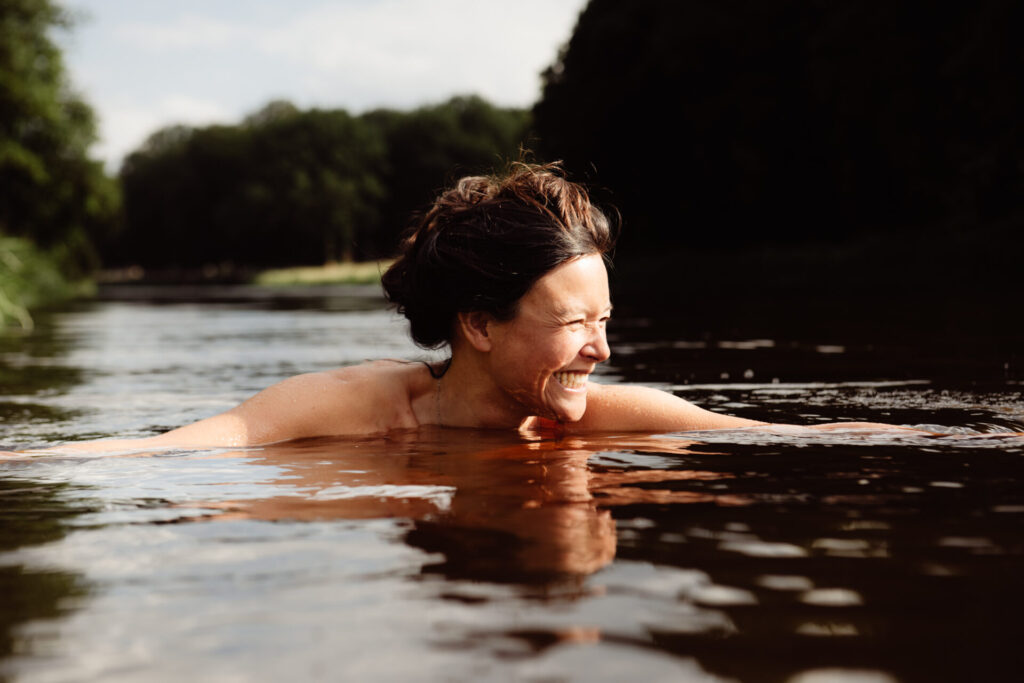 Li An Phoa swimming in the Berkel. Photographer: Diane van der Marel
Does that happen during the river walks you mentioned earlier?
“Among other things, yes. But we also run a citizen science project in which volunteers from 22 countries monitor the water quality of their local rivers. They look at chemical substances in the water, ecological indicators such as insects living around the river, and physical aspects like the amount of litter. That changes how you see the landscape – and how you relate to it.
The same happens during the walks. I’ve just returned from a walk along the Berkel. Over two weeks, six core walkers travelled from Germany to Zutphen, joined each day by thirty to fifty people. People are thirsty for community – for conversations about how we can live better together, with one another and with all other life.
And the beautiful thing is that as you walk, you notice – literally and figuratively – that every step we take for the health of rivers matters. Afterwards, people often stay in touch and action groups emerge. In this way, more and more ‘river families’ are forming: people whose lifelines are intertwined through water.”
Uitgelichte quote
Farmers are trapped in a system of ‘more’, ‘bigger’ and ‘faster’
 Li An Phoa: “We connect people to the water and to one another.” Photographer: Diane van der Marel
 Photographer: Diane van der Marel
There is growing attention on the link between pesticides and water pollution. How do you view the role of farmers?
“I lived a nomadic life for thirteen years, travelling from farmer to farmer to understand how our food system works. What I found is that every farmer I’ve ever spoken to wants to change, but they are trapped in a system of ‘more’, ‘bigger’ and ‘faster’ – driven by government subsidies and the loans they carry. That system originated after the second world war, when society decided: never again hunger, and so we pursued efficiency at any cost.
So yes, farmers need to use fewer pesticides, but if we place responsibility solely on farmers, or even hold them to blame, we miss the mark entirely – and that is exactly what is happening now. It pains me, this way of treating one another, as if you stop inviting certain uncles and aunts to the family dinner. That attitude pushes us further apart, instead of bringing us together.”
Uitgelichte quote
At that moment, the river became my teacher
Through water we can find each other again – as a ‘river family’.
“Exactly. That’s why local citizen initiatives are so important. It’s also something governments should support far more, because right now they take over everything. As a result, people living alongside rivers no longer understand how the system works or how they can influence it. How wonderful would it be if governments actively supported local initiatives – with knowledge, time and funding? Then our involvement with the landscapes we inhabit could return.”
Uitgelichte quote
That first sip moved me deeply
And if people want to contribute after reading this interview, where can they begin?
“That depends on what makes their heart sing. If you love walking, join one of our walks. If research appeals to you, take part in our citizen science. But it can also be very simple things: removing paving stones from your garden to raise groundwater levels, picking up plastic, or greening riverbanks with your neighbours. There are countless things you can do, wherever you live, but the starting point should always be what brings you joy. You’ll find that it then changes how you see the impact of your actions on rivers throughout your life. It’s like training a muscle.”
Want to read more about how ecology can be placed at the heart of everything we do? Read our interview with Vandana Shiva.
Original publication date: 10th of July 2024. Latest update: 18th of September 2026.
Who is Li An Phoa?
Li An Phoa (1980) is an ecologist, philosopher, and the founder of Drinkable Rivers. Through this foundation, she works towards a world with drinkable rivers. Over the past ten years she has walked more than 19,000 kilometres along rivers to draw attention to the health of these ecosystems. In 2021 she published the book Drinkable Rivers together with her partner Maarten van der Schaaf. Li An regularly gives guest lectures at Van Hall Larenstein University of Applied Sciences, Nyenrode Business University and Rotterdam School of Management. She is also the founder of the nomadic school Spring College, where she teaches outdoors while walking. In 2026, she became an Ashoka fellow.

READ MORE:

From soils to rivers: these women are reshaping our relationship with life
8 March 2026