John Fullerton: “This is the moment to put our pencil down and rethink the whole damn thing”
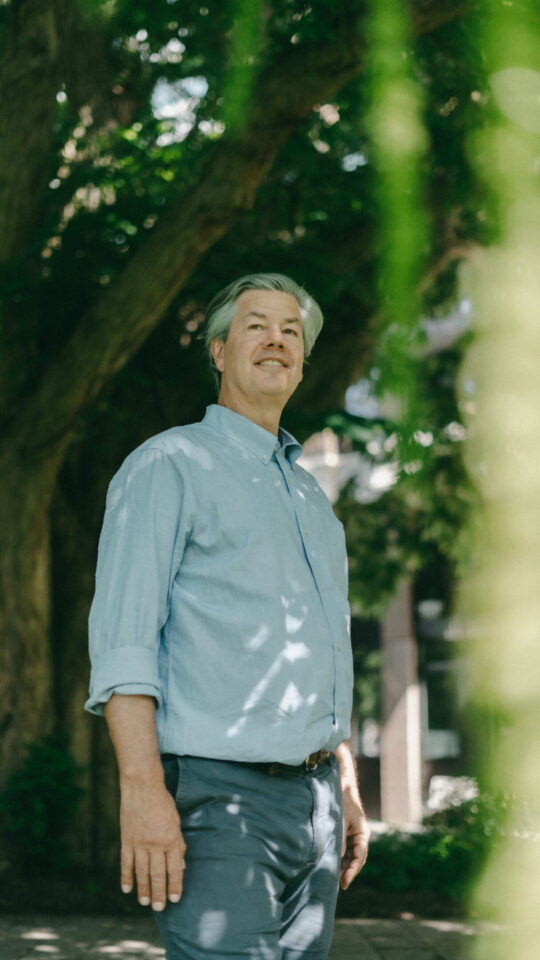
What if the economy behaved less like a machine to be optimised and more like a forest to be nurtured? Regenerative economist John Fullerton believes that changing how we see the economy could transform everything – from business and ownership to growth itself. “It’s a shift from doing more with more to doing more with less.”
You spent almost two decades at J.P. Morgan, at the heart of global finance. When did you begin to question the worldview you were working in?
“I joined J.P. Morgan right out of college in 1982 and left in the spring of 2001. I caught the derivatives wave at the beginning – Tokyo, London, New York – as finance was going through this huge shift towards globalisation.
The truth is, I didn’t know anything about the growth problem while I was there. I just became increasingly restless. It was almost like a little voice saying: ‘What are you doing? Why don’t you find something else to do with your life?’
When I left, I had no plan and no idea what I wanted to do next. Then, 9-11 interfered – I bore witness from nearby. I poured myself into books that bankers don’t read, to make sense of it all. One of them was The Limits to Growth. It hit me like a lightning bolt. As a financier, I immediately understood that exponential growth on a finite planet can’t continue. It seemed like a self-evident truth.
I considered doing a PhD or teaching in a business school, but I was hugely underwhelmed by the conversation at leading business schools at the time. There seemed to be no recognition that we were facing an existential crisis. It was treated as the next business opportunity, another challenge to grow through, rather than a moment to put our pencil down and rethink the whole damn thing.
That’s ultimately why, in 2010, I launched Capital Institute: a think tank where those fundamental questions about the economy could be explored.”
Uitgelichte quote
Mainstream economics is built on the idea that the economy is a machine
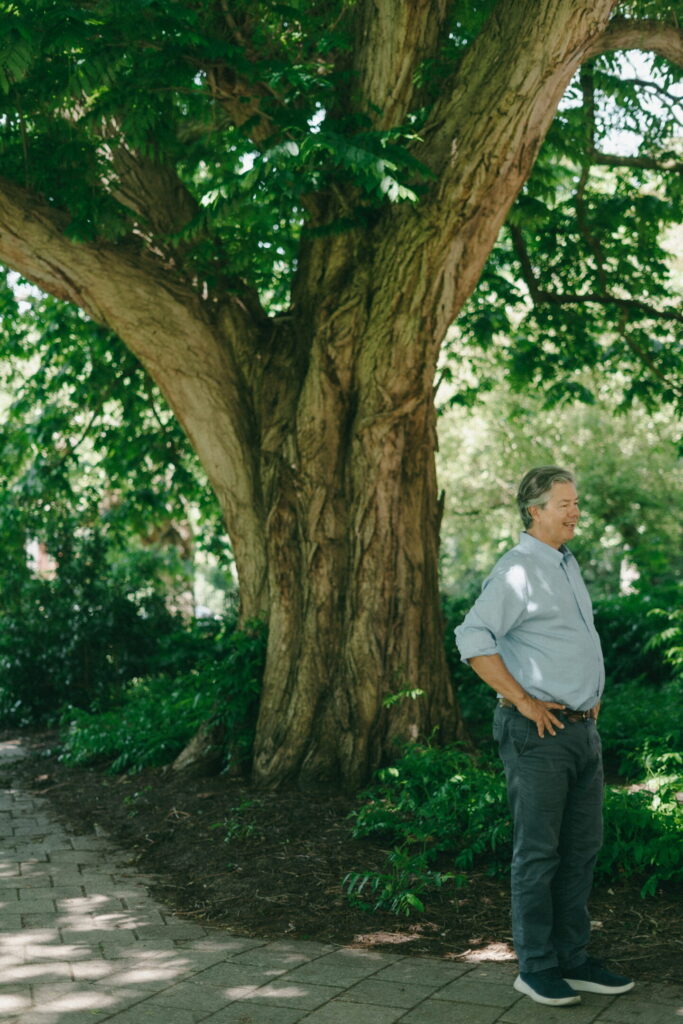 John Fullerton: “If human beings are living systems, the human economy must be designed as a living system too.” Photographer: Renata Chede
 Photographer: Renata Chede
That search led you to regenerative economics. What does it see that mainstream economics misses?
“When you look at the history of neoclassical economics – the mainstream economics still taught in graduate programmes – you realise it’s built on the idea that the economy is a mechanism, a machine.
Regenerative economics starts somewhere very different. The economy is made up of human beings, our tools and technologies, and the institutions we’ve created. Living systems don’t have iron laws in the way physics does, reducible to maths. They have patterns and principles that repeat across scales – from the microscopic to the cosmic – and allow them to persist and flourish.
So if human beings are living systems, and the biosphere and the planet are living systems, it seems self-evident to me that the human economy must be understood and designed as a living system too.
The question then becomes: how do we design an economy that aligns with those same patterns and principles that describe how life actually works?”
Uitgelichte quote
Seeing the economy as a living system forces you to rethink everything
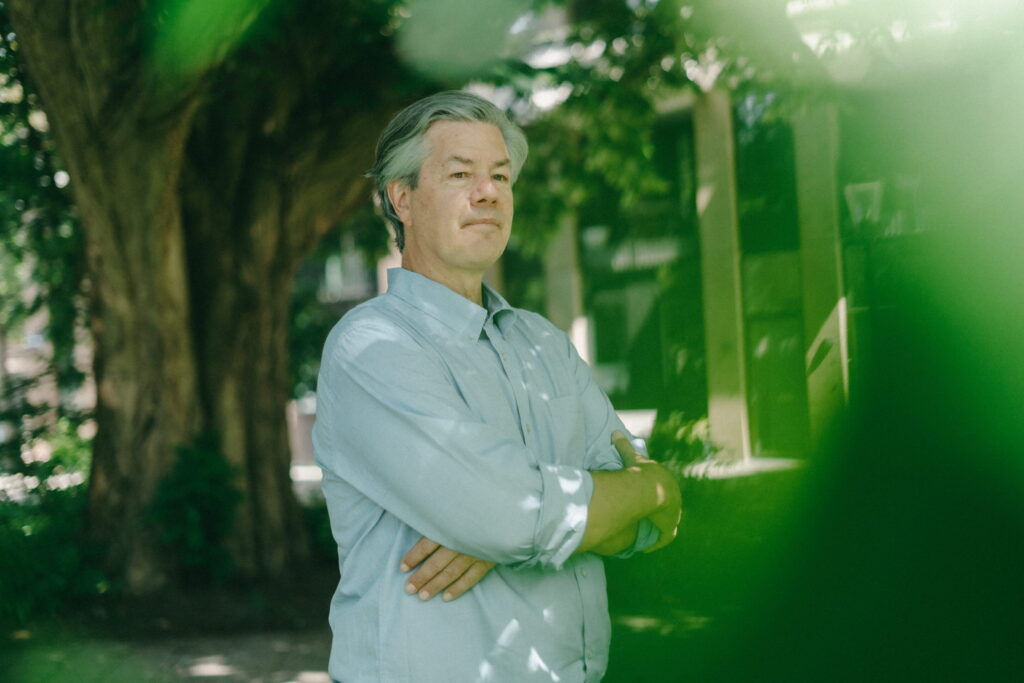 John Fullerton: “You’d better understand gravity before you start, or the thing isn’t going to fly.” Photographer: Renata Chede
 Photographer: Renata Chede
Once you see the economy as a living system, what changes?
“It forces you to rethink everything. For me, the key is getting clear on first principles. It’s a bit like designing an aeroplane: you’d better understand gravity before you start, or the thing isn’t going to fly.
In the same way, if the economy is a living system, we need to understand the principles that allow living systems to function and endure. Then you can look at the economy through the lens of those principles.”
Uitgelichte quote
What’s fundamental are the relationships, not the individual parts
At the heart of that is what you call “right relationship”.
“Exactly. Living systems are relational at their core. What’s fundamental are the relationships, not the individual parts. Yet we tend to think about the economy in parts – a business, a bank, a consumer – rather than the relationships between them.
I saw that shift first hand at Morgan. We went from being what we called a ‘relationship bank’ to a transactional bank focused on optimising fees to boost short term earnings – and the bonus pool. To me, that was a move away from a regenerative principle, and I’d argue it lies at the root of many of the problems we see on Wall Street.
The financial crisis could not have happened if banking had been fundamentally relationship-oriented. But it wasn’t. Relationships had become secondary to transactions.”
Uitgelichte quote
If the economy stops growing, the system collapses
Seeing the economy as a living system also forces us to rethink growth.
“Absolutely. The problem is that our entire economic system is now leveraged to growth. Pensions, government budgets, wages, stock prices – all of it depends on the economy continuing to expand.
So we’re caught in a double bind: if the economy stops growing, the system collapses. But if it keeps growing exponentially on a finite planet, it also risks collapse. You can’t solve that by simply turning growth off. You have to transcend it.
Living systems offer an interesting analogy. An immature ecosystem – think of a bed of weeds – puts all its energy into rapid growth. But a mature ecosystem, like a rainforest, becomes more complex and resilient. It shifts from doing more with more to doing more with less.
That’s the transition our economy has to make: not simply producing the same things a little more efficiently, but finding new sources of prosperity that require less material throughput. Learning, health, creativity, relationships, fulfilment – these are all sources of prosperity that our current economic model barely recognises.”
Uitgelichte quote
Change has to happen in the story we tell about what the economy is for
Where do we begin?
“I wish I could say I have a master plan. I don’t. But I can share how I think we need to go about it.
Again, the theory of change comes from looking at living systems. Your body is only healthy if it’s healthy at a cellular level. You can’t decide top-down how to be healthy; you have to start with sleep, nutrition and physical exercise – all the things that nourish the body from the ground up. By analogy, shifting the economic system also has to begin with its basic building blocks – the cells of the economy.”
Uitgelichte quote
Local and bioregional economies, that’s where we need to start
 John Fullerton: “We need to build ecosystems of businesses.” Photographer: On a hazy morning
 “You don’t grow a forest by planting a single tree in the middle of the desert and watering it.” Photographer: Renata Chede
So this is where place-based, bottom-up change comes in.
“Exactly. Local and bioregional economies, small and mid-sized enterprises and family businesses – that’s where I think we need to start.
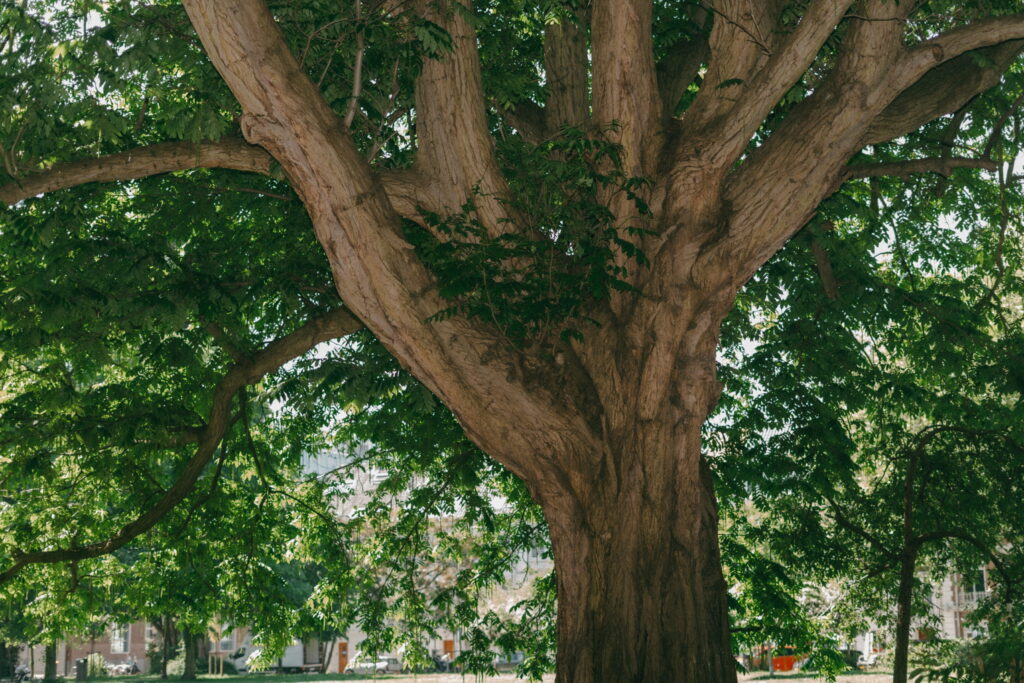
But individual businesses are also the wrong unit of analysis. We need to build ecosystems of businesses. You don’t grow a forest by planting a single tree in the middle of the desert and watering it. A tree thrives in a forest, connected to other trees and sharing nutrients – focusing not on optimising the individual tree, but the health of the whole.
Regenerative farmers understand this intuitively: they don’t manage a farm as a collection of isolated parts, but work with the relationships between soil, plants, animals, water and people. Our businesses need those kinds of relationships too.
At the same time, change has to happen in the story we tell about what the economy is for. If we can shift that worldview while building new economic relationships from the ground up, then public policy has a chance to follow.”
Uitgelichte quote
Shareholders don’t legally own corporations. They own shares
That also raises the question of ownership. Do we need to rethink how businesses are structured?
“Yes, but not only by inventing new ownership models, like steward-ownership. We can do far more with the structures we already have.
The late Cornell law professor Lynn Stout made an important point: shareholders don’t legally own corporations. They own shares. Yet we’ve allowed ourselves to behave as though maximising shareholder value is the corporation’s overriding purpose.
In reality, boards have much more freedom than we often assume. Their actual legal responsibility is to use their best judgment in the long-term interests of the corporation. They can push back rather than simply yielding to short-term demands.
So we could do a lot better with public corporations and family-controlled businesses as they already exist, rather than assuming meaningful change depends on entirely new structures.”
Uitgelichte quote
I think the power of identity is a bigger issue than greed
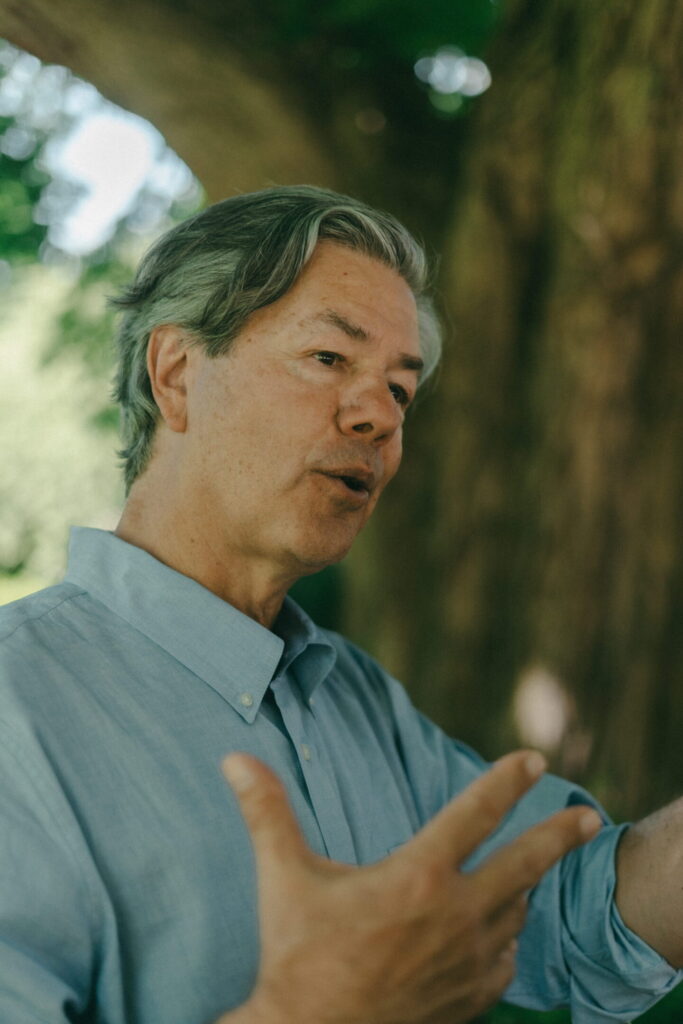
You’ve spent years trying to shift the system. What has surprised you most?
“I think what has surprised me most is the power of identity. We construct identities for ourselves, particularly in the business world, through our careers. And once that identity is established, it becomes incredibly difficult to question the system that gave it to you. I think that’s a bigger issue than greed.
Most people who get on a train and go to work on Wall Street aren’t bad people trying to do bad things. But their identity becomes bound up with the system.
I experienced that when I left Morgan. Suddenly I no longer had a business card that said ‘Managing Director, J.P. Morgan’. It was a nice business card – embossed, the whole thing.
Interestingly, one of the first things I did after I left Wall Street was to make a new business card, with just my name and email on it. It felt like stripping myself down naked: well, this is all I am. This is actually the real me.
If you’re the CEO of a big bank, it’s very difficult to decide that capitalism isn’t working, because then you’re not only questioning the system – you’re questioning yourself and what you’ve done with your life. That’s a heavy existential load to bear. And I think it explains far more about why we’re stuck than we realise.”
Uitgelichte quote
One of the highest-leverage things we can do is let go of the paradigm itself
And yet you did step away. What made that possible for you?
“We rarely elect to go down into the dungeon. Why I did, I’ll never know. I just know it felt like I had no choice. I wasn’t fired or forced out – I simply couldn’t stay.
Until I made that decision, I didn’t know what my life purpose was. Through the pain and struggle of the search, I found it. And I wouldn’t trade that for anything in the world.
Everything I do now is aimed at shifting the worldview through which we understand the economy. Ultimately, one of the highest-leverage things we can do is let go of the paradigm itself. For whatever reason, I was able to do that. So that feels like where I’m called to contribute.”
Uitgelichte quote
If the book gives people hope, it’s because the regenerative process of life does
Your book Regenerative Economics came out in 2025. What do you most hope stays with readers?
“One response I keep hearing is: ‘This gives me hope.’ Just yesterday, a woman emailed me about her father, a recently retired architect. She’d been talking to him about climate for years and giving him books to read, but he found it all depressing as hell. She asked if I would send him an inscribed copy because this was the first book that had left him feeling hopeful.
That really struck me, because I didn’t write the book to give people hope. I wrote it to describe, as honestly as I could, the reality I see. But the truth is, life itself is hopeful. If the book gives people hope, it’s because the regenerative process of life offers us all a scientifically grounded reason for hope, once we learn to see in a new way. People don’t give up; they get re-energised, and then they do something with that energy that I will never know about.
I think that’s how this whole shift happens: slowly, often invisibly, until suddenly something changes.”
Uitgelichte quote
We now have around 4,000 people from 81 countries learning about regenerative economics
 Photographer: Renata Chede
 John Fullerton: “We’ve just soft-launched the Regenerative Chamber of Commerce.” Photographer: Renata Chede
Finally, what are you working on next?
“We’ve just soft-launched something called the Regenerative Chamber of Commerce, which I’m excited about.
A traditional chamber of commerce is, at its core, a relational institution. So the idea is: what if we use that structure to help businesses build the capacity to become regenerative from the bottom up?
It grew out of With Life, an international learning community I created together with our partner nRhythm. We now have around 3,000 people from 81 countries learning about regenerative economics, finance, leadership, management and organisational design. The next question was: how do we bring organisations themselves into that process?
That’s where the Chamber comes in. Imagine regional and national chambers of regenerative commerce where businesses learn together, build ecosystems of relationships, trade with one another and advocate for policy together.
Chambers of commerce have always done those things. The difference is that instead of organising around self-interest and extraction, you organise around regeneration. For me, that’s how the bigger paradigm shift begins to take shape in the real economy.”
Who is John Fullerton?
John Fullerton (1960) is an American economic philosopher, writer and impact investor, and the founder of Capital Institute, a think tank dedicated to reimagining economics and finance in service to life. Before founding the institute in 2010, he spent almost two decades at J.P. Morgan, where he was a managing director working across capital markets, derivatives and venture investment.
Fullerton is considered the architect of Regenerative Economics, an approach that applies the patterns and principles of living systems to the design of economies and financial systems. His latest book, Regenerative Economics, was published in 2025. He is also a member of the Club of Rome and teaches Capital Institute’s live online courses on regenerative economics and finance.
READ MORE:

Money talks: why regeneration should start speaking the language of finance
10 April 2026