Cruydt-Hoeck: “The more diversity you create, the more resilient the whole becomes”
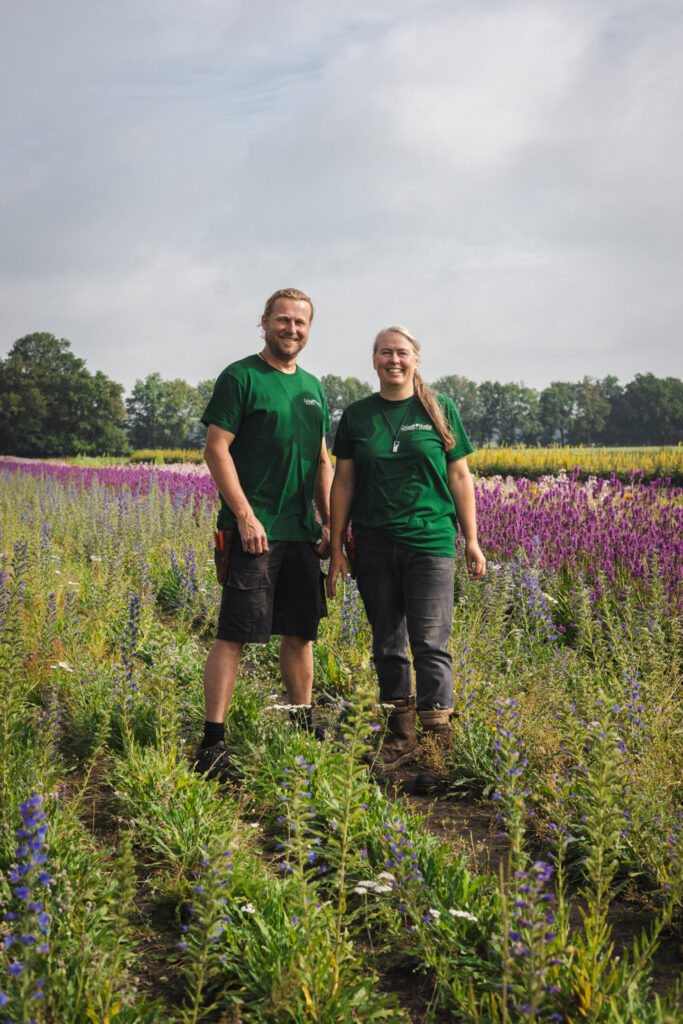
For over fifteen years, Jasper Helmantel and his wife Jojanneke Bijkerk have run the native seed and plant nursery Cruydt-Hoeck. What began as an idealistic initiative has grown into a successful enterprise with over 50 employees that’s bringing wild plants back into our everyday surroundings.
‘Working together for more biodiversity’ is the rallying cry of Cruydt-Hoeck. In that sense, little has changed since the nursery was founded in the Frisian village of Nijeberkoop in 1978, the Netherlands. Back then, founders Rob and Dick were already driven by the ambition to restore wild plants to the landscape. Since Jasper and Jojanneke took over Cruydt-Hoeck in 2007, however, almost everything else has been reworked.
“At the time of the takeover, the nursery was not exactly flourishing”, Jasper recalls. After the death of both founders, Rob’s widow had managed to keep the business afloat for another two years. “She’d heard of email, but actually using it was another matter entirely”, Jasper jokes. “Ans felt the nursery slipping through her fingers and was desperately looking for successors to her husband’s idealistic initiative. And that’s how Cruydt-Hoeck eventually came our way.”
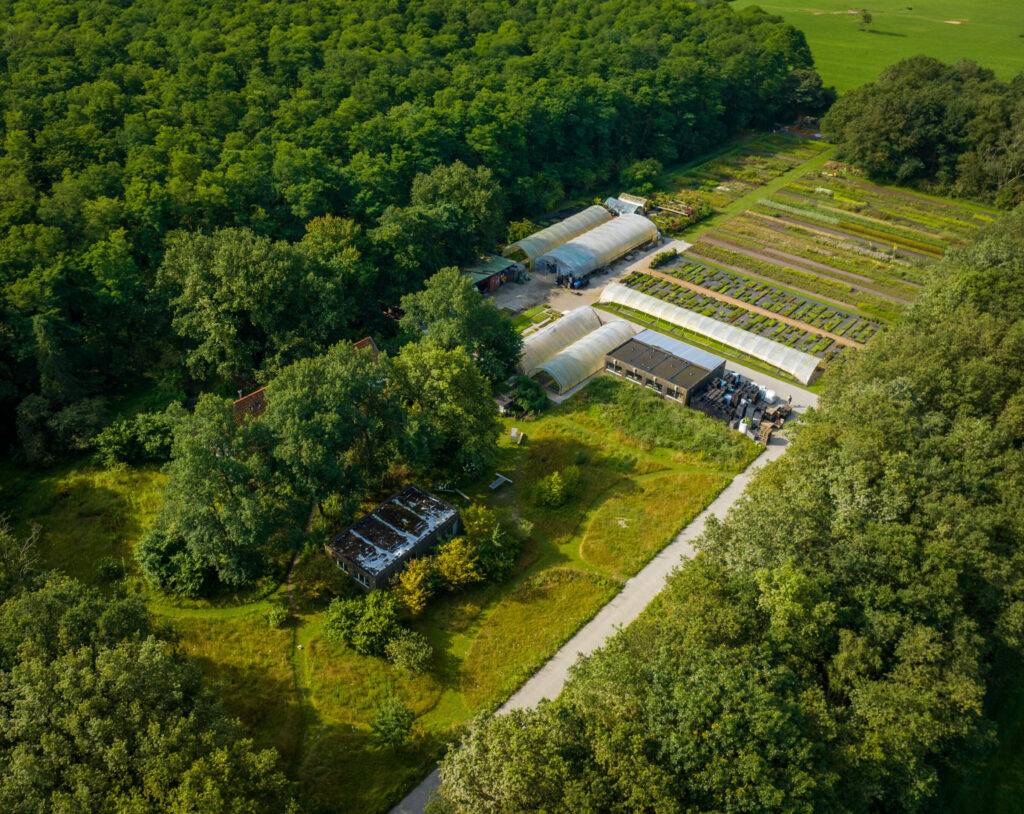
Jasper and Jojanneke, then aged 28 and 30, knew immediately: this was the opportunity they had been waiting for. For the first few months, they combined rebuilding Cruydt-Hoeck with part-time jobs. “We simply started answering the phone, replying to emails, and building a website. Now, eighteen years later, the nursery has grown into a substantial company with around fifty employees and sixty hectares of seed production.”
Uitgelichte quote
If you want change, you have to get your own hands dirty

Native seeds and plants
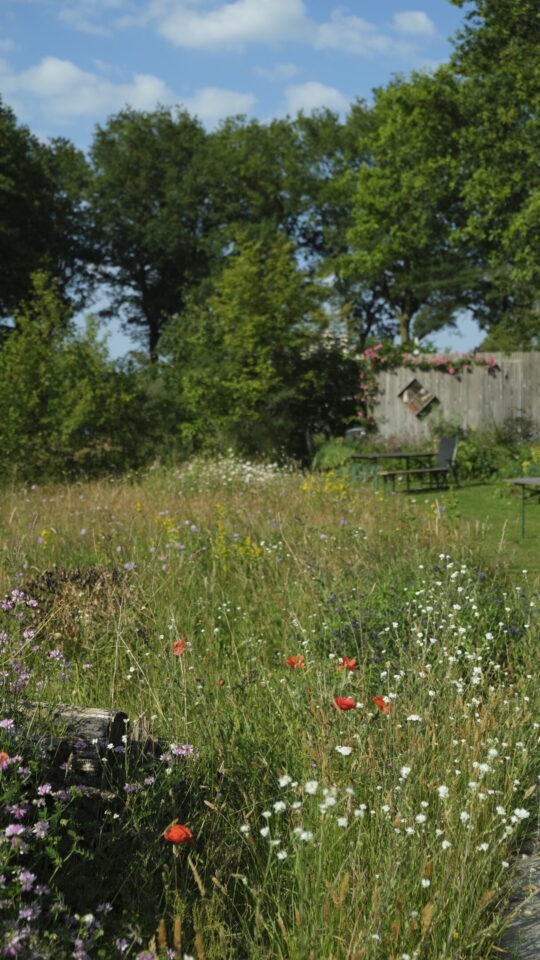
Over the past forty-seven years, Cruydt-Hoeck has specialised in cultivating native seeds and composing wildflower meadow mixes for a wide range of environments – dry, moist or wet soils; sun, partial shade or full shade – and for different applications, such as orchards, field margins, green roofs or derelict land. Since acquiring an additional wild-plant nursery, Jasper and Jojanneke have also been selling organically grown native plants in pots via their webshop.
Uitgelichte quote
The greater the variation in species, genes and habitats, the more resilient an ecosystem becomes
Horticultural school sweethearts
The pair met three decades ago at secondary horticultural school – where they fell in love. Today, the ‘horticultural school sweethearts’, as Jasper jokingly calls them, have been married for twenty years. “We complement each other perfectly. Jojanneke is the biologist and ecologist of the two of us, specialising in wild plants. I’m more the gardener, the grower, the entrepreneur.”
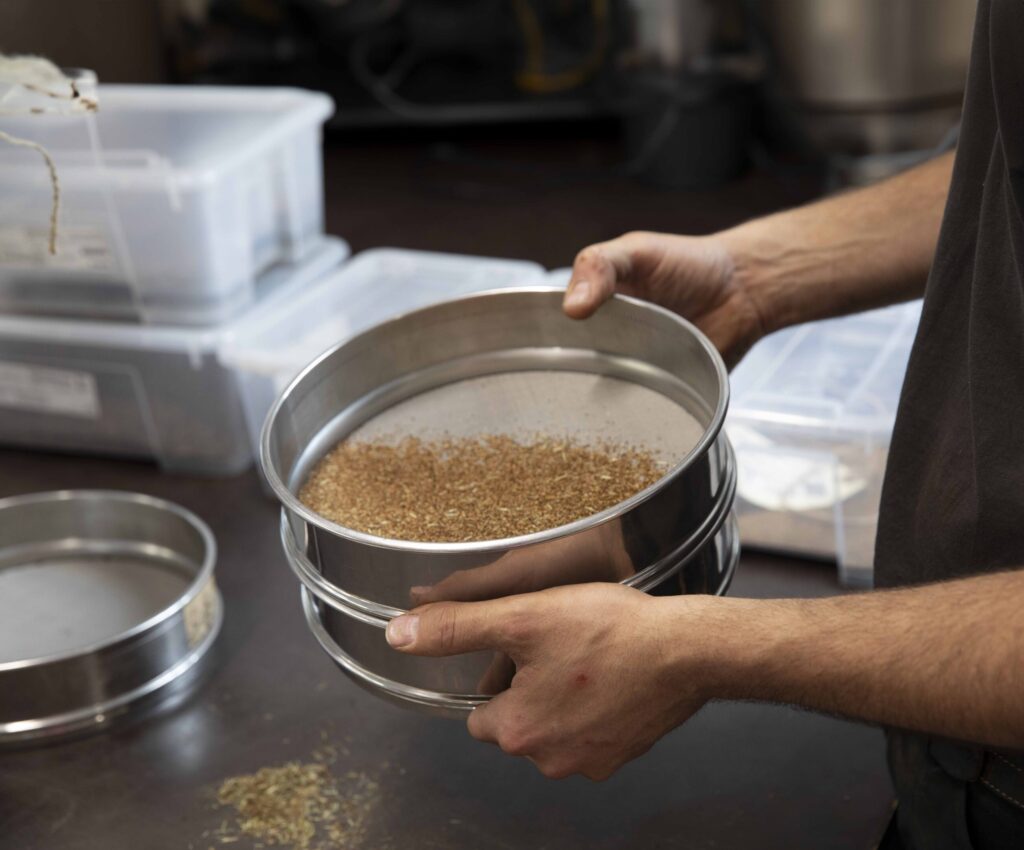
Jasper focuses mainly on running the business, while Jojanneke plays a crucial role in safeguarding the authenticity of the seeds. To do so, she regularly travels – with permission and permits from landowners – to original, undisturbed nature reserves to collect a small handful of seeds. “At the nursery, she then propagates these into larger quantities.” This ensures that the seeds are genetically authentic and suitable for restoring native flora. “She’s actually doing fieldwork at the moment, which is why she couldn’t be here for this interview”, Jasper explains.
Uitgelichte quote
If you’re only idealistic, you remain stuck in hobby mode

Scaling up idealism
Their success, Jasper says, is due not only to the spirit of the times but also to their drive. “We sometimes call ourselves idealistic realists. Our love for ecological horticulture was nurtured at home, by our surroundings and by encouraging one another. At the same time, we understand that a healthy business model is essential. If you’re only idealistic, you remain stuck in hobby mode. Entrepreneurship is precisely what allows you to scale up your idealism.”
And that scaling up, he argues, is urgently needed. “We have a massive problem”, Jasper says. “If we as humanity want to keep going on this planet for a while longer, we really have to act.” The problem he refers to is biodiversity loss. Cruydt-Hoeck is committed to biodiversity restoration. “If you bring back native plants, insects, butterflies, birds and bees follow. And with them, you can once again create a healthy living environment – one that we humans also depend on.”
Uitgelichte quote
A landscape with many different plants can absorb unexpected climate shocks
More than production alone
At Cruydt-Hoeck, it’s not just about producing and selling seeds and plants. Creating awareness, sharing knowledge and offering people practical ways to act are just as important. “I sometimes call it evangelising”, Jasper says. “We think it’s crucial to communicate the importance of biodiversity, to inspire people and get them moving. If you want change, you have to get your own hands dirty – and bring others along with you.”
Uitgelichte quote
If you bring back native plants, insects, butterflies, birds and bees follow
“Diversity, diversity, diversity and diversity”
The value of native seeds is immense, especially in places where plants have simply disappeared and nature needs a helping hand. In those cases, sowing is essential, although success depends largely on management, Jasper emphasises. “Sowing is ten per cent, good management is ninety.”
Ultimately, it all comes down to the plant – and diversity plays a key role. The greater the variation in species, genes and habitats, the more resilient an ecosystem becomes, whether facing drought, excess rainfall or pests. “Diversity, diversity, diversity and diversity”, Jasper stresses. “The climate is changing, but the direction is uncertain. Will it be warmer, colder, drier or wetter? That’s precisely why variation is crucial. A landscape with many different plants can absorb unexpected climate shocks or outbreaks far better, while a garden made up of a single species can be wiped out in one go.”
Uitgelichte quote
The scientific evidence, widely covered in the media, shocked the public

From aesthetics to ecology
Jasper sees a clear shift in the gardening world – and in society at large – from aesthetics towards idealism and ecology. He points to a German-Dutch study published in 2017, which showed that seventy-five per cent of flying insects have disappeared from nature reserves over a period of twenty-seven years. “The publication of those findings was crucial”, he says. “The scientific evidence, widely covered in the media, shocked the public. People suddenly realised that fewer insects also means fewer birds, natural pest controllers and pollinators.”
Before 2017, Cruydt-Hoeck mainly received aesthetically driven requests – ‘I don’t want yellow in my wildflower meadow’. Afterwards, the focus shifted towards ecological value – ‘I want to save the bee’. According to Jasper, the pandemic further reinforced this shift, as many people began questioning what really matters and thinking more consciously about nature. Native plants have since gained even greater appreciation, because people now see and understand how they can support bees, butterflies and birds.
Uitgelichte quote
I’m not saying we should rip all hydrangeas and hostas out of our gardens

No such thing as ‘wrong’ plants
Jasper is keen to stress that this is not a black-and-white story. “Non-native plants are not inherently ‘wrong’. I’m not saying we should rip all hydrangeas and hostas out of our gardens”, he says. “Those plants aren’t the problem. The problem is that there are too few native plants to complement them.”
According to him, it’s perfectly possible to create an aesthetically pleasing garden using native species – especially now that gardening has become increasingly naturalistic over the past fifteen years. “If every garden had just three wild plants, we’d already be a long way there.”
Going native
For gardeners inspired to get started themselves, Jasper offers a few tips:
– Start small: There’s no need to overhaul your entire garden at once. Leave existing plants in place, but add a native plant alongside them. Start with a few in a border, planting bed, façade garden or balcony. See what you like and learn as you go. Autumn is the perfect time to sow native seeds. If it works, you can add more plants next year.
– Rediscover native garden plants: Take time to explore the strong, valuable native plants of your area, which are often overlooked in favour of exotic species.
– Extend your flowering season with classics: Native plants mainly flower in spring and summer. To keep your garden attractive in autumn, combine them with other garden plants, such as autumn asters or Rudbeckia (coneflower).
– Let nature take its course: It’s a misconception that all wild plants are aggressive spreaders. Experiment, and dare to let natural processes unfold, giving wild species more space.
This is an adapted and translated version of an article from MAY & JUNE magazine – a Dutch company with a mission to get you gardening for biodiversity.
READ MORE:

Vandana Shiva: “In a living economy, we participate in the natural world as equals”
26 February 2026